
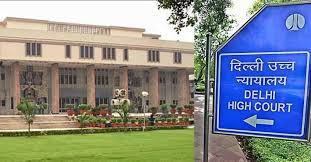
Delhi High Court Directs Committees to Decide on Plea Against Restricting Chambers to Delhi-Resident Lawyers
Petition Challenges Residency-Based Eligibility Rule
Court Emphasizes Administrative Committees’ Role in Allotment
By Legal Reporter
New Delhi: February 25, 2026:
The Delhi High Court has disposed of a petition challenging rules that restrict the allotment of lawyers’ chambers in certain district courts to advocates who are permanent residents of the National Capital Territory (NCT) of Delhi. The Division Bench of Justice V Kameswar Rao and Justice Manmeet Pritam Singh Arora directed the portfolio committees of the respective district courts—Karkardooma, Dwarka, and Rohini—to take a decision on the matter.
Also Read: Centre Bans MoodXVIP, Jugnu and 3 Other OTT Platforms for Streaming Obscene Content
The case, Piyush Gupta Advocate vs. The Chamber Allotment Committee & Ors., raised important questions about fairness, inclusivity, and the professional rights of lawyers practicing in Delhi but residing outside the capital.
[Recommended Legal Resource]
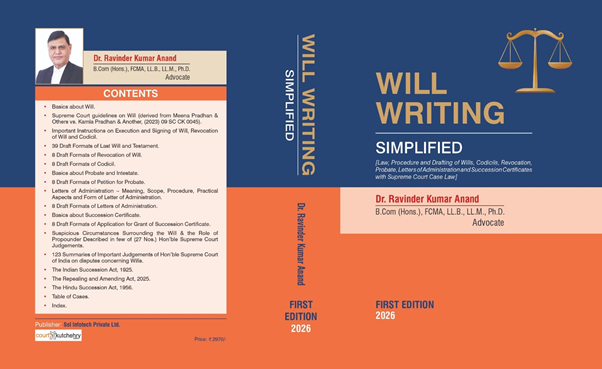
For lawyers and families dealing with succession, inheritance, and documentation, Will Writing Simplified is an invaluable resource. It provides practical guidance on wills, codicils, probate, and succession certificates with Supreme Court case law. Available on Amazon and Flipkart, this book is a professional tool for lawyers, families, and practitioners.
Also Read: Supreme Court: Restructuring Arrangements Cannot Stall Insolvency Proceedings
Case Background
- The Petition: Advocates argued that restricting chambers only to Delhi residents discriminates against lawyers from neighbouring states who regularly practice in Delhi courts.
- The Rule: Current allotment rules stipulate that only advocates with permanent residence in Delhi are eligible for chambers.
- The Challenge: Petitioners claimed this violates the principle of equality under Article 14 of the Constitution and restricts professional opportunities.
- Court’s Direction: Rather than striking down the rule directly, the High Court asked the respective committees to examine and decide the issue.
Court’s Observations
- Administrative Role: The Bench emphasized that allotment of chambers is an administrative matter best handled by designated committees.
- Judicial Restraint: The Court avoided interfering directly, instead directing committees to consider the plea and take a reasoned decision.
- Fairness in Access: The Court acknowledged the concerns raised by non-resident lawyers but left the resolution to the committees.
Why This Matters
- Professional Equality: Many lawyers commute daily from NCR towns like Noida, Ghaziabad, and Gurgaon to practice in Delhi courts. Residency-based restrictions could unfairly exclude them.
- Access to Facilities: Chambers provide essential office space for lawyers, especially young advocates who cannot afford private offices.
- Legal Precedent: The case highlights the balance between administrative autonomy and judicial oversight in professional regulation.
Also Read: Supreme Court to Examine Housing Society’s Refusal of EV Charger Installation
Broader Implications
- For Lawyers: The decision could impact thousands of advocates who practice in Delhi but live outside the capital.
- For Judiciary: Reinforces the principle that courts should defer to administrative committees in matters of allotment and infrastructure.
- For Governance: Raises questions about whether residency-based restrictions are justified in a metropolitan region like Delhi NCR.
Expert Reactions
Legal experts noted that while the Court’s restraint is consistent with judicial practice, the committees must now act transparently and fairly. Bar associations have urged that chambers should be allotted based on professional need rather than residency.
Conclusion
The Delhi High Court’s directive to committees marks a cautious but important step in addressing the plea against residency-based restrictions on chamber allotment. By leaving the matter to administrative bodies, the Court has reinforced judicial restraint while ensuring that the concerns of non-resident lawyers are formally considered.
The outcome of the committees’ deliberations will determine whether Delhi’s district courts remain accessible to all practicing advocates or continue to prioritize local residency.
Also Read: Supreme Court Rules Voluntary Confession Can Be Substantive Evidence Under Customs Act
Suggested Keywords for SEO & Faster Searches
- Delhi High Court chamber allotment case
- Plea against residency restriction lawyers Delhi
- District court chambers eligibility rule Delhi
- Article 14 equality lawyers chambers India
- Delhi NCR lawyers chamber allotment issue
- Judicial restraint administrative committees Delhi HC
- Chamber allotment rules Delhi High Court
- Will Writing Simplified book
Also Read: ITAT Quashes Income Tax Revision Against Mukul Rohatgi: PCIT Cannot Rely on AI Rental Yield Reports