
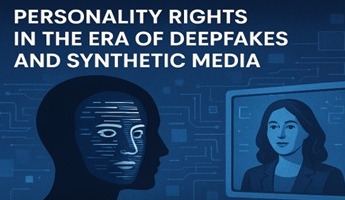
Deepfakes and Personality Rights: Indian Courts Redefine Identity in the Digital Age
Judicial activism expands protection of celebrity likeness
Digital India Bill may codify safeguards against AI misuse
By Vishwas Kumar
New Delhi: May 25, 2026:
Deepfakes are reshaping Indian law by forcing courts to expand the scope of personality rights, treating identity itself—face, voice, and likeness—as a form of intellectual property. The trend shows how privacy, dignity, and commercial value are converging, with courts stepping in even before Parliament enacts specific legislation.
The ruling in Gurdial Singh (Dead) Through LR vs Jagir Kaur (Dead) & Another is an important judgment for understanding succession disputes, rights of legal representatives, and adjudication of family property conflicts in India. The case discusses how courts evaluate documentary evidence, inheritance claims, and competing rights of parties in civil disputes involving ancestral and jointly owned properties.
1. Judicial Recognition of Personality Rights
- Personality rights are not codified in Indian statutes but have evolved through Article 21 (Right to Privacy) and the Right to Publicity.
- Courts now recognize that a person’s face, voice, and gestures hold both personal dignity and commercial value.
2. Landmark Cases
- Amitabh Bachchan v. Rajat Nagi (2024): Delhi High Court granted injunction against unauthorized use of Bachchan’s likeness in fake ads.
- Hrithik Roshan, Katrina Kaif, Anil Kapoor (2025): Courts recognized misuse of AI-generated videos as violations of personality rights, amounting to passing off, misappropriation, and defamation.
3. Legal Gaps
- Copyright Act: Protects creative works, not human identity.
- Trademarks Act: Covers logos/brands, not faces or voices.
- IT Act: Addresses cybercrime but not identity cloning.
- Result: Victims of deepfakes struggle for remedies unless they are high-profile celebrities.
4. Future Legislation – Digital India Bill
- Expected to replace IT Act.
- May include digital identity protection and penalties for AI misuse.
- Could impose obligations on platforms to label or remove synthetic media, similar to the EU AI Act.
5. Global Context
- US: California’s “Right of Publicity” laws protect individuals from unauthorized likeness use.
- EU: Strong privacy safeguards under GDPR and AI Act.
- India is aligning with these trends but needs comprehensive legislation.
Clarifications & Relevance
- For Celebrities: Personality rights protect both dignity and commercial value.
- For Ordinary Citizens: Extending rights universally may burden platforms like Instagram and TikTok, raising free speech concerns.
- For Lawmakers: Balance is needed between privacy, consent, and creative freedom.
- For Tech Companies: Watermarking and disclaimers are emerging as compliance tools, but India lacks clear rules on training datasets.
FAQ for Quick Understanding
Q1. What are personality rights in India?
They are judicially recognized rights allowing individuals to control the use of their image, voice, and likeness, linked to privacy and publicity.
Q2. How do deepfakes violate personality rights?
By misusing a person’s likeness without consent, causing reputational harm or commercial misappropriation.
Q3. Are there specific laws against deepfakes in India?
No dedicated statute yet. Courts rely on IT Act, IPC, and privacy principles. The Digital India Bill is expected to address this gap.
Q4. Can ordinary citizens claim personality rights?
Yes, but enforcement is harder. Courts have mostly acted in celebrity cases; broader application may come with new legislation.
Q5. What global models can India adopt?
The EU AI Act (synthetic media transparency) and US Right of Publicity laws provide strong frameworks for identity protection.
Action Plan: Indian professionals should track Delhi High Court rulings, study global AI laws, and prepare for the Digital India Bill. For lawyers, this is a cutting-edge field combining privacy, IP, and cyber law, offering opportunities in litigation, compliance, and policy advisory.