
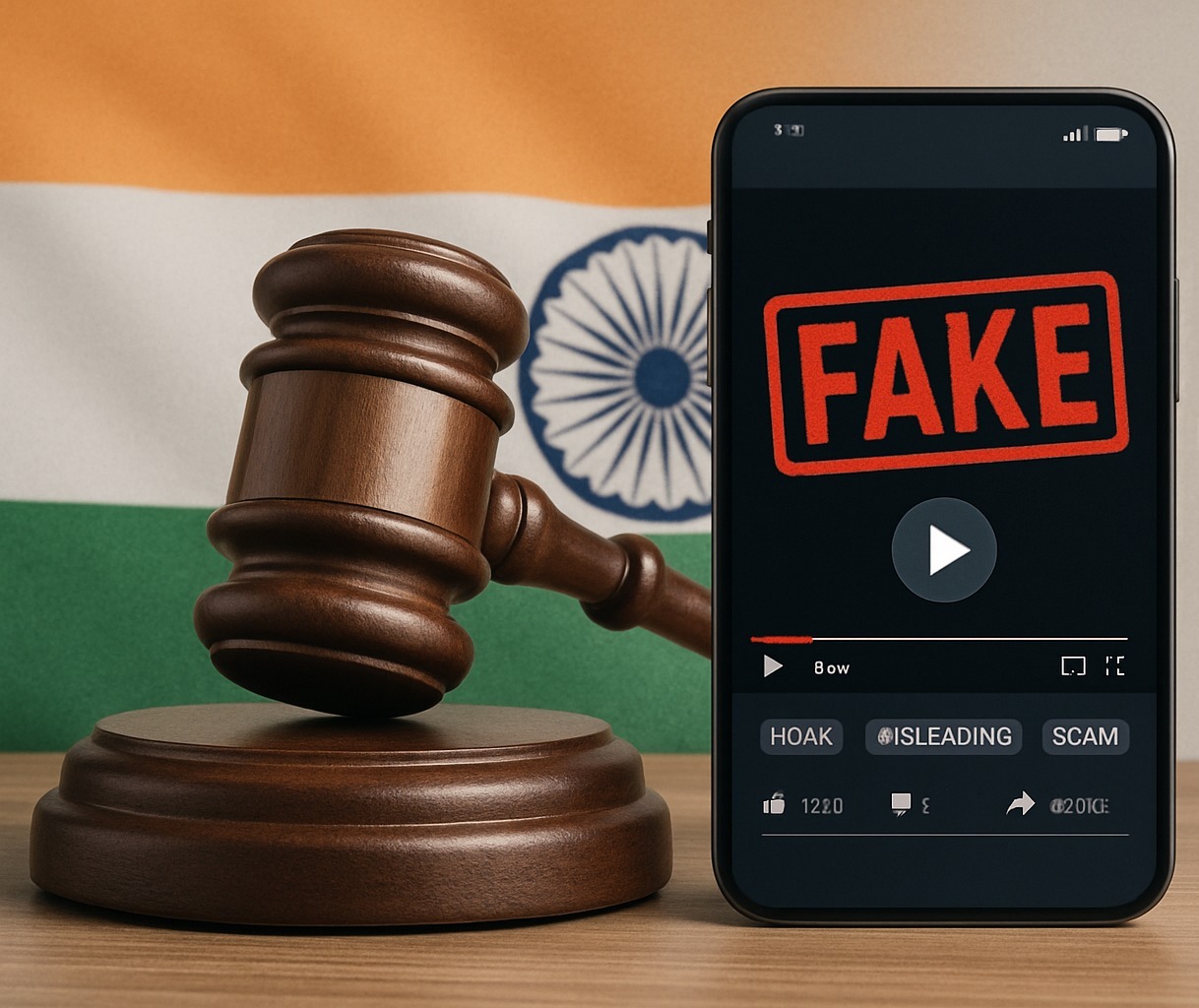
Deepfakes in Indian Courts: Landmark Judicial Precedents Shaping Cyber Law
Courts confront AI-generated evidence and fraud
Key rulings clarify intermediary liability and privacy rights
By Vishwas Kumar
New Delhi: May 25, 2026:
Indian courts have begun grappling with deepfakes, AI manipulation, and cybercrime, with landmark precedents shaping how evidence, privacy, and intermediary liability are treated. These cases provide guidance for lawyers and enforcement agencies on how to prosecute and defend matters involving synthetic media.
The judgment in Ramesh Chand (D) Thr LRs vs Suresh Chand & Another is an important reference for understanding property disputes, succession claims, and the evidentiary standards followed by Indian courts in civil litigation involving legal heirs and family ownership conflicts. The case provides insight into judicial reasoning on inheritance-related disputes, partition issues, and rights arising from ancestral or jointly held properties.
Landmark Judicial Precedents
|
Case |
Court/Year |
Clarification |
Relevance to Deepfakes |
|
Shreya Singhal v. Union of India (2015) |
Supreme Court |
Struck down Section 66A IT Act, limiting arbitrary takedowns. Clarified intermediary liability under Section 79 IT Act. |
Important for deepfake regulation—ensures takedown requests balance free speech with harm prevention. |
|
Super Cassettes Industries Ltd. v. MySpace Inc. (2016) |
Delhi High Court |
Defined intermediary liability for hosting infringing content. |
Relevant for platforms hosting deepfakes—clarifies safe harbour limits. |
|
Christian Louboutin SAS v. Nakul Bajaj (2018) |
Delhi High Court |
Expanded liability of online platforms beyond passive hosts. |
Shows courts may hold platforms accountable for deepfake circulation. |
|
Andhra Pradesh Fake Judgment Scandal (2025–26) |
Supreme Court (suo motu) |
Judge used AI hallucinated citations; SC declared it “serious misconduct.” |
First precedent on AI misuse in judicial process—warns against unverified AI evidence. LinkedIn |
|
Telangana Land Scam – Deepfake Documents (2025) |
Delhi High Court |
Claimants used AI-generated documents to claim land. Case under forensic review. |
Demonstrates courts’ willingness to scrutinize deepfake documentary fraud. LinkedIn |
|
Delhi Court – Deepfake Video of Prime Minister (2026) |
Delhi District Court |
Bail granted; clarified deepfake evidence must be assessed under existing frameworks. |
First articulation of deepfake video admissibility in criminal proceedings. LinkedIn |
|
Kerala High Court – AI as Tool, Not Judge (2025) |
Kerala HC |
Directed use of AI transcription tools but barred AI from judicial decision-making. |
Clarifies AI’s role in courts—supportive, not determinative. LinkedIn |
Clarifications & Relevance
- Intermediary Liability: Courts balance safe harbour protections with accountability. Platforms hosting deepfakes may lose immunity if they fail to act after notice.
- Evidence Authenticity: Under the Bharatiya Sakshya Adhiniyam, 2023 (Section 63), electronic evidence must carry a certificate of authenticity. Deepfakes challenge this requirement, making forensic validation critical. LinkedIn
- Privacy & Personality Rights: Emerging jurisprudence (e.g., Arijit Singh v. Codible Ventures LLP) recognizes misuse of likeness as a violation of dignity and personality rights. journals.ed.ac.uk
- Judicial Integrity: AI hallucinations in judgments highlight risks of over-reliance on generative tools without verification.
FAQ for Quick Understanding
Q1. Can deepfakes be prosecuted under current Indian law?
Yes, under IT Act Sections 66D, 67, 67A, IPC Sections 354A, 354C, 509, and DPDP Act provisions.
Q2. How do courts treat deepfake evidence?
Courts require forensic validation and certificates of authenticity under the BSA, 2023.
Q3. Are platforms liable for hosting deepfakes?
Yes, if they fail to remove harmful content after notice, as clarified in Shreya Singhal and MySpace rulings.
Q4. What is the global relevance of Indian precedents?
They show how developing jurisdictions balance free speech, privacy, and accountability in regulating AI misuse.
Q5. What should lawyers focus on in deepfake cases?
Evidence authenticity, intermediary liability, privacy rights, and comparative global frameworks (EU AI Act, GDPR).
Action Plan: Indian professionals should study these precedents, specialize in cyber forensics and AI law, and leverage them in litigation strategies. This expertise will be vital as India moves toward a Digital India Act explicitly regulating deepfakes.