
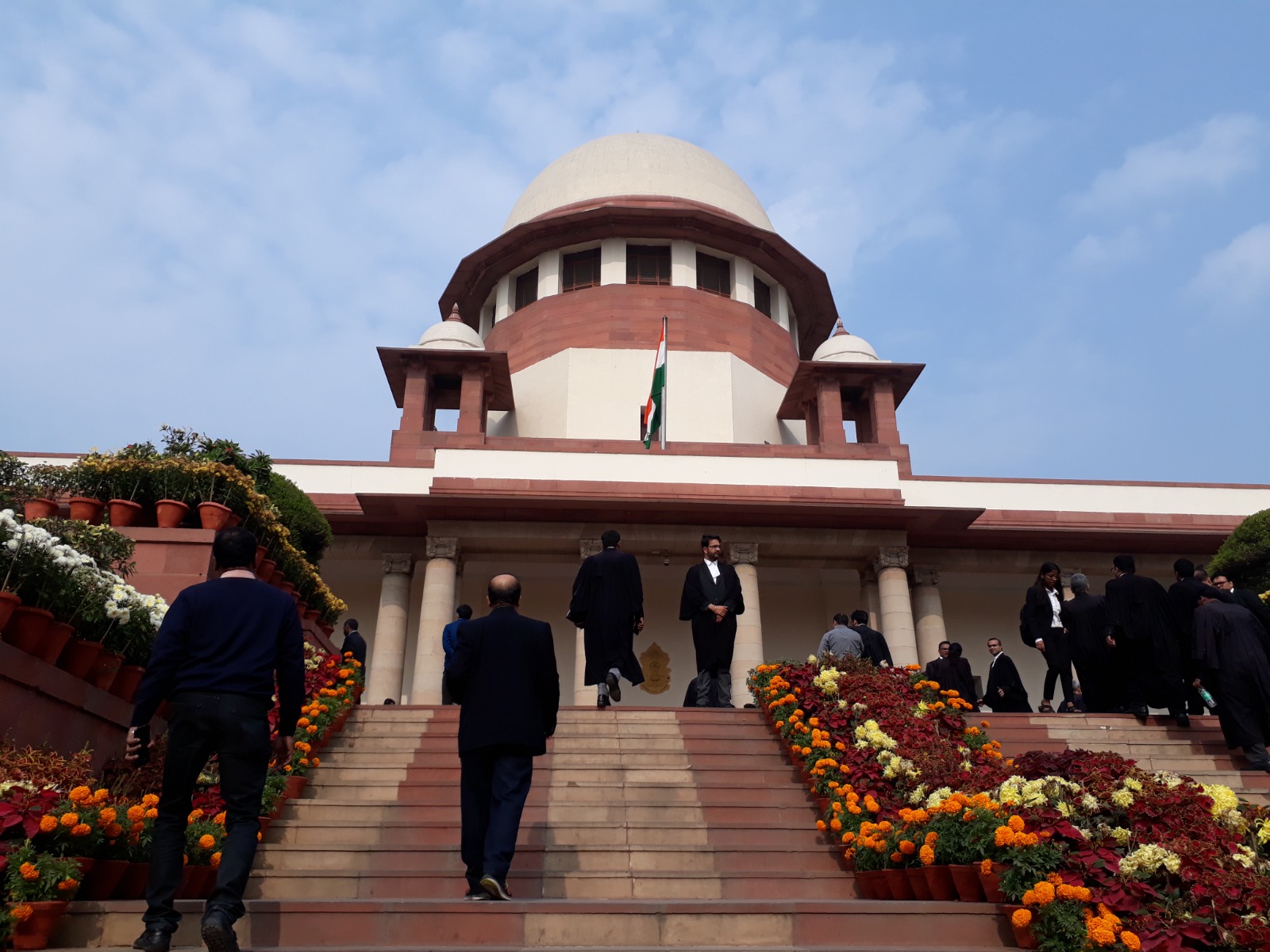
Declaratory Decrees Stand Firm, Even Without Execution, rules Supreme Court
Apex Court: Non-Execution Doesn’t Nullify Rights
Plaintiffs Need Not Seek Enforcement to Retain Validity
By Legal Reporter
New Delhi: April 15, 2026:
The Supreme Court recently clarified an important principle in civil law: a declaratory decree cannot be set aside merely because the plaintiff did not seek its execution. The case involved a challenge to a decree that declared rights but was not followed by an execution petition. The lower courts had questioned its validity, but the Supreme Court stepped in to reaffirm the enduring nature of declaratory relief.
Case Title: Shakuntala Bai & Others v. Mahaveer Prasad .
To understand key legal principles on inheritance disputes, property rights, and succession law, read the full Supreme Court judgment here: Shakuntala Bai vs Mahaveer Prasad Supreme Court judgment on inheritance and property law .
What is a Declaratory Decree?
A declaratory decree is a judicial pronouncement that declares the rights of parties without necessarily ordering enforcement actions. For example, a court may declare ownership of property or the validity of a contract. Unlike money decrees or injunctions, declaratory decrees do not always require execution—they serve as authoritative recognition of rights.
Key Legal Provisions Discussed
- Section 34, Specific Relief Act, 1963
- Empowers courts to issue declaratory decrees.
- A person entitled to any legal character or right may seek a declaration against those denying it.
- Order XXI, Code of Civil Procedure (CPC), 1908
- Governs execution of decrees.
- Declaratory decrees generally do not require execution unless accompanied by consequential relief.
- Judicial Principle: Declaratory Relief is Self-Contained
- The Court emphasized that declaratory decrees are not rendered invalid by non-execution.
- They remain binding and enforceable as recognition of rights.
Supreme Court’s Reasoning
- The Court noted that declaratory decrees are distinct from executable decrees. Their purpose is to settle disputes about rights, not necessarily to compel action.
- Failure to file an execution petition does not extinguish the decree’s validity.
- The Court warned against conflating declaratory relief with executable relief, as this would undermine the utility of declaratory decrees.
- It reaffirmed that once a declaration is granted, it continues to bind parties unless overturned by appeal or review.
Precedents Considered
- K.K. Dewan v. District Judge, Chandigarh: Declaratory decrees are valid even without execution.
- Supreme Court’s earlier rulings: Declaratory relief serves a preventive and clarificatory function, ensuring parties know their rights.
Implications of the Judgment
- For Litigants: Plaintiffs who secure declaratory decrees need not worry about filing execution petitions unless consequential relief is sought.
- For Courts: Reinforces the distinction between declaratory and executable decrees, ensuring clarity in civil procedure.
- For Legal Practice: Encourages use of declaratory relief to settle disputes about rights without unnecessary procedural hurdles.
- For Rule of Law: Strengthens certainty of rights by ensuring declaratory decrees remain valid and binding.
[RESEARCH RESOURCES]
EXTRACTS FROM BOOK, WILL WRITING SIMPLIFIED, By Dr Ravinder Kumar Anand. [📘 Buy Will Writing Simplified online: Amazon | Flipkart ]
FAQ: Key Legal Points Simplified on Declaratory Decree
Q1: What is a declaratory decree?
It is a court order that declares the rights of parties without necessarily requiring enforcement action.
Q2: Does a declaratory decree need execution?
No. Declaratory decrees are self-contained and remain valid even without execution.
Q3: What law governs declaratory decrees?
Section 34 of the Specific Relief Act, 1963 empowers courts to issue declaratory decrees.
Q4: What happens if a plaintiff doesn’t seek execution?
The decree remains valid. Non-execution does not nullify the declaration of rights.
Q5: How are declaratory decrees different from other decrees?
Unlike money decrees or injunctions, declaratory decrees do not compel action—they simply recognize rights.
Q6: Can declaratory decrees be challenged?
Yes, but only through appeal or review. They cannot be set aside merely for non-execution.
Q7: Why is this ruling significant?
It ensures that declaratory decrees retain their binding force, protecting litigants’ rights without procedural complications.
Conclusion
The Supreme Court’s ruling reinforces the enduring validity of declaratory decrees, ensuring that recognition of rights is not undermined by procedural technicalities. By clarifying that non-execution does not nullify such decrees, the Court has strengthened the role of declaratory relief in civil law. This judgment provides certainty to litigants and ensures that declaratory decrees continue to serve their purpose: settling disputes about rights and preventing future conflicts.