
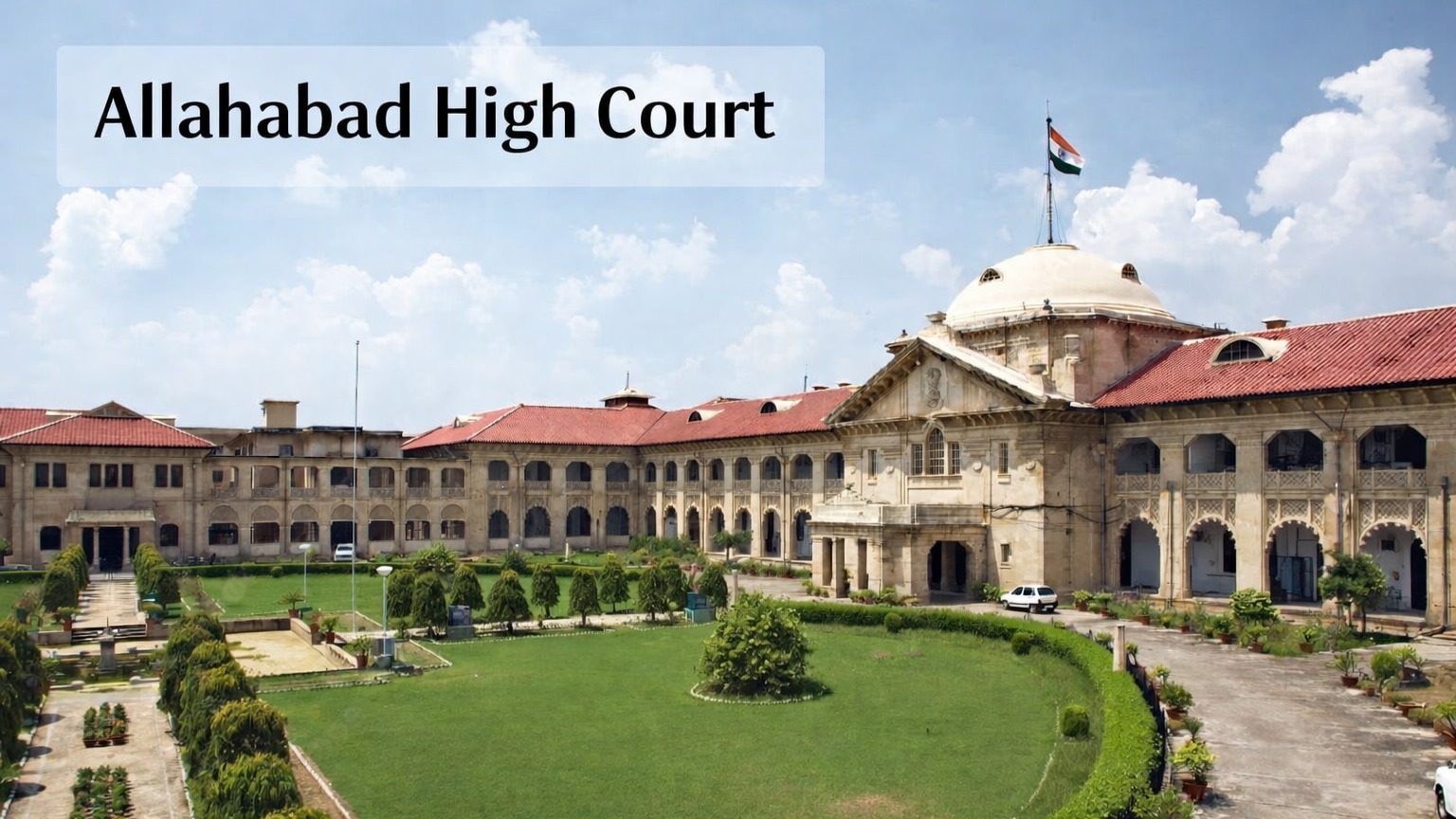
HC Rules Daughter-in-Law Not Liable to Maintain Parents-in-Law
Moral duty cannot replace statutory mandate, says Allahabad High Court.
Judgment clarifies scope of maintenance under CrPC and BNSS provisions.
By Our Legal Correspondent
New Delhi: April 01, 2026:
In a landmark ruling, the Allahabad High Court has declared that a daughter-in-law is not legally obligated to provide financial maintenance to her parents-in-law. The case arose after an elderly couple sought maintenance from their daughter-in-law following the death of their son, who had been their primary breadwinner. The court’s decision underscores the distinction between moral responsibility and legal enforceability, reshaping the understanding of family obligations under Indian law.
For a deeper understanding, explore the full database of Supreme Court judgments on wills.
The Case Background
- The couple’s son, a constable in the Uttar Pradesh Police, died in 2021.
- Financially dependent on him, the parents sought maintenance from their daughter-in-law.
- Their plea was rejected by the family court in 2025, leading to an appeal before the High Court.
- Justice Madan Pal Singh dismissed the revision petition, ruling that parents-in-law are not included in the statutory categories eligible for maintenance under Section 125 of the CrPC (now Section 144 of the BNSS).
Key Legal Points
- Section 125 CrPC / Section 144 BNSS: Provides maintenance rights to wives, children, and parents, but not parents-in-law.
- Statutory Right: Maintenance is a statutory right, confined to categories expressly mentioned in the law.
- Moral vs Legal Duty: The court emphasized that moral obligations cannot be enforced as legal duties without legislative mandate.
Implications of the Judgment
- For Families: Parents-in-law cannot claim maintenance from daughters-in-law; their rights are limited to children or other statutory categories.
- For Courts: Reinforces strict adherence to statutory provisions, preventing expansion of maintenance rights beyond legislative intent.
- For Society: Highlights the gap between moral expectations and legal enforceability in family relationships.
Comparative Context
- In many jurisdictions, maintenance laws are limited to direct dependents (spouse, children, parents).
- India’s law follows this principle, ensuring clarity in succession and maintenance disputes.
- The ruling aligns with earlier judgments that restrict maintenance claims to statutory categories.
Legal professionals and students alike will benefit from Will Writing Simplified, which covers procedure and case law in detail. Amazon. 📘 Buy "Will Writing Simplified" online: 🔹 Flipkart
FAQs
Q1. Can parents-in-law claim maintenance from a daughter-in-law?
No. The High Court ruled that parents-in-law are not covered under Section 125 CrPC / Section 144 BNSS.
Q2. What is the difference between moral and legal duty?
A moral duty is based on social expectations, while a legal duty must be backed by statutory law.
Q3. Who can claim maintenance under Indian law?
Wives, children, and parents are eligible under Section 125 CrPC / Section 144 BNSS.
Q4. Does this ruling affect succession rights?
No. Succession rights are governed separately under the Hindu Succession Act and other laws.
Q5. What options do parents-in-law have?
They may seek support from their own children or rely on social welfare schemes, but not from daughters-in-law.
Q6. Is this ruling final?
Yes, unless overturned by a higher court or amended by legislation.
Summary Note of FAQs
The Allahabad High Court clarified that daughters-in-law are not legally bound to maintain parents-in-law. Maintenance rights remain confined to statutory categories such as wives, children, and parents. The ruling highlights the distinction between moral expectations and enforceable legal duties.
Suggested Keywords for SEO
- Daughter-in-law maintenance law India
- Allahabad High Court ruling parents-in-law
- Section 125 CrPC maintenance rights
- Section 144 BNSS family law India
- Moral vs legal duty in family law
- Parents-in-law maintenance rights India
- Indian succession and maintenance disputes