
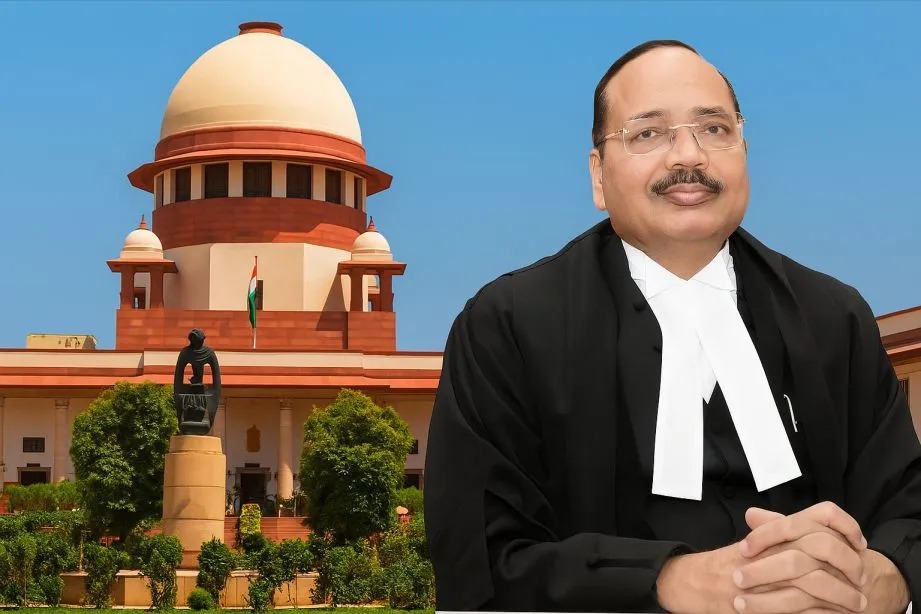
CJI Surya Kant Slams Repeated Recusals in Punjab & Haryana HC, Warns Senior Advocates Against Havoc
Supreme Court directs High Court judges not to recuse despite pressure tactics
Judicial independence and Bar conduct under sharp scrutiny
By Legal Reporter
New Delhi: June 18, 2026:
Chief Justice of India Surya Kant has raised alarm over repeated recusals by Punjab and Haryana High Court judges in a case concerning a dismissed judicial officer, warning that “three or four so-called senior advocates” are creating havoc and influencing proceedings. The Supreme Court directed the High Court to constitute a two-judge bench that must hear the matter without further recusals.
Case Background
Case Title: Amrish Kumar Jain v. State of Punjab
Court: Supreme Court of India, Bench of CJI Surya Kant and Justice V. Mohana
Date: June 17, 2026
Facts:
A former judicial officer challenged his dismissal from service.
Four successive benches of Punjab & Haryana HC recused: Justice Lisa Gill, the then Chief Justice, Justice Ashwini Kumar Mishra, Justice Dipak Sibal, and Justice Sanjiv Berry.
Petitioner sought transfer to another High Court.
Supreme Court declined transfer, instead directing HC to form a Division Bench and hear the matter on a day-to-day basis from July 13, 2026.
CJI Surya Kant remarked that “three or four so-called senior advocates” were creating havoc and warned of serious consequences if mischief continued.
Key Legal Principles
1. Judicial Independence
Independence of the judiciary is part of the basic structure of the Constitution.
Judges must not yield to external influence or intimidation.
2. Doctrine of Recusal
Recusal ensures impartiality but must not be misused.
Excessive recusals can delay justice and undermine public confidence.
Supreme Court stressed that judges should not recuse “irrespective of situations created by anyone.”
3. Role of the Bar
Advocates are officers of the court and must uphold fairness.
Pressure tactics or attempts to influence judicial proceedings amount to professional misconduct.
CJI’s remarks highlight accountability of senior advocates.
4. Supreme Court’s Supervisory Role
Under Article 136 and 142 of the Constitution, SC can intervene to ensure justice.
Here, SC monitored proceedings, ordered compliance reports, and fixed timelines.
Analytical Insights
Crisis of Confidence: Repeated recusals suggest systemic pressure on judges, raising concerns about judicial independence.
Bar Conduct: CJI’s remarks expose unhealthy dynamics between senior advocates and the Bench.
Judicial Accountability: SC’s directive ensures case is heard without derailment, reinforcing accountability.
Policy Implication: May trigger debate on codified guidelines for recusals to prevent misuse.
FAQ – Quick Legal Index
Q1: Why did the Supreme Court intervene?
Because four successive HC judges recused, delaying justice and raising concerns of external influence.
Q2: What did CJI Surya Kant say?
He warned that “three or four so-called senior advocates” were creating havoc and influencing proceedings.
Q3: Can judges recuse freely?
Yes, but recusal must be based on genuine conflict of interest, not external pressure.
Q4: What constitutional principle is at stake?
Judicial independence, part of the basic structure doctrine.
Q5: What action did SC take?
Directed HC to form a Division Bench, hear case daily from July 13, 2026, and submit compliance report.
Q6: Are senior advocates liable for misconduct?
Yes. Pressure tactics or influencing judges can amount to professional misconduct under Bar Council of India rules.
Q7: What precedent does this set?
It reinforces that SC will monitor proceedings to safeguard judicial independence and prevent derailment.
Conclusion
The Supreme Court’s intervention in the Punjab & Haryana High Court recusals case underscores the fragility of judicial independence when external pressures mount. By warning senior advocates and directing judges not to recuse, CJI Surya Kant has sent a strong message: justice must not be derailed by intimidation or manipulation. This ruling may pave the way for stricter norms on recusals and renewed emphasis on ethical conduct within the Bar.