

CCI Probe Exposes Cement Cartel in ONGC Tenders
Companies Found Guilty of Bid Rigging
Commission Reinforces Transparency in Public Procurement
By Legal Reporter
New Delhi: March 10, 2026:
Also Read: CJI Surya Kant Warns Young Lawyers: “Don’t File PILs for Media Publicity”
In a landmark order, the Competition Commission of India (CCI) has uncovered a cartel among cement manufacturers that colluded in tenders floated by the Oil and Natural Gas Corporation (ONGC). The Commission found that the companies engaged in bid rigging and collusive practices, thereby violating Section 3 of the Competition Act, 2002, which prohibits anti-competitive agreements.
The ruling is significant as it involves one of India’s largest public sector undertakings and highlights how cartelization can distort fair competition in critical sectors like cement supply for oil and gas projects.
Background of the Case
- ONGC Tenders: Issued for procurement of cement required in drilling and exploration projects.
- Allegations: Multiple cement companies coordinated bids, ensuring predetermined winners.
- CCI Investigation: Initiated after suspicious bidding patterns were reported.
- Findings: Companies shared sensitive information, manipulated prices, and restricted competition.
The Commission concluded that such practices harmed ONGC by inflating procurement costs and undermined the integrity of public tendering.
[Recommended Resource for Legal Readers]
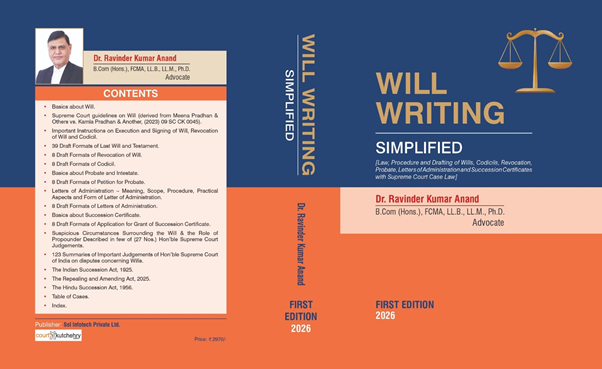
Legal professionals, families and students alike will benefit from Will Writing Simplified, which covers procedure and case law in detail. It is available on Amazon. 📘 Buy Will Writing Simplified online: 🔹 Flipkart.
Also Read: Passport Rules India 2026: Birth Certificate Now Mandatory for Date of Birth Proof
Court’s Observations
- Bid Rigging: The companies engaged in collusive bidding, violating competition law.
- Public Interest: Cartelization in public tenders causes financial loss to government entities.
- Legal Principle: Section 3 of the Competition Act prohibits agreements that limit competition.
- Accountability: Companies must face penalties and corrective measures to restore fair competition.
Impact of the Judgment
- For Cement Industry: Reinforces strict scrutiny of bidding practices and deters cartelization.
- For Public Sector Procurement: Ensures transparency and fair competition in government tenders.
- For Legal Practice: Strengthens jurisprudence on bid rigging and cartel behaviour under competition law.
- For Governance: Protects taxpayer money by preventing inflated procurement costs.
Also Read: Bombay HC Quashes Rape Case: Consensual Relationship Cannot Be Treated as False Promise of Marriage
This ruling will have far-reaching implications, ensuring that collusion in public tenders is penalized and fair competition is maintained.
Conclusion
The CCI’s probe into the cement cartel in ONGC tenders underscores the importance of vigilance in public procurement. By exposing collusion and penalizing anti-competitive practices, the Commission has reinforced the principle that fair competition is essential for economic integrity and public interest. This judgment will serve as a precedent for future cases, ensuring that cartelization is rooted out from India’s industrial landscape.
Suggested Keywords for SEO & Faster Searches
- CCI cement cartel ONGC tenders
- Competition Commission bid rigging case India
- ONGC procurement cartel exposed
- Cement companies collusion CCI ruling
- Competition Act Section 3 cartelization India
- Public procurement transparency India
- CCI cartel investigation cement industry
- Will Writing Simplified legal drafting book
Also Read: Delhi HC Grants Anticipatory Bail to Army Officer in False Promise of Marriage Case