
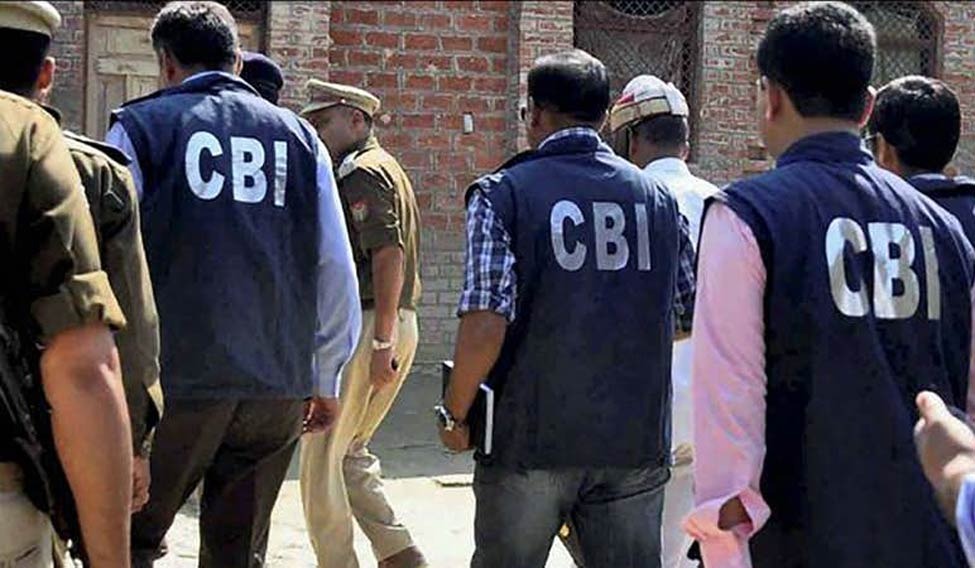
CBI Storms Real Estate Sector
22 FIRs Against Builders Across Eight States
Crackdown Targets Cheating, Delays, and Diversion of Funds
By Legal Reporter
New Delhi: April 15, 2026:
The Central Bureau of Investigation (CBI) has launched a sweeping crackdown on builders, filing 22 new FIRs and conducting raids at 77 locations across eight states. The action comes amid mounting complaints of homebuyers being cheated through delayed projects, diversion of funds, and fraudulent practices.
Case Title: Shakuntala Bai & Others v. Mahaveer Prasad .
To understand key legal principles on inheritance disputes, property rights, and succession law, read the full Supreme Court judgment here: Shakuntala Bai vs Mahaveer Prasad Supreme Court judgment on inheritance and property law .
This move reflects the government’s growing emphasis on accountability in the real estate sector, which has historically been plagued by opacity and weak enforcement.
Key Legal Frameworks Involved
- Indian Penal Code (IPC), 1860
- Sections 420 (Cheating) and 406 (Criminal Breach of Trust) are commonly invoked in cases where builders collect money but fail to deliver promised projects.
- Section 120B (Criminal Conspiracy) is often added when multiple actors collude in fraudulent schemes.
- Prevention of Corruption Act, 1988
- Applied when public officials are found complicit in shielding builders or facilitating illegal approvals.
- Real Estate (Regulation and Development) Act (RERA), 2016
- Mandates registration of projects and prohibits diversion of funds.
- Provides homebuyers with a forum to seek redressal, though enforcement remains uneven.
- CBI’s Investigative Powers
- Under the Delhi Special Police Establishment Act, 1946, the CBI can investigate offences across states with consent.
- Its jurisdiction allows probing large-scale frauds that transcend local boundaries.
Court and Regulatory Observations
- The Supreme Court has repeatedly emphasized that homebuyers are consumers, entitled to protection under consumer law as well as RERA.
- In several landmark rulings, the Court has directed refund of money with interest where builders failed to deliver projects.
- The CBI’s action complements judicial efforts, targeting criminal liability rather than just civil remedies.
Why This Crackdown Matters
- Scale of Fraud: Thousands of homebuyers have been left stranded, with projects stalled for years.
- Investor Confidence: Cleaning up the sector is crucial for restoring trust among domestic and foreign investors.
- Systemic Reform: The raids highlight the need for stronger coordination between RERA authorities, state police, and central agencies.
- Deterrence: By filing FIRs and conducting raids, the CBI signals that fraudulent builders will face criminal consequences, not just regulatory penalties.
Implications
- For Builders: Greater scrutiny of financial practices, mandatory compliance with RERA, and risk of criminal prosecution.
- For Homebuyers: Increased hope of accountability, though recovery of funds may still be slow.
- For Regulators: Pressure to strengthen monitoring mechanisms and ensure timely reporting of violations.
- For Judiciary: Likely surge in cases linked to builder fraud, requiring faster adjudication.
[RESEARCH RESOURCES]
EXTRACTS FROM BOOK, WILL WRITING SIMPLIFIED, By Dr Ravinder Kumar Anand. [📘 Buy Will Writing Simplified online: Amazon | Flipkart ]
FAQ: Key Legal Points Simplified
Q1: What offences are builders usually charged with?
Primarily cheating (Section 420 IPC), criminal breach of trust (Section 406 IPC), and criminal conspiracy (Section 120B IPC).
Q2: How does RERA protect homebuyers?
RERA requires builders to register projects, prohibits diversion of funds, and provides a forum for complaints.
Q3: Why is the CBI involved instead of local police?
Because frauds often span multiple states and involve large sums, requiring central investigation under the Delhi Special Police Establishment Act.
Q4: Can homebuyers get refunds through criminal cases?
Criminal cases punish offenders but do not guarantee refunds. Refunds are usually sought through RERA or consumer forums.
Q5: What role does the Prevention of Corruption Act play?
It applies when public officials collude with builders to facilitate fraud or illegal approvals.
Q6: What has the Supreme Court said about builder frauds?
That homebuyers are consumers entitled to protection, and builders must refund money with interest if projects are not delivered.
Q7: What is the broader impact of these FIRs?
They serve as a deterrent, signalling that fraudulent practices in real estate will attract criminal liability.
Conclusion
The CBI’s filing of 22 FIRs and raids across eight states marks one of the most significant crackdowns on builder fraud in recent years. By invoking provisions of the IPC, RERA, and corruption laws, the agency is addressing both criminal and regulatory dimensions of the problem. For homebuyers, this action offers renewed hope of accountability, while for the real estate sector, it underscores the urgent need for transparency and compliance.
This is not just about punishing errant builders—it is about restoring faith in India’s housing market and ensuring that justice is delivered not only in courtrooms but also in the homes promised to citizens.