
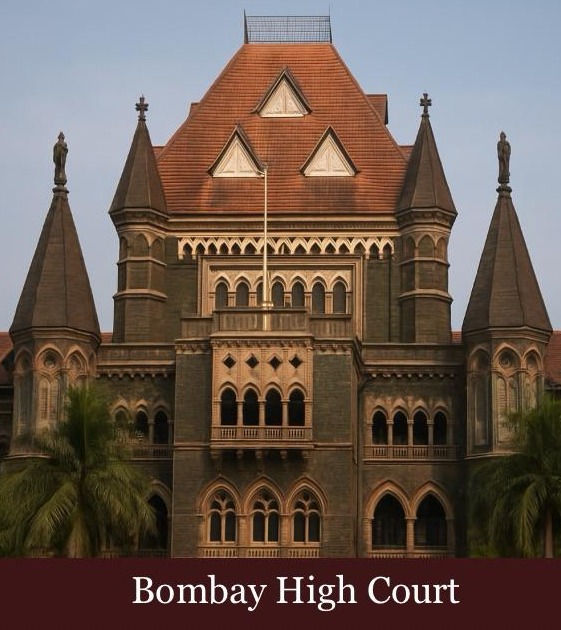
Bombay HC: Inquiry Into Forged Judicial Orders Must Precede Recall Applications
Court emphasizes sanctity of judicial records and need for verification before recall.
Forgery allegations require inquiry to protect integrity of justice system.
By Legal Reporter
New Delhi: June 26, 2026:
The Bombay High Court has ruled that when allegations of forged judicial orders arise, a proper inquiry must precede any recall application. This ensures that the integrity of judicial records is preserved and that recall jurisdiction is exercised only after verifying authenticity. The decision underscores the sanctity of court orders and the procedural safeguards required before altering them.
1. Case Background
The matter before the Bombay High Court involved allegations that forged judicial orders had been placed on record. A recall application was filed seeking to nullify the orders. The Court, however, clarified that recall jurisdiction cannot be exercised mechanically; instead, an inquiry into the authenticity of the alleged forged orders must precede any recall.
This ruling is significant because it addresses the delicate balance between correcting fraudulent records and maintaining the sanctity of judicial proceedings.
2. Key Legal Issues
Recall Jurisdiction: Whether courts can recall orders based solely on allegations of forgery.
Forgery of Judicial Records: How courts should respond when authenticity of orders is questioned.
Procedural Safeguards: Whether inquiry is mandatory before recall.
Integrity of Judicial System: How to protect credibility of judicial records against manipulation.
3. Court’s Observations
Inquiry First, Recall Later: The Court held that allegations of forgery must be investigated before recall jurisdiction is exercised.
Sanctity of Judicial Records: Judicial orders carry presumption of authenticity; this cannot be displaced without inquiry.
Due Process: Parties must be given opportunity to present evidence before recall.
Limited Recall Jurisdiction: Recall is not a substitute for appeal or review; it is confined to correcting fraud or procedural irregularities.
Justice G.S. Kulkarni observed: “The sanctity of judicial records cannot be compromised. Allegations of forgery must be tested through inquiry before recall jurisdiction is invoked.”
4. Statutory Framework
Code of Civil Procedure, 1908 (Order IX Rule 13, Section 151): Provides for recall of orders in limited circumstances.
Indian Penal Code, 1860 (Sections 463–471): Defines and penalizes forgery of documents, including judicial records.
Evidence Act, 1872: Governs proof of documents and presumption of authenticity of judicial records.
Contempt of Courts Act, 1971: Addresses interference with administration of justice, including manipulation of records.
5. Key Legal Principles
Presumption of Authenticity: Judicial orders presumed valid unless proven forged.
Inquiry Requirement: Courts must investigate forgery allegations before recall.
Limited Recall Jurisdiction: Recall confined to fraud or procedural irregularities, not merits.
Protection of Judicial Integrity: Courts must safeguard credibility of records.
6. Implications of the Judgment
For Litigants: Allegations of forgery must be substantiated through inquiry before recall.
For Courts: Reinforces procedural safeguards in recall jurisdiction.
For Judicial Records: Strengthens presumption of authenticity and credibility.
For Legal System: Ensures balance between correcting fraud and preserving sanctity of orders.
7. Comparative Perspective
Indian Courts: Consistently emphasize inquiry before recall in forgery cases.
Supreme Court Precedents: Recall jurisdiction limited to fraud or procedural irregularities (Indian Bank v. Satyam Fibres).
Global Jurisdictions: Similar emphasis on inquiry before altering judicial records.
Trend: Courts worldwide prioritize integrity of judicial records over expediency.
FAQ: Legal Points Simplified
Q1: What is recall jurisdiction?
It allows courts to recall orders in limited circumstances, such as fraud or procedural irregularities.
Q2: Can courts recall orders based on allegations of forgery?
No. Allegations must be investigated through inquiry before recall.
Q3: What laws govern forgery of judicial records?
Sections 463–471 of the Indian Penal Code, 1860.
Q4: What presumption applies to judicial records?
They are presumed authentic unless proven otherwise.
Q5: What is the difference between recall and appeal?
Recall corrects fraud or irregularities; appeal challenges merits of the order.
Q6: Why is inquiry necessary before recall?
To protect sanctity of judicial records and ensure due process.
Q7: What precedent does this set?
It reinforces that forgery allegations must be tested through inquiry before recall jurisdiction is exercised.
Conclusion
The Bombay High Court’s ruling is a landmark in procedural law, clarifying that inquiry into forgery must precede recall applications. This ensures that judicial records retain their sanctity and that recall jurisdiction is exercised only after verifying authenticity.
By prioritizing inquiry and due process, the Court has strengthened the integrity of the judicial system, ensuring that fraudulent manipulation of records cannot undermine justice.
Citations
Code of Civil Procedure, 1908 (Order IX Rule 13, Section 151)
Indian Penal Code, 1860 (Sections 463–471)
Evidence Act, 1872 provisions on documentary proof
Supreme Court precedent: Indian Bank v. Satyam Fibres (India) Pvt. Ltd. (1996)