
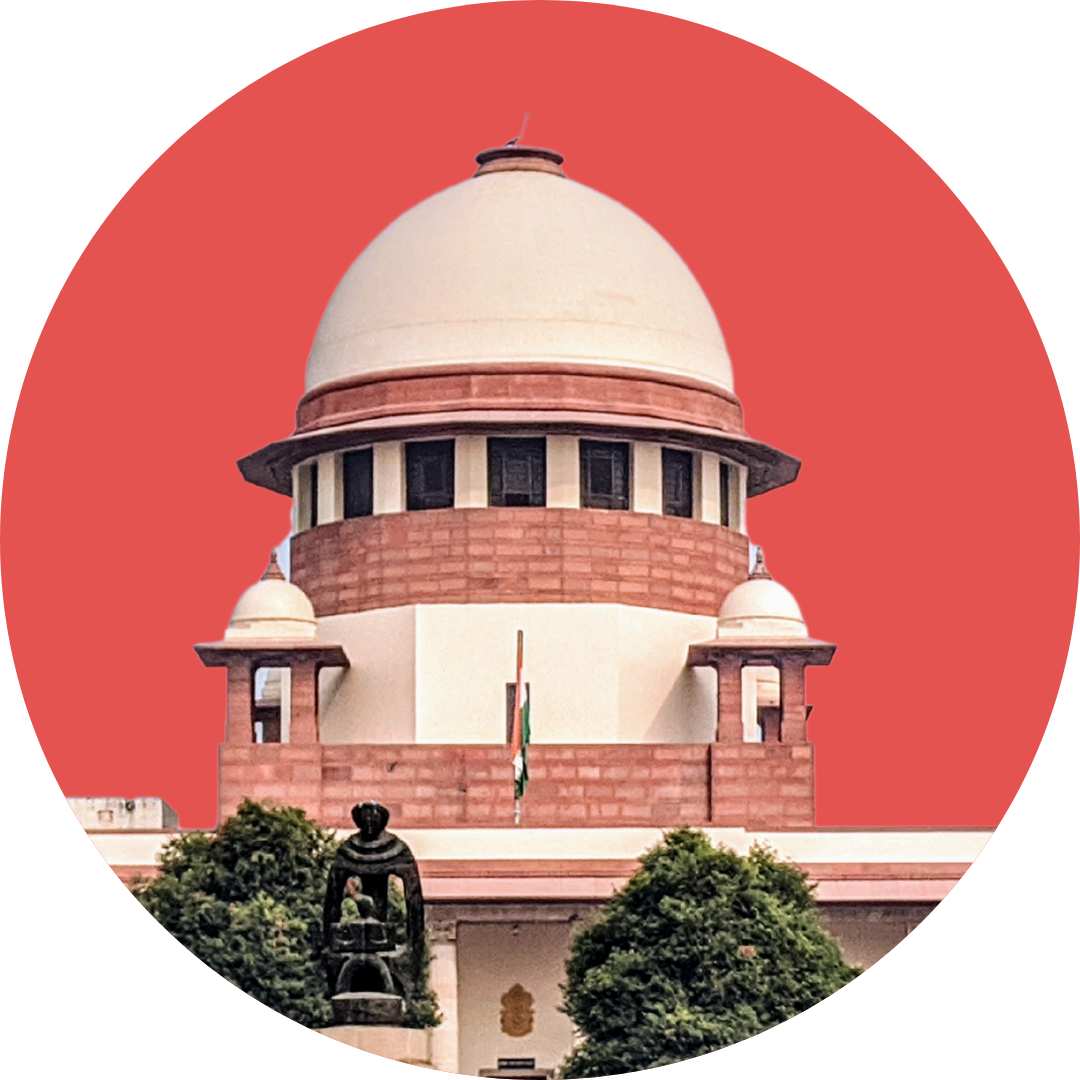
Supreme Court Restricts High Courts’ Supervisory Powers Under Article 227
Jurisdiction limited to correcting excesses, not merits
Appellate substitution declared impermissible
By Legal Reporter
New Delhi: May 03, 2026:
The Supreme Court has clarified the scope of Article 227 jurisdiction, ruling that High Courts cannot act as appellate bodies to re-examine merits or substitute their own views for those of subordinate courts. The judgment emphasizes that supervisory jurisdiction is limited to correcting jurisdictional errors or perverse findings.
In disputes involving proof of wills, suspicious circumstances, and competing inheritance claims, the judgment in Bhagwan Kaur vs Kartar Kaur provides important guidance on how courts assess the validity of testamentary documents, evaluate evidence, and determine the genuineness of a will under Indian succession law.
Background
The case involved Nandi Infrastructure Corridor Enterprises Ltd. (NICE) and landowners in Bengaluru. A compromise in 2007 required NICE to provide alternate land or compensation. When NICE failed, the executing court fixed compensation at ₹1,000 per sq. ft. The Karnataka High Court, invoking Article 227, reduced it to ₹500 per sq. ft. The Supreme Court set aside this reduction, restoring the executing court’s order.
Key Legal Provisions Discussed
- Article 227 of the Constitution of India
- Grants High Courts supervisory jurisdiction over subordinate courts and tribunals.
- Intended to ensure that lower courts act within their jurisdiction and do not commit gross errors.
- Not meant to allow re-appreciation of evidence or substitution of findings.
- Principles Laid Down by the Supreme Court
- Supervisory power is to be exercised only in cases of:
- Unwarranted assumption of jurisdiction not vested in the court/tribunal.
- Gross abuse of jurisdiction.
- Unjustifiable refusal to exercise jurisdiction.
- High Courts cannot act as appellate courts under Article 227.
- Supervisory jurisdiction is not meant to correct every factual or legal error.
- Courts must avoid reweighing evidence or substituting their own conclusions.
- Supervisory power is to be exercised only in cases of:
- Distinction Between Appellate and Supervisory Jurisdiction
- Appellate jurisdiction allows re-examination of facts and law.
- Supervisory jurisdiction is narrower, focusing only on jurisdictional excesses or perversity.
- The Supreme Court stressed that conflating the two undermines judicial hierarchy.
Court’s Reasoning
- High Court Overreach: By reducing compensation, the High Court effectively re-examined merits and substituted its view, which is impermissible under Article 227.
- Preserving Judicial Discipline: Supervisory jurisdiction must remain narrow to prevent High Courts from interfering unnecessarily in subordinate court decisions.
- Restoring Executing Court’s Order: Since the executing court’s decision was reasonable and within jurisdiction, the Supreme Court reinstated it.
Implications of the Judgment
- For High Courts: Clear boundaries are set Article 227 cannot be used as a backdoor appellate mechanism.
- For Litigants: Provides certainty that supervisory jurisdiction will not reopen factual disputes.
- For Judicial System: Reinforces judicial hierarchy and prevents overburdening High Courts with appeals disguised as writ petitions.
Critical Analysis
This ruling is a reaffirmation of long-standing jurisprudence but with sharper clarity. It prevents misuse of Article 227 petitions as surrogate appeals. While litigants may feel constrained, the judgment ensures judicial efficiency and respects the autonomy of subordinate courts. The distinction between appellate and supervisory jurisdiction is crucial for maintaining balance in the judicial system.
Detailed FAQ for Easy Understanding
Q1. What is Article 227 jurisdiction?
It gives High Courts supervisory control over subordinate courts and tribunals to ensure they act within jurisdiction.
Q2. Can High Courts re-examine evidence under Article 227?
No. The Supreme Court held that High Courts cannot reweigh evidence or substitute their own findings.
Q3. When can Article 227 be invoked?
Only in cases of jurisdictional excess, gross abuse, or unjustifiable refusal to exercise jurisdiction.
Q4. How is Article 227 different from appellate jurisdiction?
Appellate jurisdiction allows re-examination of facts and law, while supervisory jurisdiction is limited to correcting jurisdictional errors or perversity.
Q5. What was the dispute in this case?
It involved compensation for land acquired by NICE. The executing court fixed ₹1,000 per sq. ft., which the High Court reduced to ₹500 under Article 227.
Q6. What did the Supreme Court decide?
It restored the executing court’s order, holding that the High Court had overstepped its supervisory jurisdiction.
Q7. What is the broader impact of this ruling?
It strengthens judicial discipline, prevents misuse of Article 227, and ensures High Courts do not act as appellate bodies in disguise.
In conclusion, the Supreme Court has drawn a firm line: Article 227 is a supervisory tool, not an appellate weapon. High Courts must respect this boundary to preserve judicial hierarchy and efficiency.