
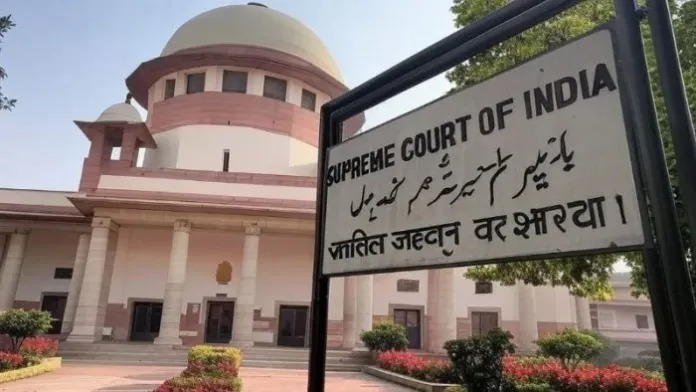
COURTKUTCHEHRY SPECIAL SERIES ON LANDMARKS JUDGEMENTS ON WILLS, CODICIL & PROBATE
Arjan Singh and Others v. Hazara Singh: Supreme Court Restores Acquittal in Forged Will Case
Suspicion Alone Cannot Sustain Conviction
Conflicting Expert Evidence Weakens Prosecution
By Vishwas Kumar
New Delhi: March 28, 2026:
On 14 February 1979, the Supreme Court of India in Arjan Singh and Others v. Hazara Singh (Criminal Appeal No. 213 of 1974) delivered a pivotal ruling on the alleged forgery of a will purportedly executed by Sahib Singh. The Division Bench comprising Hon’ble Mr. Justice S. Murtaza Fazal Ali and Hon’ble Mr. Justice A.D. Koshal examined whether the prosecution had successfully proved that the thumb impression on the disputed will (Exh. PD) was not genuine.
The prosecution’s case rested heavily on expert testimony, but the Court noted that the opinions of handwriting and fingerprint experts were conflicting and inconclusive. More importantly, there was no direct proof establishing that the thumb impression did not belong to Sahib Singh. The Court emphasized that in criminal law, conviction cannot rest on mere suspicion or civil probabilities; the standard of proof must be beyond reasonable doubt.
Highlighting this principle, the Supreme Court held that the evidence presented was insufficient to sustain a conviction for forgery. The prosecution’s inability to dispel doubts about the authenticity of the thumb impression rendered the case unsafe. Consequently, the Court allowed the appeal, restoring the acquittal of the accused.
This judgment underscores the judiciary’s insistence on strict standards of proof in criminal trials. It serves as a reminder that while civil disputes may be decided on probabilities, criminal liability demands certainty and credible evidence. The ruling remains a landmark precedent in safeguarding individuals against wrongful conviction based on suspicion alone.
For More, Read Here the Summary of the Judgement from the Book: WILL WRITING SIMPLIFIED, read below or open page no 436, Chapter 14.1 in the book. (Online book purchase link available here on: Buy online: Amazon | Flipkart
|
|
Case Summary |
: |
Arjan Singh and Others v. Hazara Singh. |
|
|
Court |
: |
Supreme Court of India |
|
|
Citations |
: |
(1979) 02 SC CK 0045: Criminal Appeal No. 213 of 1974. |
|
|
Link |
: |
https://www.courtkutchehry.com/judgements/650353/arjan-singh-and-others-vs-hazara-singh/
|
|
|
Decided on |
: |
14 February 1979 |
|
|
Coram |
: |
Hon’ble Mr. Justice S. Murtaza Fazal Ali and Hon’ble Mr. Justice A.D. Koshal. (Division Bench) |
|
|
Relevant Paragraphs |
: |
Para Nos. 1-3 |
1. Facts of the Case
The appellants were prosecuted for forging a Will (Exh. PD) alleged to have been executed by Sahib Singh in their favour. The trial court acquitted them for lack of direct proof. On State appeal, the Punjab & Haryana High Court reversed the acquittal and convicted them under Sections 467 and 471 IPC, sentencing two years’ R.I. on each count (concurrent). One accused (Bachan Singh) had died and the appeal abated. The alleged forgery rested solely on an expert opinion that the thumb impression on Exh. PD did not match that on Exh. PA (admitted).
2. Law Points Involved
(i). Standard of proof in criminal prosecution for forgery of a Will.
(ii). Evidentiary value and limitations of expert evidence under Section 45 Evidence Act.
(iii). Distinction between “suspicious circumstances” relevant in civil will-disputes and the proof required for criminal conviction under Sections 467 and 471 IPC.
3. Acts / Provisions / Articles Referred
(i). Indian Penal Code, 1860 — Sections 467 & 471
(ii). Indian Evidence Act, 1872 — Section 45 (expert evidence, implied)
4. Judgments Referred
No specific precedents were cited in the text; the Court distinguished the approach for civil suspicious-circumstance analysis from criminal proof requirements.
5. Obiter Dicta
Suspicious circumstances surrounding a Will, even if strong, cannot substitute proof of forgery beyond reasonable doubt. Matters that may influence a civil court cannot form the basis of criminal conviction without conclusive evidence.
6. Ratio Decidendi
Where expert evidence is conflicting and unreliable, and no direct evidence of forgery exists, the benefit of doubt must go to the accused. The High Court erred in reversing acquittal based merely on suspicious circumstances and speculative reasoning. Suspicion, however strong, cannot replace proof.
7. Final Ruling
The Supreme Court allowed the appeal, set aside the High Court’s conviction and restored the trial court’s acquittal. Appellants were acquitted of all charges and discharged from bail bonds.
8. Gist / Dispute & Final Decision
The dispute centered on the alleged forgery of a Will (Exh. PD) purportedly executed by Sahib Singh. The prosecution failed to establish that the thumb impression was not his. Conflicting expert opinions and absence of direct proof rendered the prosecution case unsafe. The Supreme Court reaffirmed that criminal conviction cannot rest on mere suspicion or civil probabilities. Appeal allowed — acquittal restored.
Read full Judgement Here:
Arjan Singh and Others v. Hazara Singh.
Supreme Court of India
(1979) 02 SC CK 0045: Criminal Appeal No. 213 of 1974.
https://www.courtkutchehry.com/judgements/650353/arjan-singh-and-others-vs-hazara-singh/
You Can Also Purchase the Book from here on: Buy online: Amazon | Flipkart
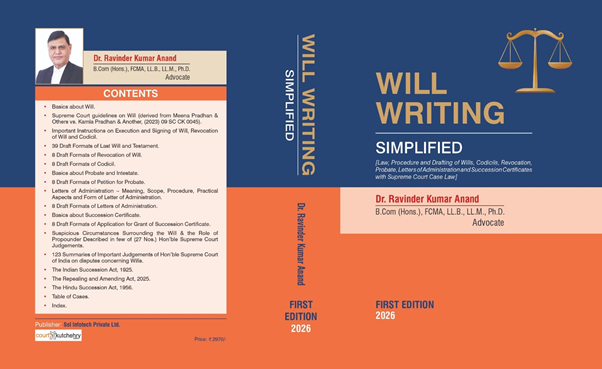
OUR RECOMMENDATION: Check out 123 Key Judgements, as highlighted in the book, WILL WRITING SIMPLIFIED, for the quick research and reference purposes. Click the link here: https://www.courtkutchehry.com/pages/blog/123-supreme-court-judgments-on-wills/
Keywords for SEO & Quick Search
- Arjan Singh v. Hazara Singh Supreme Court case
- 1979 Indian Supreme Court forgery judgment
- Sahib Singh disputed will case
- Criminal conviction suspicion Supreme Court ruling
- Justice Murtaza Fazal Ali forgery case decision
- Civil vs criminal proof standard India
- Criminal Appeal No. 213 of 1974 Supreme Court