
NO-FAULT REDRESS: HOW THE AP HIGH COURT SAFEGUARDS MOTOR ACCIDENT VICTIMS REGARDLESS OF DRIVER ERROR
Unpacking the Statutory Shield of Section 163A under the Motor Vehicles Act
Why Welfare Legislation Trumps Traditional Tort Liability in Road Accident Claims
By Legal Editor
New Delhi: July 06, 2026:
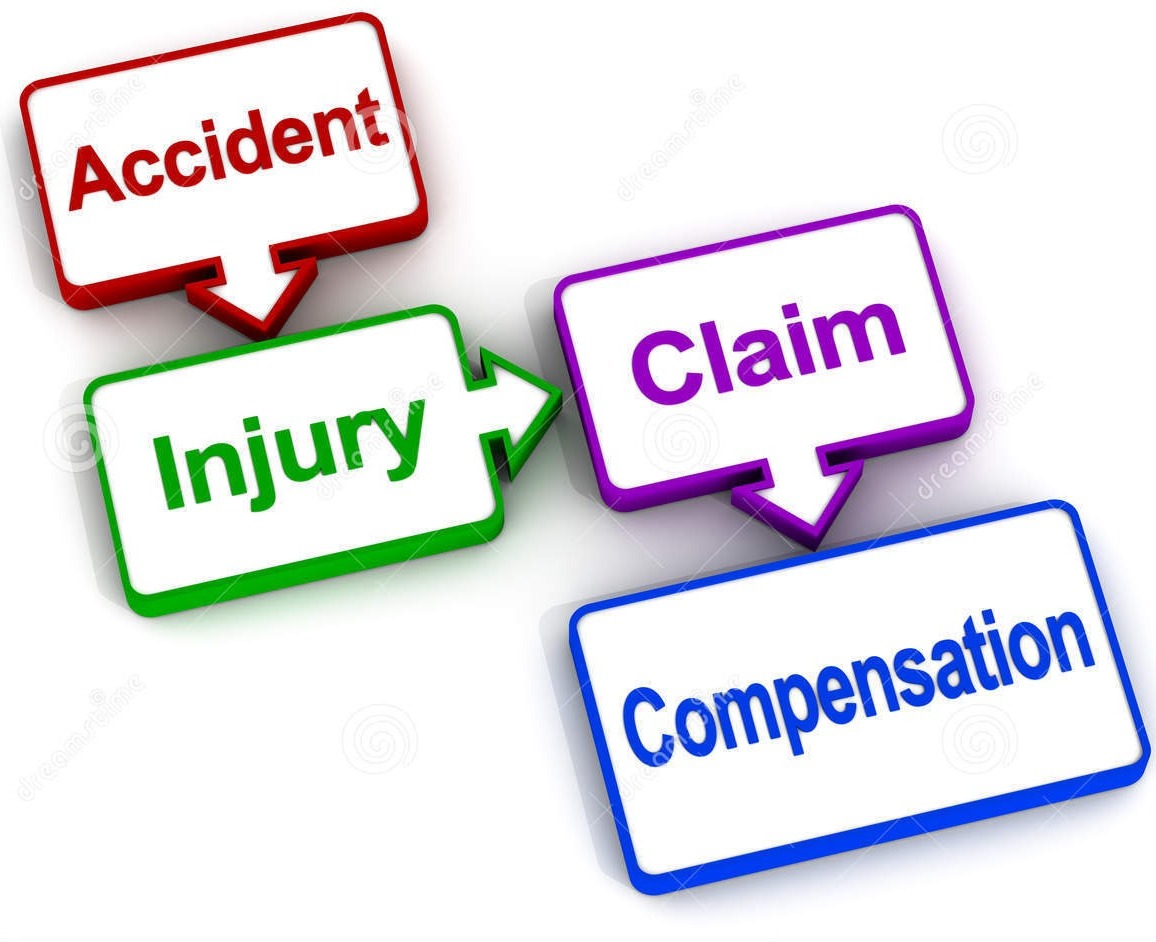
The jurisprudence surrounding motor accident compensation in India has long undergone a transformative evolution from a traditional, fault-based liability regime to an inclusive, social-welfare-oriented structure. At the absolute heart of this evolution is the statutory fine-tuning of the . In an analytical landmark ruling under the citation 2026 LiveLaw (AP) 109, the Andhra Pradesh High Court, presided over by Justice Venkateswarlu Nimmagadda, reaffirmed a cornerstone principle of social security law: the proven or alleged negligence of a deceased driver does not strip their legal heirs of the statutory right to seek compensation under Section 163A of the Act.
Article 19 of the Indian Constitution guarantees essential freedoms that form the foundation of a democratic society, including the freedom of speech and expression, peaceful assembly, association, movement, residence, and profession. These rights are subject to reasonable restrictions imposed in the interest of national security, public order, decency, morality, and the sovereignty and integrity of India. To understand the constitutional scope, landmark judicial interpretations, and evolving legal principles, explore this comprehensive guide on Article 19 of the Constitution of India.
By declaring that Section 163A stands as a piece of beneficial social-welfare legislation, the High Court effectively decoupled the concept of financial restitution from the long-standing legal prerequisites of proving a lack of fault. This decision underscores a deliberate legislative and judicial intent to prioritize human vulnerability and familial rehabilitation over mechanical legal technicalities.
The Historical Continuum: Fault vs. No-Fault Liability
To fully appreciate the weight of the High Court's ruling, one must dissect the structural bifurcation embedded within India’s motor accident claims framework. The , offers two primarily distinct litigation pathways for victims or their legal representatives:
1. Section 166: The Fault-Based Principle
Under this section, claimants must establish standard tortious liability. The burden of proof rests heavily upon the claimant to demonstrate that the accident was a direct consequence of the rash, reckless, or negligent driving of the offending vehicle's operator. This process routinely translates into protracted, exhaustive legal battles, leaving devastated families without immediate economic assistance while tribunals pore over police spot-maps, forensic data, and eyewitness depositions.
2. Section 163A: The No-Fault Structured Formula Basis
Introduced via a critical legislative amendment, Section 163A operates on an entirely different legal dimension. It bypasses the requirement of establishing blameworthiness. It explicitly mandates that in claims arising from death or permanent disablement due to an accident involving a motor vehicle, the claimant is not required to plead or establish that the casualty was due to any wrongful act, neglect, or default. Instead, compensation is computed using a rigid, mathematically structured formula originally set out in the Second Schedule of the Act.
The socio-legal conflict arises when the insurance companies argue that if the deceased driver was themselves negligent, their legal heirs are stepping into the shoes of a "wrongdoer" rather than an innocent third party. In this case, the Andhra Pradesh High Court firmly shut down this defence, clarifying that the protective umbrella of Section 163A is designed precisely to eliminate such inquiries into human error.
Deconstructing the Statutory Mechanism of Section 163A
The legislative framework of Section 163A contains unique textual mechanisms designed to optimize the delivery of social justice.
The application of this section hinges on a non-obstante clause ("Notwithstanding anything contained in this Act or in any other law..."), which effectively gives the provision an overriding statutory authority. By utilizing this clause, Parliament intended to create an absolute right to remedy, completely independent of traditional concepts within the law of torts.
Reconciling the Conflicting Judicial Landscape
The legal landscape surrounding self-accidents and driver negligence has seen significant evolution, with various courts interpreting the boundary lines of "no-fault" coverage differently.
The Self-Tortfeasor or Boundary
Historically, courts have struggled with cases where a driver's extreme rashness or a singular vehicle accident results in death. For instance, in landmark precedents such as Ningamma v. United India Insurance Co. Ltd. (2009), the Supreme Court noted that the legal heirs of a deceased borrower-driver who steps into the exact shoes of the vehicle owner cannot casually claim third-party status against their own insurance policy under Section 163A if no other vehicle is involved.
Furthermore, very recent rulings, including an appellate judgment from the Supreme Court on , have emphasized that the no-fault liability framework does not extend to entirely self-inflicted accidents where reckless behaviour is overwhelmingly proven by state charge-sheets, asserting that a tortfeasor cannot profit from their own explicit wrong.
The Balancing Welfare Approach
Conversely, the judiciary frequently corrects overly aggressive insurance denials by highlighting those technical mechanical failures, such as tyre bursts or sudden road hazards, should not be weaponized against grieving families. This tension is evident in the Supreme Court’s reference in Wakia Afrin (Minor) v. M/S National Insurance Co. Ltd. (2025), where the court noted the urgent necessity for an authoritative larger-bench pronouncement to ensure that the social security purpose of Section 163A is not altogether diluted by complex contractual fine print.
The Andhra Pradesh High Court's decision aligns directly with this protective judicial philosophy. By ruling that the driver's alleged negligence is ultimately irrelevant, Justice Nimmagadda preserved the primary legislative intent: safeguarding dependent family members from absolute destitution following the sudden loss of a primary breadwinner.
Conclusion: Upholding the Spirit of Social Security
The Andhra Pradesh High Court’s ruling in this case serves as an essential reminder of the true purpose of specialized insurance law. Motor accident claims tribunals are not traditional criminal courts tasked with punishing an individual's driving errors; they are specialized forums designed to manage social risk and provide economic rehabilitation.
By ensuring that the legal heirs of a deceased driver are not disqualified due to allegations of negligence, the judiciary reinforces the idea that human life possesses an intrinsic value that social legislation must protect. This analytical approach keeps the focus on what truly matters: providing certain, structural, and timely economic relief to families facing unexpected tragedy.
DETAILED FAQ: SEARCHABLE LEGAL INDEX ON MOTOR ACCIDENT COMPENSATIONS
SEARCH INDEX
FAQ 1: Core Scope of Section 163A
FAQ 2: Proof of Negligence Rules
FAQ 3: Distinction Between Section 163A and Section 166
FAQ 4: Status of Legal Heirs vs. Third Parties
FAQ 5: The "Self-Tortfeasor" Defense Explained
FAQ 6: Alternative Redressal Pathways (PA Cover)
FAQ 1: Core Scope of Section 163A
What is the foundational purpose of Section 163A of the Motor Vehicles Act, 1988?
Section 163A was enacted as a social security measure to grant speedy, structured economic relief to motor vehicle accident victims or their legal heirs. It establishes a "no-fault liability" framework, meaning compensation is determined based on a predetermined schedule factoring in age and income, rather than an extended trial to establish blame.
FAQ 2: Proof of Negligence Rules
Can an insurance company deny a Section 163A claim by proving the deceased driver was driving negligently?
Based on the Andhra Pradesh High Court ruling in 2026 LiveLaw (AP) 109, the answer is no. The court explicitly noted that because Section 163A is beneficial social legislation, evaluating proof of the driver's negligence is entirely irrelevant. Sub-section (2) specifically removes the requirement to plead or prove negligence.
FAQ 3: Distinction Between Section 163A and Section 166
How does a claim under Section 163A differ from a standard claim under Section 166?
Section 166 (Fault-Based): The claimant must prove the active negligence of the offending vehicle's driver. There is no cap on the maximum compensation, but the litigation process can take years.
Section 163A (No-Fault): The claimant is exempted from proving negligence. Compensation is fixed quickly via a structured formula. However, choosing Section 163A acts as a final settlement, barring any additional claims under Section 166.
FAQ 4: Status of Legal Heirs vs. Third Parties
Are the legal heirs of a deceased driver considered "third parties" under insurance regulations?
This depends on ownership and the nature of the accident. Generally, an innocent driver operating a vehicle owned by someone else is protected. However, under precedents like Ningamma (2009), if a deceased person was driving their own vehicle or had borrowed it (thereby stepping into the owner's shoes), insurance companies often argue they cannot be classified as a traditional third party. Courts look closely at the specific policy terms to resolve these disputes.
FAQ 5: The "Self-Tortfeasor" Defence Explained
What is the "self-tortfeasor" principle often cited by insurance providers?
The "self-tortfeasor" principle is a legal argument asserting that an individual cannot seek compensation or financial benefit resulting from their own wrongful act. Insurance companies use this defence to argue that if a driver caused their own death through reckless behaviour, their estate should not receive no-fault compensation. However, recent High Court interpretations clarify that this defence cannot be used to completely bypass the social welfare protections of Section 163A.
FAQ 6: Alternative Redressal Pathways (PA Cover)
If a Section 163A claim faces structural hurdles, what alternative insurance remedies exist?
When statutory claims under Section 163A are strictly limited due to ownership factors, the legal heirs can pursue a remedy through the mandatory Personal Accident (PA) Cover built into the vehicle's insurance policy. The PA cover functions as a contractual guarantee that pays out a predetermined sum in the event of the driver's death or permanent disability, entirely independent of tortious fault.
Legal Provision Elements — Statutory Treatment Under Section 163A — Practical Legal Outcome
Pleading Negligence — Explicitly dispensed with under Sub-section (2). — The claimant does not need to prove who caused the accident.
Nature of Award — Held to be a final and conclusive settlement. — Bars any subsequent dual claims under Section 166.
Calculation Basis — Mandated via a predetermined structured formula. — Eliminates subjective judicial discretion, ensuring speed.
Legislative Objective — Social security measure for marginalized income brackets. — Focuses on instant economic relief over assigning blame.