
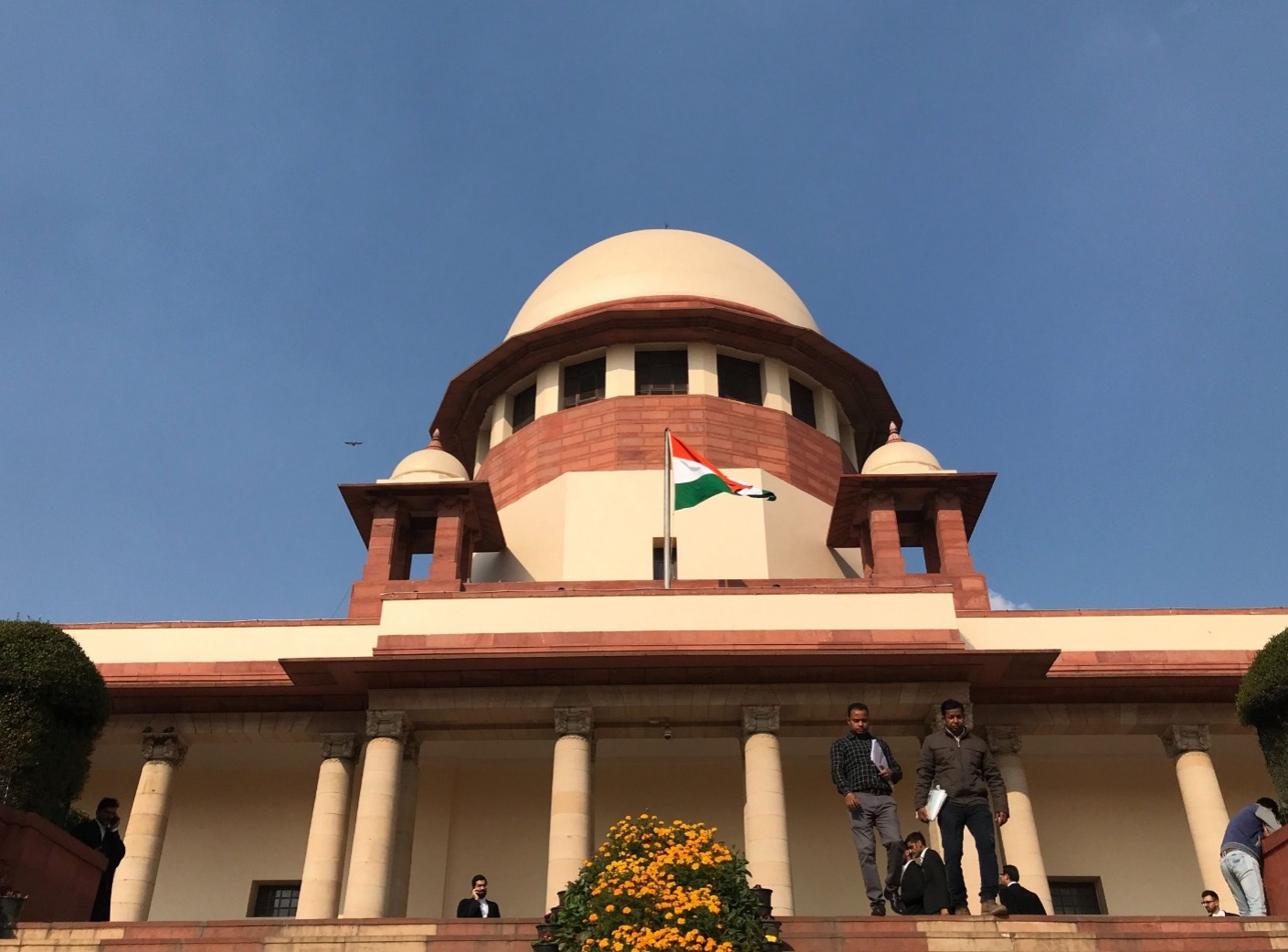
COURTKUTCHEHRY SPECIAL SERIES ON LANDMARKS JUDGEMENTS ON WILLS, CODICIL & PROBATE
Anil Kak v. Kumari Sharada Raje & Ors.: Supreme Court Rejects Incomplete Will of Holkar Maharani
Unsigned Appendices Rendered Testament Legally Defective
Probate Denied Amid Suspicious Circumstances
By Vishwas Kumar
New Delhi: March 24, 2026:
In Anil Kak v. Kumari Sharada Raje & Ors. (Civil Appeal No. 2965 of 2008 with Nos. 2974–75 and 2977 of 2008, decided on 24 April 2008), the Supreme Court of India delivered a landmark ruling on the validity of testamentary documents. The Division Bench comprising Hon’ble Mr. Justice S.B. Sinha and Hon’ble Mr. Justice V.S. Sirpurkar examined two Wills executed by Maharani Sharmishthabai Holkar, focusing particularly on the later Will dated 4 November 1992.
read key inheritance case laws explained of Anil Kak Case
The Will was detailed but incomplete, as it incorporated unsigned appendices that were integral to its terms. The High Court had earlier held that the absence of signatures on these appendices rendered the Will unproven. On appeal, the Supreme Court upheld this finding, stressing that a Will must be proved as a complete document, free from ambiguity or suspicion. The Court further noted that the role of the propounder, coupled with the benefits accruing to him, raised serious doubts about the genuineness of the document.
The Bench categorically ruled that mere drafting of a detailed Will is insufficient if essential parts remain unsigned or unverified. Since the appendices formed an inseparable component of the testament, their absence of proof invalidated the entire document. Consequently, probate was refused, and the appeal was dismissed.
This judgment reiterates a vital principle in succession law: Wills must be executed and proved in their entirety, with all annexures authenticated. Any lapse, such as unsigned appendices or suspicious circumstances surrounding the propounder’s involvement, can render the Will void. The ruling strengthens safeguards against incomplete or manipulated testamentary instruments, ensuring fairness in inheritance disputes.
For More, Read Here the Summary of the Judgement from the Book: WILL WRITING SIMPLIFIED, read below or open page no 436, Chapter 14.1 in the book. (Online book purchase link available here on: Buy online: Amazon | Flipkart
|
|
Case Summary |
: |
Anil Kak v. Kumari Sharada Raje & Ors. |
|
|
Court |
: |
Supreme Court of India |
|
|
Citations |
: |
(2008) 04 SC CK 0062: Civil Appeal No. 2965 of 2008 with Nos. 2974–75 and 2977 of 2008. |
|
|
Link |
: |
|
|
|
Decided on |
: |
24 April 2008 |
|
|
Coram |
: |
Hon’ble Mr. Justice S.B. Sinha and Hon’ble Mr. Justice V.S. Sirpurkar. |
|
|
Relevant Paragraphs |
: |
Para No. 14–16, 29–37, 38–42, 43. |
1. Facts of the Case
Maharani Sharmishthabai Holkar, widow of Maharaja Tukoji Rao Holkar, executed a Will dated 23.08.1978 bequeathing her estate to Kumari Sharada Raje. Later, she executed another Will dated 04.11.1992 revoking the earlier one and appointing K.R.P. Singh and Anil Kak (her grand-son-in-law) as executors. The 1992 Will divided properties into Part A (properties from her husband) and Part B (her own assets) to be distributed among four daughters and grandchildren. The Will had appendices (A–C) listing shares, jewellery and valuations, but these were unsigned by attesting witnesses. The High Court refused probate for both Wills. The propounder (Anil Kak) appealed.
2. Law Points Involved
(i). Proof of Will under Sections 63 (c) of the Indian Succession Act and 68 of the Evidence Act – attestation and animus attestandi.
(ii). Incorporation by reference under Section 64 of the Succession Act.
(iii). Effect of incomplete Wills and unsigned appendices.
(iv). Suspicious circumstances surrounding execution of Will.
(v). Effect and scope of Sections 87 and 103 of the Succession Act.
3. Acts / Provisions / Articles Referred
(i). Evidence Act, 1872 – Section 68
(ii). Indian Succession Act, 1925 – Sections 63, 63(1)(c), 64, 87, 103
4. Judgements Referred
(i). H. Venkatachala Iyengar v. B.N. Thimmajamma (1958) 11 SC CK 0008;
(ii). Kavita Kanwar v. Pamela Mehta, (2020) 05 SC CK 0022.
https://www.courtkutchehry.com/judgements/1034363/kavita-kanwar-vs-pamela-mehta-ors/]
(iii). Madhukar D. Shende v. Tarabai Aba Shedage, (2002) 01 SC CK 0024.
https://www.courtkutchehry.com/judgements/653626/madhukar-d-shende-vs-tarabai-aba-shedage/]
(iv). Naranjan Umeshchandra Joshi v. Mrudula Jyoti Rao, (2006) 12 SC CK 0022;
(v). B. Venkatamuni v. C.J. Ayodhya Ram Singh, (2006) 10 SC CK 0054.
(vi). Savithri v. Karthyayani Amma, (2007) 10 SC CK 0023.
https://www.courtkutchehry.com/judgements/659546/savithri-and-others-vs-karthyayani-amma-and-others/]
(vii). Adivekka and Others v. Hanamavva Kom Venkatesh (Dead) by LRs. and Another, (2007) 05 SC CK 0152.
5. Obiter Dicta
(i). A Will must be complete and self-contained; appendices unsigned or not in existence on the date of execution cannot be incorporated later by reference.
(i). Even strict compliance with statutory requirements cannot cure incompleteness or suspicious circumstances.
(i). Existence of suspicious circumstances by itself is sufficient to deny probate if not satisfactorily explained.
6. Ratio Decidendi
The appendices to the Will were not signed by attesting witnesses and were brought into existence after execution; hence, the Will was incomplete and its execution was not proved in accordance with Section 63(c) of the Succession Act and Section 68 of the Evidence Act. The principle of incorporation by reference under Section 64 cannot apply to documents not in existence at the time of execution. The Will was further vitiated by suspicious circumstances active participation of beneficiary (Anil Kak), custody of Will with him, unequal division, and non-examination of key witness. Therefore, the propounder failed to discharge the burden of proof.
7. Final Ruling
Appeals dismissed with costs. Held that the Will dated 04.11.1992 was not duly proved and was surrounded by suspicious circumstances. Probate could not be granted as the document was incomplete and unsigned appendices formed an integral part of the Will. Compliance with statutory formalities alone does not satisfy judicial conscience in probate matters. (Appeals dismissed with ₹ 50,000 costs; probate refused.)
8. Gist / Dispute and Final Decision
Dispute concerned the validity and probate of two Wills executed by Maharani Sharmishthabai Holkar particularly the later Will dated 4 November 1992 which was detailed but incomplete due to unsigned appendices. Supreme Court upheld High Court’s finding that the appendices were integral to the Will and not proved; further, the propounder’s role and benefit raised serious suspicion. Hence, probate was refused. This judgment reiterates that a Will must be proved as a complete document free from suspicious circumstances and that incomplete Wills or documents incorporating non-existent appendices are invalid.
Read full Judgement Here:
Anil Kak v. Kumari Sharada Raje & Ors.
Supreme Court of India
(2008) 04 SC CK 0062: Civil Appeal No. 2965 of 2008 with Nos. 2974–75 and 2977 of 2008.
You Can Also Purchase the Book from here on: Buy online: Amazon | Flipkart
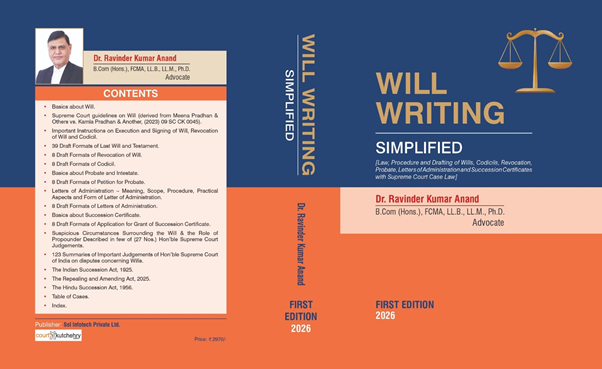
OUR RECOMMENDATION: Check out 123 Key Judgements, as highlighted in the book, WILL WRITING SIMPLIFIED, for the quick research and reference purposes. Click the link here: https://www.courtkutchehry.com/pages/blog/123-supreme-court-judgments-on-wills/
Keywords: Anil Kak v. Kumari Sharada Raje, Supreme Court of India 2008, Civil Appeal No. 2965 of 2008, Justice S.B. Sinha, Justice V.S. Sirpurkar, Maharani Sharmishthabai Holkar Will dispute, probate refused, incomplete Will, unsigned appendices, suspicious circumstances in Will, Indian succession law.