
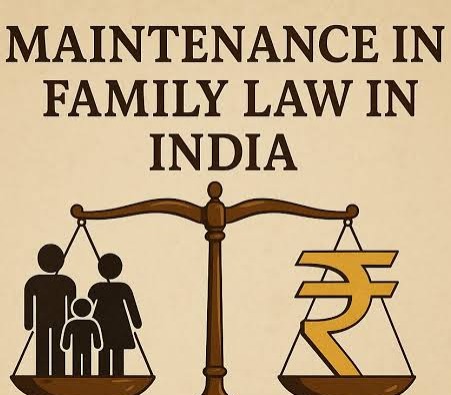
Financial Support by Parents No Substitute for Husband’s Duty
Allahabad High Court Reaffirms Section 125 CrPC’s Protective Purpose
Comparative Lessons from Global Jurisdictions on Spousal Maintenance
By Legal Editor
New Delhi: June 29, 2026:
The Allahabad High Court has ruled that a wife cannot be denied maintenance under Section 125 CrPC merely because her parents support her financially. This landmark judgment reaffirms that parental assistance is not a substitute for a husband’s legal duty to maintain his wife and children.
The Case in Brief
In Vikas Sharma v. State of U.P. & Anr., the Allahabad High Court overturned a Family Court order that denied maintenance to a wife solely because she was living with her parents. Justice Garima Prashad emphasized that Section 125 CrPC is a welfare provision designed to prevent destitution and should not be treated like a full-fledged matrimonial trial. The Court directed the husband, a retired Army personnel, to pay ₹5,000 per month to his wife and ₹4,000 each to his two minor children, noting that the earlier award of ₹3,000 per child was “wholly inadequate.”
Key Legal Principles
The foundation of maintenance law in India rests on Section 125 of the Criminal Procedure Code (CrPC), a provision designed to provide immediate relief to dependents who are neglected or unable to sustain themselves. Unlike lengthy matrimonial litigation, Section 125 CrPC offers a quick, summary remedy to ensure that vulnerable family members—wives, children, and parents—are not left destitute. Its purpose is rooted in the idea of social justice: guaranteeing food, shelter, and dignity to those who would otherwise be exposed to poverty and neglect.
A critical safeguard within this framework is Section 125(4) CrPC, which sets boundaries on entitlement. It specifies that a wife is not entitled to maintenance if she is living in adultery, refuses to live with her husband without sufficient cause, or lives separately by mutual consent. However, courts have consistently emphasized that mere allegations of adultery or misconduct are not enough; such claims must be proven with credible evidence. This ensures that the provision is not misused to deny rightful support based on unsubstantiated accusations.
The constitutional backdrop further strengthens the moral and legal basis of maintenance. Article 15(3) of the Constitution empowers the State to make special provisions for women and children, recognizing their vulnerability in socio-economic structures. Article 39(a), part of the Directive Principles of State Policy, directs the State to ensure that citizens have adequate means of livelihood. Together, these provisions create a constitutional mandate for laws like Section 125 CrPC, which operationalize the vision of a welfare state by protecting dependents from destitution.
Thus, the key legal principles governing maintenance are not merely statutory rules but reflections of constitutional values. They balance individual rights with social responsibility, ensuring that family members most at risk—wives, children, and parents—are provided with the means to live with dignity.
Expanded Judicial Precedents
The jurisprudence around Section 125 CrPC has been significantly shaped by landmark Supreme Court rulings, each reinforcing the principle that maintenance is not a matter of charity but a fundamental right tied to dignity and survival.
In Rajnesh v. Neha (2021, SC), the Court laid down comprehensive guidelines to streamline maintenance proceedings. Recognizing the delays and inconsistencies in awards, it mandated that both parties must file detailed affidavits disclosing their income, assets, liabilities, and lifestyle. This was a crucial step toward transparency, ensuring that courts could assess realistic needs against actual financial capacity. The judgment also emphasized uniformity across jurisdictions, reducing arbitrariness in maintenance awards.
In Bhuwan Mohan Singh v. Meena (2014, SC), the Court underscored that maintenance is not a matter of benevolence but a legal right. Justice Dipak Misra observed that neglecting a wife’s sustenance amounts to a violation of her dignity. The ruling highlighted that the purpose of Section 125 CrPC is to prevent destitution, and therefore, courts must interpret it liberally to protect vulnerable dependents. This case firmly established that maintenance is integral to the constitutional vision of social justice.
In Shamima Farooqui v. Shahid Khan (2015, SC), the Court criticized token maintenance awards, stressing that amounts must be realistic and sufficient to meet actual living expenses. Justice Ranjan Gogoi noted that symbolic sums defeat the very purpose of the law. The Court directed that maintenance should reflect the standard of living enjoyed during marriage, ensuring that dependents are not forced into poverty.
Together, these precedents form a robust framework: transparency in financial disclosure, recognition of maintenance as a right, and insistence on realistic awards. They collectively reinforce the welfare spirit of Section 125 CrPC, ensuring that the law remains a lifeline for women and children facing neglect.
Comparative Perspectives
UK: Spousal maintenance is assessed under the Matrimonial Causes Act, focusing on “reasonable needs” and fairness.
US: Alimony varies by state; factors include duration of marriage, earning capacity, and contributions.
Canada: Spousal support under the Divorce Act considers economic disadvantage from marriage breakdown.
South Africa: Maintenance courts ensure dependents are not left destitute, similar to India’s welfare approach.
Humanizing the Law: Case Studies
Case Study 1: A homemaker abandoned after 20 years of marriage, forced to rely on her brother’s income. The court held that family support cannot absolve the husband’s duty.
Case Study 2: In contrast, in Saurabh Srivastava v. State of U.P. (2025), maintenance was denied because the wife earned ₹73,000 per month and owned property worth ₹80 lakh. This shows courts balance need with financial independence.
Extended FAQ Index
What is Section 125 CrPC? It is a provision in the Criminal Procedure Code that allows wives, children, and parents to claim maintenance if neglected or unable to support themselves.
Who can claim maintenance under Section 125 CrPC? Wives, minor children (legitimate or illegitimate), and dependent parents can claim maintenance.
Can parents’ financial support replace a husband’s duty? No. Courts have held that parental support cannot absolve a husband’s legal duty to maintain his wife.
What is the purpose of Section 125 CrPC? To prevent destitution and ensure basic sustenance for dependents neglected by family members.
Is proof of cruelty required for maintenance? No. Maintenance is not dependent on proving cruelty; it is based on neglect and inability to maintain oneself.
What if the wife is alleged to be in adultery? Only proven adultery bars maintenance under Section 125(4). Mere allegations are insufficient.
How much maintenance can be awarded? It depends on the husband’s income, wife’s needs, and standard of living. Courts aim for fairness.
Can children claim maintenance separately? Yes. Minor children can claim maintenance independently through their guardian.
What happens if the husband hides his income? Courts can order disclosure of assets and infer income from lifestyle and evidence.
Can maintenance be deducted from pension? Yes. Courts can direct deductions from pension or salary to ensure compliance.
Is maintenance automatic after separation? No. It must be claimed and awarded by the court based on circumstances.
What if the wife is employed? If she earns enough to support herself, maintenance may be reduced or denied.
Can a working wife still claim maintenance? Yes, if her income is insufficient to meet basic needs or children’s expenses.
What if the wife owns property? Property ownership may reduce entitlement, but maintenance depends on actual income and need.
How is “sufficient cause” to live separately determined? Cruelty, neglect, or reasonable apprehension of harm are valid causes.
Can allegations alone bar maintenance? No. Allegations must be proven with evidence.
What is the difference between Section 125 CrPC and divorce proceedings? Section 125 is a summary remedy for survival; divorce proceedings decide marital status and rights.
Is maintenance a right or charity? It is a legal right, not charity, recognized by courts as essential for dignity.
Can maintenance orders be modified? Yes. Courts can increase or decrease amounts based on changed circumstances.
What if the husband remarries? His duty to maintain his first wife and children continues unless legally exempted.
Can maintenance be claimed during pending divorce? Yes. Interim maintenance can be awarded during divorce proceedings.
What if the wife refuses to live with the husband? If refusal is without sufficient cause, maintenance may be denied.
How is maintenance enforced? Through attachment of property, salary deductions, or imprisonment for default.
Can arrears of maintenance be recovered? Yes. Courts can order recovery of arrears with interest.
What if the husband is unemployed? He is still liable; courts assess earning capacity, not just current employment.
Does military pension count as income? Yes. Pension is considered income for maintenance purposes.
Can parents-in-law be made liable? No. The duty lies with the husband, not his parents.
What if the wife lives with her parents? Parental support does not bar maintenance; husband’s duty remains intact.
Is maintenance taxable? Generally, maintenance received is not taxable as income.
Can maintenance be claimed under personal laws? Yes. Hindu, Muslim, and other personal laws also provide for maintenance.
What is interim maintenance? Temporary financial support granted during the pendency of proceedings.
Can maintenance be denied if wife left without reason? Yes. If she leaves without sufficient cause, courts may deny maintenance.
What if husband alleges illicit relations? Allegations must be proven; otherwise, they do not bar maintenance.
How do courts assess children’s needs? By considering education, healthcare, and standard of living.
Can maintenance be enhanced later? Yes. Courts can revise amounts based on inflation or changed needs.
What if husband refuses to pay? Courts can enforce payment through coercive measures, including imprisonment.
Can wife claim medical expenses? Yes. Courts may include medical costs in maintenance awards.
What if husband lives abroad? He remains liable; courts can enforce orders through diplomatic channels or property attachment.
Can wife claim maintenance after divorce? Yes, if she is unable to support herself, depending on personal law and circumstances.
What is the role of constitutional provisions in maintenance law? Articles 15(3) and 39(a) empower protective laws for women and children, forming the basis for Section 125 CrPC.
Op-Ed Style Closing Vision
The Allahabad High Court’s ruling is more than a legal pronouncement—it is a reaffirmation of the moral and constitutional duty of society to protect women and children from destitution. Section 125 CrPC, often dismissed as a “summary remedy,” is in fact a cornerstone of India’s welfare jurisprudence. It embodies the principle that no individual should be left without basic sustenance merely because of marital discord.
The Family Court’s earlier approach—treating maintenance proceedings like a trial on cruelty and adultery—was a distortion of the law’s purpose. Maintenance is not about proving fault; it is about ensuring survival. By clarifying that parental support cannot substitute for a husband’s duty, the High Court has restored the protective spirit of Section 125.
This judgment also resonates with broader constitutional ideals. Article 39(a) of the Directive Principles envisions adequate means of livelihood for all citizens. Article 15(3) empowers the State to make special provisions for women and children. Maintenance laws operationalize these ideals in the intimate sphere of family life.
Globally, spousal maintenance reflects similar values. In the UK, courts balance fairness and need. In the US, alimony varies but always considers economic disadvantage. Canada’s Divorce Act explicitly recognizes the sacrifices made by spouses in marriage. South Africa’s maintenance courts echo India’s welfare approach. The common thread is that marriage creates obligations that cannot be shrugged off when convenient.
The human stories behind these cases are poignant. A homemaker expelled from her home, forced to rely on her aging parents, is not just a litigant—she is a reminder of the vulnerability of women in patriarchal structures. Conversely, cases where financially independent spouses are denied maintenance show that the law is not blind charity but a calibrated welfare measure.
The challenge ahead lies in implementation. Maintenance orders often remain on paper, with husbands defaulting and wives struggling to enforce them. The Allahabad High Court’s directive allowing deduction from pension is a practical step forward. Courts must increasingly adopt mechanisms that ensure compliance—automatic deductions, attachment of property, and penal consequences for willful default.
Another challenge is realistic assessment of needs. Symbolic amounts like ₹3,000 per child are inadequate in today’s economy. Maintenance must reflect the actual cost of living, education, healthcare, and dignity. Courts must resist the temptation to award token sums and instead engage with the lived realities of dependents.
Finally, there is a need for societal change. Maintenance should not be seen as a burden but as a moral responsibility. Husbands must recognize that supporting their wives and children is not charity but justice. Families must stop stigmatizing women who claim maintenance. And society must acknowledge that economic dependence is a structural issue, not a personal failing.
In conclusion, the Allahabad High Court’s ruling is a beacon in the evolving landscape of family law. It reminds us that justice is not merely about resolving disputes but about safeguarding dignity. Section 125 CrPC is not a technical provision—it is a lifeline. By reaffirming that parental support cannot absolve a husband’s duty, the Court has ensured that the law remains true to its purpose: protecting the vulnerable, upholding constitutional values, and reminding us that in the intimate realm of family, justice begins with sustenance.