
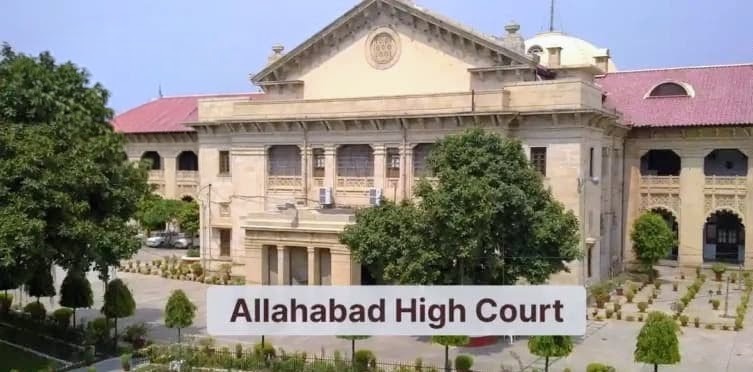
Allahabad HC Sends Trial Judge for Training Over Perverse Order
Court stresses judicial accountability and adherence to CPC principles
Reiterates importance of reasoned orders in safeguarding justice
By Our Legal Correspondent
New Delhi: April 13, 2026:
The Allahabad High Court has strongly reprimanded a trial judge for passing what it termed a “perverse order” and directed that the judge undergo judicial training. The case highlights judicial accountability, the importance of reasoned orders, and the application of procedural safeguards under the Code of Civil Procedure (CPC).
Analytical Overview
1. Background of the Case
- The matter arose from a trial court order that was found to be legally unsustainable.
- The High Court, while hearing the revision, noted that the trial judge had ignored settled principles of law and passed an order that was not only erroneous but also “perverse.”
- The HC emphasized that such orders undermine public confidence in the judiciary and necessitate corrective measures.
2. Key Legal Issues
- Judicial Accountability: Whether a trial judge can be directed to undergo training for passing an order contrary to law.
- Reasoned Orders: Courts must provide clear reasoning, not arbitrary conclusions.
- Procedural Safeguards: Application of Order VI Rule 17 CPC (amendment of pleadings) and Order VII Rule 11 CPC (rejection of plaint) often comes into play in such disputes.
3. High Court’s Observations
- On Judicial Conduct:
- Judges must apply settled law and precedents.
- Passing orders without reasoning amounts to judicial impropriety.
- On Training:
- Judicial training is not punitive but corrective, aimed at improving judicial standards.
- On Public Confidence:
- Erroneous orders erode trust in the justice system.
- Courts must ensure that trial judges are equipped with proper legal understanding.
4. Broader Implications
- The ruling underscores the importance of continuing judicial education.
- It also reflects the High Court’s supervisory role under Article 227 of the Constitution of India, which empowers it to oversee subordinate courts.
- The decision signals that judicial accountability is not limited to appellate correction but extends to capacity-building measures.
Key Laws and Rules Discussed
- Code of Civil Procedure (CPC):
- Order VI Rule 17 – amendment of pleadings must be allowed only when necessary for determining the real controversy.
- Order VII Rule 11 – plaint can be rejected if it fails to disclose cause of action or is barred by law.
- Article 227 of the Constitution: High Courts have supervisory jurisdiction over subordinate courts.
- Judicial Training Mandate: Judicial officers are periodically required to undergo training at judicial academies to ensure updated knowledge.
[RECOMMENDED RESEARCH RESOURCES]
Access will dispute cases here. Click the link here: https://www.courtkutchehry.com/pages/blog/123-supreme-court-judgments-on-wills/
EXTRACTS FROM BOOK, WILL WRITING SIMPLIFIED, By Dr Ravinder Kumar Anand. [📘 Buy Will Writing Simplified online: Amazon | Flipkart ]
FAQ: Quick Legal Understanding
Q1: What is meant by a “perverse order”?
A perverse order is one that ignores evidence, disregards settled law or is arbitrary and unreasonable.
Q2: Can High Courts direct training for trial judges?
Yes. Under Article 227, High Courts can issue directions to ensure proper functioning of subordinate courts, including recommending training.
Q3: Why are reasoned orders important?
Reasoned orders show application of mind, ensure transparency, and allow higher courts to review decisions effectively.
Q4: What happens if a plaint is rejected under Order VII Rule 11 CPC?
The suit is dismissed at the threshold, saving judicial time and preventing frivolous litigation.
Q5: Is judicial training punitive?
No. It is corrective and educational, aimed at improving judicial competence and ensuring adherence to law.
Q6: How does this ruling affect litigants?
It reassures litigants that higher courts actively monitor trial courts and safeguard against arbitrary decisions.
Q7: What constitutional power allows High Courts to supervise trial courts?
Article 227 of the Constitution grants High Courts supervisory jurisdiction over all subordinate courts and tribunals.
Conclusion
The Allahabad High Court’s directive reflects a proactive approach to judicial accountability. By sending the trial judge for training, the Court reinforced the principle that justice must not only be done but must be seen to be done through reasoned, lawful orders. This case serves as a reminder that judicial education and accountability are essential pillars of a robust justice system.