
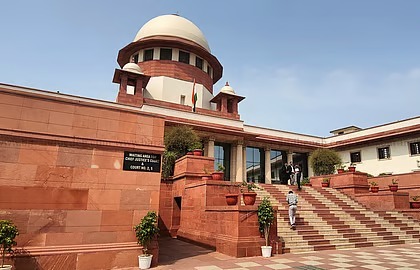
COURTKUTCHEHRY SPECIAL SERIES ON LANDMARKS JUDGEMENTS ON WILLS, CODICIL & PROBATE
Adivekka and Others v. Hanamavva Kom Venkatesh (Dead) by LRs. and Another: Supreme Court Invalidates Suspicious Will
Cancer-Afflicted Testator’s Bequest to Niece Questioned
Trial Court’s Decree Restored, Appeal Dismissed
By Vishwas Kumar
New Delhi: March 24, 2026:
In Adivekka and Others v. Hanamavva Kom Venkatesh (Dead) by LRs. and Another (Civil Appeal Nos. 7400–7401 of 2000, decided on 9 May 2007), the Supreme Court of India delivered a significant ruling on the proof of Wills under succession law. The Division Bench comprising Hon’ble Mr. Justice S.B. Sinha and Hon’ble Mr. Justice Markandey Katju examined the validity of a Will executed by a testator suffering from cancer just two weeks before his death.
The Will in question disinherited the testator’s wife and minor children, favouring instead a niece. This improbable disposition raised immediate suspicion. The Court noted several deficiencies: the beneficiary herself was not examined, contradictions appeared in the evidence of attesting witnesses, and there was no proof of the testator’s possession of the properties bequeathed. These factors created a strong cloud of doubt that the propounder failed to dispel.
The Supreme Court emphasized that statutory compliance with formalities cannot override substantive doubts about a Will’s authenticity. Suspicious circumstances must be convincingly removed before a Will can be accepted as genuine. Since this burden was not discharged, the Court restored the Trial Court’s decree invalidating the Will and dismissed the appeal.
This ruling reinforces the principle that testamentary freedom is subject to strict scrutiny when suspicious circumstances exist. Courts will not uphold Wills that exclude natural heirs without clear justification, especially when executed under questionable conditions. The judgment strengthens safeguards against fraudulent or manipulated testamentary claims, ensuring fairness in inheritance disputes.
For More, Read Here the Summary of the Judgement from the Book: WILL WRITING SIMPLIFIED, read below or open page no 436, Chapter 14.1 in the book. (Online book purchase link available here on: Buy online: Amazon | Flipkart
|
|
Case Summary |
: |
Adivekka and Others v. Hanamavva Kom Venkatesh (Dead) by LRs. and Another. |
|
|
Court |
: |
Supreme Court of India |
|
|
Citations |
: |
(2007) 05 SC CK 0152: Civil Appeal Nos. 7400-7401 of 2000. |
|
|
Link |
: |
|
|
|
Decided on |
: |
09 May 2007 |
|
|
Coram |
: |
Hon’ble Mr. Justice S.B. Sinha and Hon’ble Mr. Justice Markandey Katju. (Division Bench) |
|
|
Relevant Paragraphs |
: |
Para Nos. 1–20 |
1. Facts of the Case:
Hanumanthappa, owner of 4 acres 32 guntas agricultural land, allegedly executed a Will dated 25.08.1988 in favour of his brother’s daughter (Respondent No.1) two weeks before his death (11.09.1988). The appellants, his wife and children, were unaware of the Will and challenged it as fabricated. Respondent No.1 sold the land to Respondent No.2 on 16.03.1989. The trial court decreed in favour of the plaintiffs (appellants), but the High Court reversed it, holding the Will genuine. Hence, the appeal before the Supreme Court.
2. Law Points Involved:
(i). Proof of Will under Section 63 of the Indian Succession Act, 1925 and Section 68 of the Indian Evidence Act, 1872.
(ii). Burden on propounder to prove execution and dispel suspicious circumstances.
(iii). When execution is surrounded by suspicion, strict proof and cogent evidence are required.
(iv). Non-examination of beneficiary leads to adverse inference.
3. Acts / Provisions / Articles Referred:
(i). Indian Evidence Act, 1872 – Sections 63 & 68
(ii). Indian Succession Act, 1925 – Section 63
4. Judgments Referred:
(i). Sardar Gurbakhsh Singh Vs Gurdial Singh and another, (1927) 07 PRI CK 0012 (adverse inference for non-examination).
(ii). Martand Pandharinath Chaudhari v. Radhabai Krishnarao Deshmukh, (1930) 03 BOM CK 0019.
(iii). Sudhir Ranjan Paul v. Chhatter Singh Baid, (1998) 07 CAL CK 0008.
(iv). Tulsi v. Chandrika Prasad, (2006) 08 SC CK 0022.
(v). Binapani Paul v. Pratima Ghosh, (2007) 04 SC CK 0144.
(vi). B. Venkatamuni v. C.J. Ayodhya Ram Singh, (2006) 10 SC CK 0054.
(vii). Naranjan Umeshchandra Joshi v. Mrudula Jyoti Rao, (2006) 12 SC CK 0022.
(viii). H. Venkatachala Iyengar v. B.N. Thimmajamma (1958) 11 SC CK 0008;
(ix). Joseph Antony Lazarus v. A.J. Francis, (2006) 04 SC CK 0063 ;
(x). Sardar Gurbakhsh Singh Vs Gurdial Singh and another, (1927) 07 PRI CK 0012 (adverse inference for non-examination).
5. Obiter Dicta:
Compliance with statutory formalities alone does not prove genuineness of a Will. Even if a Will is registered, the propounder must remove suspicion by independent and trustworthy evidence. Suspicious circumstances, such as unnatural bequests, non-examination of beneficiary, and contradictions in testimony, are fatal unless dispelled by cogent proof.
6. Ratio Decidendi:
Where a Will is executed under circumstances that raise doubt such as illness of testator, unnatural exclusion of heirs, lack of witness credibility, and failure of the beneficiary to testify the burden on the propounder is heavy. The High Court erred in assuming that compliance with Sections 63 and 68 was sufficient without addressing these suspicious features. The Supreme Court reaffirmed that mere formal proof is not enough; satisfaction of judicial conscience is essential before accepting the Will.
7. Final Ruling:
The Supreme Court allowed the appeal, set aside the High Court’s judgment, and restored the decree of the Trial Court holding the Will not proved. The High Court erred by ignoring glaring suspicious circumstances and applying an incorrect legal test. No order as to costs.
8. Gist Highlighting Dispute and Final Decision:
The dispute centered on the genuineness of a Will executed by a cancer-afflicted testator two weeks before death, favouring a niece over wife and minor children. The Supreme Court found multiple suspicious circumstances non-examination of the beneficiary, improbable disposition, contradictions in attesting witness evidence, and lack of proof of possession. Holding that statutory compliance cannot override substantive doubts, the Court restored the Trial Court’s decree invalidating the Will.
Read full Judgement Here:
Adivekka and Others v. Hanamavva Kom Venkatesh (Dead) by LRs. and Another.
Supreme Court of India
(2007) 05 SC CK 0152: Civil Appeal Nos. 7400-7401 of 2000.
You Can Also Purchase the Book from here on: Buy online: Amazon | Flipkart
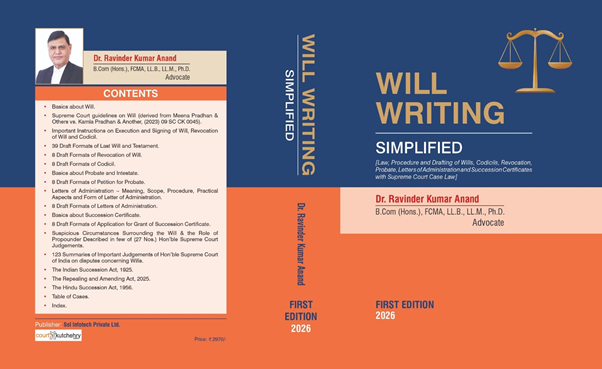
OUR RECOMMENDATION: Check out 123 Key Judgements, as highlighted in the book, WILL WRITING SIMPLIFIED, for the quick research and reference purposes. Click the link here: https://www.courtkutchehry.com/pages/blog/123-supreme-court-judgments-on-wills/
Keywords: Adivekka v. Hanamavva Kom Venkatesh, Supreme Court of India 2007, Civil Appeal Nos. 7400–7401 of 2000, Justice S.B. Sinha, Justice Markandey Katju, cancer-afflicted testator, suspicious circumstances in Will, disinheritance of wife and children, proof of attestation, Indian succession law.