
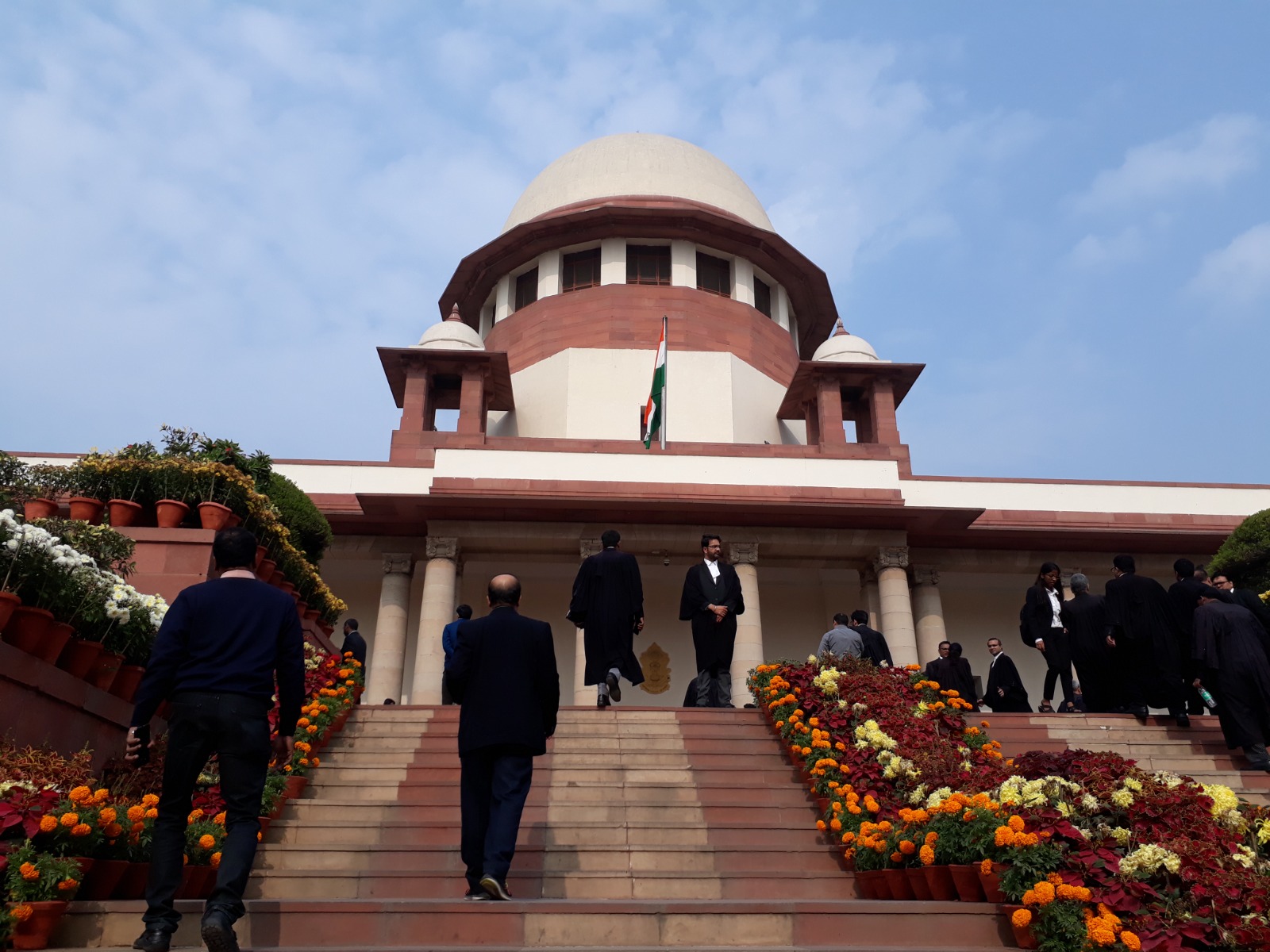
COURTKUTCHEHRY SPECIAL SERIES ON LANDMARKS JUDGEMENTS ON WILLS, CODICIL & PROBATE
Yumnam Ongbi Tampha Ibema Devi v. Yumnam Joykumar Singh & Others: Supreme Court Rejects Will as Unproved, Upholds High Court’s Findings
Suspicious Circumstances Remained Unexplained
Sections 63 & 68 Requirements Not Satisfied
By Vishwas Kumar
New Delhi: March 23, 2026:
On 6 March 2009, the Supreme Court of India delivered a decisive judgment in Yumnam Ongbi Tampha Ibema Devi v. Yumnam Joykumar Singh & Others (Civil Appeal No. 1600 of 2009), addressing the validity of a disputed Will executed by Yumnam Gouramani Singh on 13 August 1986. The case revolved around whether the Will was genuine and duly attested, forming the basis of succession rights claimed by the appellant.
best judgments on probate and will disputes of Yumnam Ongbi Tampha Ibema Devi Case
The trial court had initially granted letters of administration in favour of the appellant, accepting the Will. However, the High Court reversed this decision, finding the evidence of the attesting witness unreliable and insufficient to meet the statutory requirements. The matter then reached the Supreme Court, where a Bench comprising Justice Arijit Pasayat, Justice V.S. Sirpurkar, and Justice Asok Kumar Ganguly examined the evidentiary record in detail.
The Court emphasized that under Section 63 of the Indian Succession Act and Section 68 of the Indian Evidence Act, a Will must be proved through credible testimony of attesting witnesses. In this case, the evidence presented failed to establish due execution and attestation. Moreover, the Court noted that suspicious circumstances surrounding the Will remained unexplained, further undermining its authenticity.
Affirming the High Court’s findings, the Supreme Court ruled that the Will was not proved and consequently rejected the appellant’s claim. The judgment underscores the principle that mere production of a document is insufficient; strict compliance with statutory proof requirements is essential in testamentary disputes.
By dismissing the appeal, the Court reinforced the importance of evidentiary safeguards in succession law, ensuring that inheritance rights are not determined by unproven or suspicious documents.
For More, Read Here the Summary of the Judgement from the Book: WILL WRITING SIMPLIFIED, read below or open page no 436, Chapter 14.1 in the book. (Online book purchase link available here on: Buy online: Amazon | Flipkart
|
|
Case Summary |
: |
Yumnam Ongbi Tampha Ibema Devi v. Yumnam Joykumar Singh and Others. |
|
|
Court |
: |
Supreme Court of India |
|
|
Citations |
: |
(2009) 03 SC CK 0200: Civil Appeal No. 1600 of 2009. |
|
|
Link |
: |
|
|
|
Decided on |
: |
March 6, 2009 |
|
|
Coram |
: |
Hon’ble Dr. Justice Arijit Pasayat, Hon’ble Mr. Justice V.S. Sirpurkar and Hon’ble Mr. Justice Asok Kumar Ganguly. |
|
|
Relevant Paragraphs |
: |
Para Nos. 2–12 |
1. Facts of the Case:
The appellant, widow of Yumnam Mani Singh, claimed that her father-in-law, Yumnam Gouramani Singh, executed a Will dated 13.08.1986 bequeathing land and a building at Thangal Bazar, Imphal, in her favour. She sought letters of administration with the Will annexed. Respondents (sons and daughters of the testator) opposed the petition, alleging (a) the testator was in U.P. on the date of alleged execution, (b) the Will was not duly executed, and (c) it was surrounded by suspicious circumstances. The Additional District Judge (Fast Track Court), Manipur East, granted letters of administration, holding the Will validly executed. On appeal, the Gauhati High Court (Imphal Bench) reversed this finding, holding that the attesting witness (PW2)’s evidence was vague and failed to establish due execution and attestation as per law.
2. Law Points Involved:
(i). Proof of Will — requirements under Section 63, Indian Succession Act, 1925 and Section 68, Evidence Act, 1872.
(ii). Attestation — each witness must have seen the testator sign, and must sign animo attestandi in the testator’s presence.
(iii). Suspicious Circumstances — propounder must dispel all legitimate suspicion before the Will can be accepted as genuine.
(iv). Role of Attesting Witness — mere signature without understanding the nature of the document or witnessing the testator’s signature invalidates attestation.
3. Acts / Provisions / Articles Referred:
(i). Indian Succession Act, 1925 – Section 63 (Execution of unprivileged Wills)
(ii). Indian Evidence Act, 1872 – Section 68 (Proof of execution of document required by law to be attested)
4. Judgments Referred:
(i). H. Venkatachala Iyengar v. B.N. Thimmajamma (1958) 11 SC CK 0008;
(ii). Janki Narayan Bhoir v. Narayan Namdeo Kadam, (2002) 12 SC CK 0087.
https://www.courtkutchehry.com/judgements/654452/janki-narayan-bhoir-vs-narayan-namdeo-kadam/]
(iii). Sridevi v. Jayaraja Shetty, (2005) 01 SC CK 0034.
(iv). Rani Purnima Debi v. Kumar Khagendra Narayan Deb, (1961) 08 SC CK 0021.
(v). Madhukar D. Shende v. Tarabai Aba Shedage, (2002) 01 SC CK 0024.
https://www.courtkutchehry.com/judgements/653626/madhukar-d-shende-vs-tarabai-aba-shedage/]
(vi). Savithri v. Karthyayani Amma, (2007) 10 SC CK 0023.
https://www.courtkutchehry.com/judgements/659546/savithri-and-others-vs-karthyayani-amma-and-others/]
5. Obiter Dicta:
Compliance with Section 63 of the Succession Act and Section 68 of the Evidence Act is mandatory; mere registration or formal acknowledgment cannot substitute for proper attestation. A Will’s genuineness must satisfy the conscience of the court, especially where circumstances raise legitimate suspicion.
6. Ratio Decidendi:
(i). A Will must be attested by at least two witnesses in accordance with Section 63, and at least one attesting witness must depose to both execution and attestation as per Section 68.
(ii). If the attesting witness fails to confirm that he saw the testator sign or that he signed in the testator’s presence, the Will is not duly proved.
(iii). Compliance with statutory formality is not enough; the propounder must remove all suspicious circumstances to the satisfaction of the court.
7. Final Ruling:
The Supreme Court dismissed the appeal, affirming the High Court’s judgment. It held that:
(i). There was no issue framed on genuineness of the Will.
(ii). PW2’s evidence did not establish execution or attestation as required by law.
(iii). Hence, the Will could not be accepted as duly executed under Section 68 of the Evidence Act.
(iv). Appeal Dismissed.
8. Gist Highlighting Dispute with Final Decision:
(i). The central dispute concerned whether the Will dated 13.08.1986 by Yumnam Gouramani Singh was genuine and duly attested.
(ii). While the trial court granted letters of administration, the High Court and Supreme Court found that the evidence of the attesting witness was unreliable and failed to satisfy the requirements of Sections 63 & 68.
(iii). The Supreme Court, affirming the High Court, ruled that suspicious circumstances remained unexplained, and the Will was not proved thus rejecting the appellant’s claim.
Read full Judgement Here:
Yumnam Ongbi Tampha Ibema Devi v. Yumnam Joykumar Singh and Others.
Supreme Court of India
(2009) 03 SC CK 0200: Civil Appeal No. 1600 of 2009.
You Can Also Purchase the Book from here on: Buy online: Amazon | Flipkart
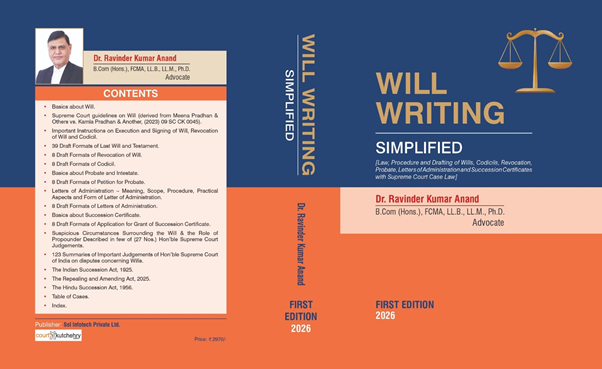
OUR RECOMMENDATION: Check out 123 Key Judgements, as highlighted in the book, WILL WRITING SIMPLIFIED, for the quick research and reference purposes. Click the link here: https://www.courtkutchehry.com/pages/blog/123-supreme-court-judgments-on-wills/
Keywords for SEO & Faster Searches
- Yumnam Ongbi Tampha Ibema Devi v. Yumnam Joykumar Singh Supreme Court
- 2009 inheritance dispute judgment India
- Will proof requirements Supreme Court India
- Section 63 Succession Act Will validity
- Section 68 Evidence Act attestation proof
- Civil Appeal No. 1600 of 2009 Supreme Court ruling