

Who Can Make a Will in India? Supreme Court Principles and Everyday Lessons for Families
Sound Mind, Legal Capacity, and Lucid Intervals Define Testamentary Power
Law Clarifies Rights of Married Women, Persons with Disabilities, and Those with Illness
By Vishwas Kumar
New Delhi: March 31, 2026:
In India, inheritance disputes often arise not because of property itself, but because of questions surrounding who can make a valid Will. The law is clear: not everyone can execute a Will, and even those who can, must meet strict conditions of testamentary capacity.
The extract from the book [WILL WRITING SIMPLIFIED; Available Online on: Amazon | Flipkart ] provides a detailed framework for understanding this principle. It explains that a Will is valid only when made by a person of sound mind, not being a minor, and who fully understands the nature and effect of the document. Courts often scrutinize medical records, witness testimony, and surrounding circumstances to determine whether the testator was capable of making a Will.
This article unpacks the extract in plain language, explores its legal context, and highlights its implications for families, society, and courts.
Detailed Explanation of the Extract
The extract lays down the rules of testamentary capacity:
- General Rule:
“Every person of sound mind not being a minor may dispose of his property by Will.” - Explanation 1:
“A married woman may dispose by Will of any property which she could alienate by her own act during her life.”
→ Meaning: A married woman has full testamentary rights over property she owns independently. - Explanation 2:
“Persons who are deaf or dumb or blind are not thereby incapacitated for making a Will if they are able to know what they do by it.”
→ Meaning: Physical disability does not bar testamentary capacity if the person understands the act. - Explanation 3:
“A person who is ordinarily insane may make a Will during an interval in which he is of sound mind.”
→ Meaning: Even those with mental illness can make a Will during lucid intervals. - Explanation 4:
“No person can make a Will while he is in such a state of mind, whether arising from intoxication or from illness or from any other cause that he does not know what he is doing.”
→ Meaning: Intoxication, illness, or confusion invalidates testamentary capacity.
Illustrations from the Extract
- A cannot make a valid Will if he perceives surroundings but does not understand property or heirs.
- An instrument is invalid if the testator does not understand its nature or effect.
- A valid Will exists if a feeble person, though weak, can still exercise judgment about property disposal.
The extract concludes:
“The law requires testamentary capacity at the time of the Will’s execution. Even a single lucid interval is sufficient if the Testator fully understands the nature and effect of the document.”
Legal Context
Indian Succession Act, 1925
- Section 59: Only persons of sound mind, not minors, can make Wills.
- Section 63: Requires signature of testator and attestation by two witnesses.
- Evidence Act, Section 68: At least one attesting witness must testify if Will is contested.
Hindu Succession Act, 1956
- Applies when there is no Will. Property devolves by intestate succession.
- A valid Will overrides these default rules.
Judicial Principles
Courts examine:
- Medical records.
- Age-related decline.
- Influence of medication.
- Testator’s understanding of property and heirs.
Examples and Case Studies
- Hypothetical Example:
A 75-year-old man suffering from dementia executes a Will during a lucid interval, clearly understanding his property and heirs. The Will is valid. - Illustration from Extract:
A feeble person, though weak, makes a rational decision about property disposal. The Will stands valid. - Suspicious Circumstances:
If a Will is made under intoxication or without understanding its effect, courts will reject it.
Historical and Comparative Context
- Colonial Legacy: The Indian Succession Act, 1925, consolidated testamentary law.
- UK Law: Wills Act 1837 requires sound mind and two witnesses.
- US Law: Varies by state, but capacity and understanding are universal requirements.
- Evolution in India: Courts emphasize free will, absence of coercion, and mental clarity.
Implications for Society, Families, and Courts
- Families: Prevents manipulation of vulnerable testators.
- Courts: Provides clear standards to assess validity.
- Society: Protects rights of women, persons with disabilities, and those with illness.
FAQ Section
1. Can a minor make a Will?
No. Only persons above 18 years with sound mind can make Wills.
2. Can a married woman make a Will?
Yes, over property she owns independently.
3. Can a blind or deaf person make a Will?
Yes, if they understand the act and its effect.
4. Can a person with mental illness make a Will?
Yes, during lucid intervals when they are of sound mind.
5. Is intoxication a bar to making a Will?
Yes. A Will made under intoxication is invalid.
6. What if the testator is very weak?
If they can still exercise judgment, the Will is valid.
7. What do courts check in disputes?
Medical records, witness testimony, and testator’s understanding.
Conclusion
The extract makes one principle clear: testamentary capacity is the foundation of a valid Will. Whether young or old, healthy or ill, the testator must understand their property, heirs, and the effect of the document. Even a single lucid interval is enough, but intoxication or confusion invalidates the act.
By protecting vulnerable individuals and clarifying who can make Wills, the law ensures fairness, reduces disputes, and preserves the testator’s true intention. For families, it is a safeguard against manipulation; for courts, it is a guiding principle; for society, it is a cornerstone of justice in inheritance.
Book Reference
[Book: Will Writing Simplified]
Sentences Used from Extract
- “Person capable of making Wills - Every person of sound mind not being a minor may dispose of his property by Will.”
- “Explanation 1. A married woman may dispose by Will of any property which she could alienate by her own act during her life.”
- “Explanation 2. Persons who are deaf or dumb or blind are not thereby incapacitated for making a Will if they are able to know what they do by it.”
- “Explanation 3. A person who is ordinarily insane may make a Will during an interval in which he is of sound mind.”
- “Explanation 4. No person can make a Will while he is in such a state of mind, whether arising from intoxication or from illness or from any other cause that he does not know what he is doing.”
- “Illustrations: (i)… A cannot make a valid Will.”
- “Illustrations: (ii)… This instrument is not a valid Will.”
- “Illustrations: (iii)… This is a valid Will.”
- “The law requires testamentary capacity at the time of the Will’s execution. Even a single lucid interval is sufficient if the Testator fully understands the nature and effect of the document. Courts often examine factors such as medical records, age-related cognitive decline, medication, and surrounding circumstances to determine whether such capacity existed.”
You Can Also Purchase the Book from here on: Buy online: Amazon | Flipkart
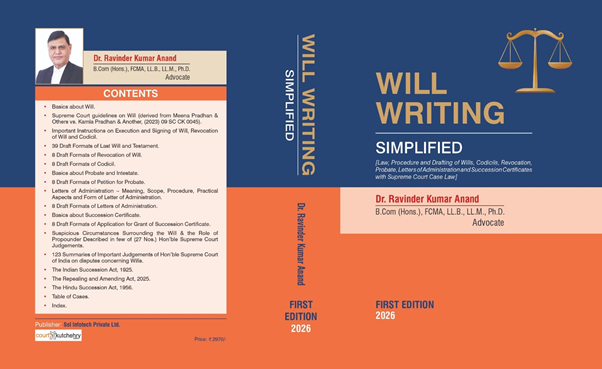
LEGAL RESEARCH RESOURCES: Check out 123 Key Judgements, as highlighted in the book, WILL WRITING SIMPLIFIED, for the quick research and reference purposes. Click the link here: https://www.courtkutchehry.com/pages/blog/123-supreme-court-judgments-on-wills/
Suggested Keywords
- Testamentary capacity India
- Who can make a Will in India
- Indian Succession Act Will rules
- Hindu Succession Act intestate succession
- Lucid interval Will law
- Married woman Will rights India
- Sound mind requirement Will India
- Supreme Court Will principles