
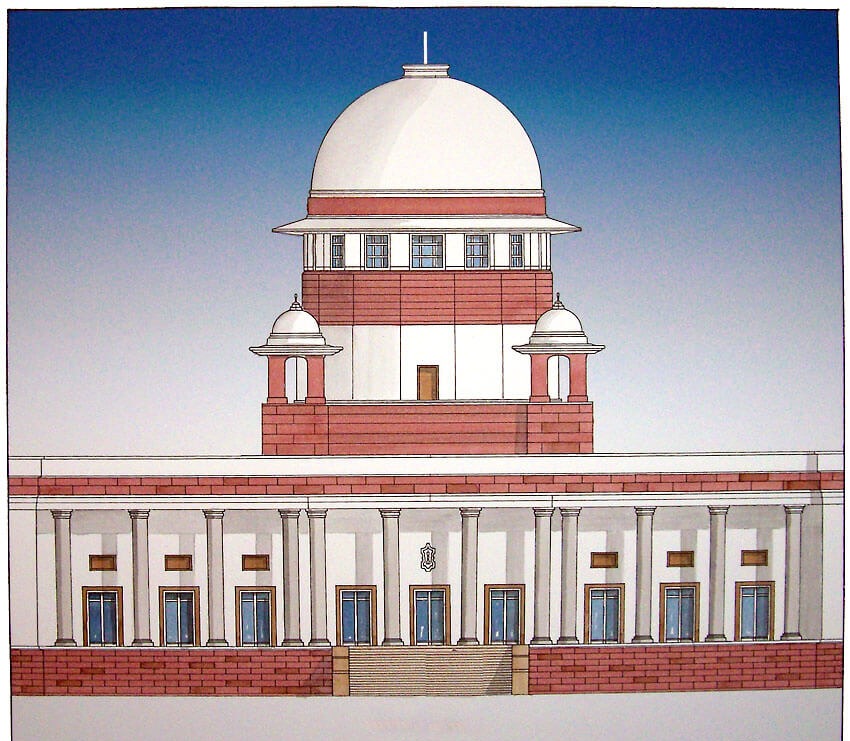
COURTKUTCHEHRY SPECIAL SERIES ON LANDMARKS JUDGEMENTS ON WILLS, CODICIL & PROBATE
Vrindavanibai Sambhaji Mane v. Ramchandra Vithal Ganeshkar & Ors.: Supreme Court Upholds Validity of Babubai’s Will
High Court’s Suspicion Found Baseless
Appellate Court’s Decision Restored in Favor of Propounder
By Vishwas Kumar
New Delhi: March 27, 2026:
On 10 July 1995, the Supreme Court of India in Vrindavanibai Sambhaji Mane v. Ramchandra Vithal Ganeshkar & Ors. (Civil Appeal No. 2409 of 1978; (1995) 07 SC CK 0002) delivered a crucial ruling on the genuineness of a disputed will. The Division Bench comprising Hon’ble Mr. Justice S.C. Agrawal and Hon’ble Mr. Justice Sujata V. Manohar upheld the validity of the will executed by Babubai, which bequeathed property to her niece, Vrindavanibai Sambhaji Mane.
The litigation had traversed multiple stages. The Trial Court rejected the will, doubting its authenticity. The Appellate Court reversed this finding, holding the will genuine. However, the High Court once again invalidated the will, citing “suspicious circumstances” surrounding its execution.
The Supreme Court, after examining the record, found no evidence of suspicious circumstances. It emphasized that once due execution and attestation are proved, and the testator’s sound mind is established, courts must not invalidate a will based on conjecture. The Bench held that the High Court had erred in substituting suspicion for evidence, thereby undermining the sanctity of testamentary freedom.
By restoring the Appellate Court’s decision in favour of the propounder, the Supreme Court reaffirmed the principle that valid wills must be respected unless concrete proof of fraud or coercion exists. This ruling strengthens the evidentiary standards for proving wills in India and ensures that rightful beneficiaries are not deprived of inheritance due to speculative doubts.
For More, Read Here the Summary of the Judgement from the Book: WILL WRITING SIMPLIFIED, read below or open page no 436, Chapter 14.1 in the book. (Online book purchase link available here on: Buy online: Amazon | Flipkart
|
|
Case Summary |
: |
Vrindavanibai Sambhaji Mane v. Ramchandra Vithal Ganeshkar & Ors. |
|
|
Court |
: |
Supreme Court of India |
|
|
Citations |
: |
(1995) 07 SC CK 0002: Civil Appeal No. 2409 of 1978. |
|
|
Link |
: |
|
|
|
Decided on |
: |
10 July 1995 |
|
|
Coram |
: |
Hon’ble Mr. Justice S.C. Agrawal and Hon’ble Mr. Justice Sujata V. Manohar. (Division Bench) |
|
|
Relevant Paragraphs |
: |
Para Nos.1–17 |
1. Facts of the Case:
The suit property, a house in Narayan Peth, Pune, originally belonged to Rangubai Maruti Ganeshkar and devolved upon her daughter Babubai Sonba Pawar. Babubai, a child widow without issue, managed the property till her death on 27.11.1963. She executed a Will dated 25.07.1963 bequeathing the property to her niece Vrindavanibai (appellant), who had been caring for her. The respondent-plaintiff Vithalrao Ganpatrao Ganeshkar, a distant relative, claimed ownership as heir under the Hindu Succession Act, contending that Babubai died intestate.
2. Law Points Involved:
Proof of Will under Section 63, Indian Succession Act, 1925 and Section 68, Evidence Act, 1872 — Suspicious circumstances — Re-appreciation of evidence in Second Appeal under Section 100 CPC.
3. Acts / Provisions / Articles Referred:
(i). Indian Succession Act, 1925 — Section 63, 68;
(ii). Indian Evidence Act, 1872 — Section 68;
(iii). Code of Civil Procedure, 1908 — Section 100.
4. Judgments Referred:
(i). H. Venkatachala Iyengar v. B.N. Thimmajamma, (1958) 11 SC CK 0008.
(ii). Smt. Indu Bala Bose v. Manindra Chandra Bose, (1981) 11 SC CK 0017.
(iii). Smt. Guro v. Atma Singh, (1992) 03 SC CK 0011.
https://www.courtkutchehry.com/judgements/674862/guro-smt-vs-atma-singh-and-others/
(iv). Kristo Gopal Nath v. Baidya Nath, (1938) 01 CAL CK 0006. https://www.courtkutchehry.com/judgements/850955/kristo-gopal-nath-appellant-hash-baidya-nath-khan-and-others-respondent]
5. Obiter Dicta:
Suspicious circumstances must be clear and cogent, approaching impossibility, to vitiate a Will. Mere delay in production or non-mention of the Will in earlier proceedings is not fatal if adequately explained. Motive for execution of a Will at a relatively young age is irrelevant.
6. Ratio Decidendi:
A Will proved by attesting witnesses in accordance with Section 68 Evidence Act and untainted by genuine suspicious circumstances must be accepted as valid. Re-assessment of concurrent factual findings by the High Court in Second Appeal is impermissible.
7. Final Ruling:
The Supreme Court allowed the appeal, set aside the High Court judgment, and restored the Appellate Court’s decree upholding the Will. No order as to costs.
8. Gist Highlighting Dispute with Final Decision:
Dispute centered on the genuineness of Babubai’s Will bequeathing property to her niece Vrindavanibai. While the Trial Court rejected the Will, the Appellate Court upheld it. The High Court reversed on grounds of “suspicious circumstances.” The Supreme Court found no such suspicion, held the Will genuine, and restored the Appellate Court’s decision in favour of the propounder.
Read full Judgement Here:
Vrindavanibai Sambhaji Mane v. Ramchandra Vithal Ganeshkar & Ors.
Supreme Court of India
(1995) 07 SC CK 0002: Civil Appeal No. 2409 of 1978.
You Can Also Purchase the Book from here on: Buy online: Amazon | Flipkart
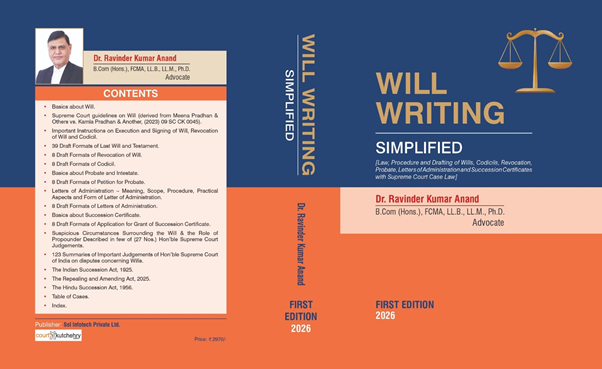
OUR RECOMMENDATION: Check out 123 Key Judgements, as highlighted in the book, WILL WRITING SIMPLIFIED, for the quick research and reference purposes. Click the link here: https://www.courtkutchehry.com/pages/blog/123-supreme-court-judgments-on-wills/
Keywords for SEO & Quick Search
- Vrindavanibai Sambhaji Mane v. Ramchandra Vithal Ganeshkar Supreme Court case
- Civil Appeal No. 2409 of 1978 judgment
- Babubai will dispute India
- Supreme Court inheritance law 1995
- S.C. Agrawal Sujata V. Manohar judgment
- Suspicious circumstances will validity case
- Testamentary freedom Supreme Court ruling