
Vodafone Idea’s ₹50,000 Crore Lifeline Required AGR Dispute Closes: Who Will Step In?
Government Becomes Largest Shareholder
Growth Hinges on Strategic Investor
By Business Reporter
New Delhi: May 04, 2026:
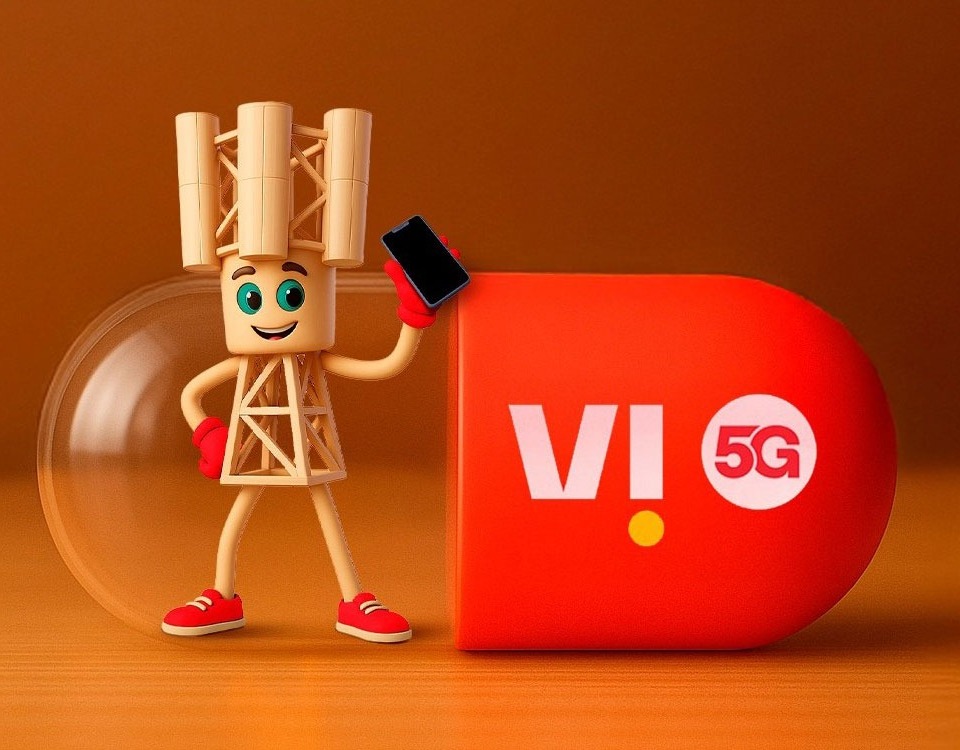
Vodafone Idea faces a growth challenge despite government relief measures, with analysts warning it needs a fresh capital infusion of ₹45,000–50,000 crore to remain competitive in India’s telecom market. The government now holds nearly 49% equity after converting spectrum dues, but questions remain about who will step in as a strategic investor.
In matters involving inheritance and family property disputes, courts place strong emphasis on establishing lawful succession and validating ownership through reliable evidence. A key judicial reference in this context is Uma Sashi Devi (Dead) through LRs vs Dibakar Banerjee & Others succession and property dispute judgment , where the court examined competing claims among legal heirs and reinforced that inheritance rights must be determined in accordance with statutory provisions and factual clarity. The ruling highlights that courts adopt a balanced approach, ensuring equitable resolution of disputes while protecting the rights of all parties involved.
Background
Vodafone Idea Limited (Vi), India’s third-largest telecom operator, is at a crossroads. Despite relief measures from the government—including conversion of ₹37,000 crore spectrum dues into equity and reduction of ₹23,649 crore in AGR-related dues—the company’s liabilities still hover around ₹64,046 crore. Analysts argue that Vi needs ₹45,000–50,000 crore in fresh capital over the next three years to fund operations and roll out 5G services.
Key Legal and Regulatory Frameworks
- Adjusted Gross Revenue (AGR) Dues
- AGR is a revenue-sharing mechanism under telecom licenses.
- The Supreme Court’s 2019 ruling mandated telecom operators to pay dues calculated on gross revenues, including non-core income.
- Vodafone Idea’s AGR liabilities were a major factor in its financial distress.
- Spectrum Payment Rules
- Telecom operators must pay for spectrum acquired in auctions.
- The government allowed deferred payments and converted part of Vi’s dues into equity, making the Centre the largest shareholder.
- Telecom Regulatory Authority of India (TRAI) Oversight
- TRAI regulates tariffs, quality of service, and competition.
- Analysts warn that if Vi collapses, India risks becoming a two-player market dominated by Reliance Jio and Bharti Airtel, raising concerns about tariff hikes and reduced competition.
- Corporate Governance and Equity Dilution
- With the government holding 49%, promoters Vodafone Plc and Aditya Birla Group at 25.5%, and the rest with public investors, any fresh equity infusion will dilute promoter stakes further.
- Legal provisions under the Companies Act and SEBI regulations will govern such restructuring.
Market Dynamics
- Reliance Jio and Bharti Airtel dominate the sector, with Vi’s market share steadily declining.
- Without fresh capital, Vi risks widening its gap in network quality and subscriber base.
- The government has stretched repayment timelines, with bulk payments scheduled between FY36–FY41, easing immediate cash stress but not solving growth funding needs.
Potential Investors
- JSW Group (Sajjan Jindal): Expanding in infrastructure and telecom-adjacent sectors, rumoured to be evaluating entry.
- Adani Group: Already invested in spectrum and data centers, could leverage Vi for telecom expansion.
- Promoter Participation: Kumar Mangalam Birla’s Aditya Birla Group may face dilution unless it contributes proportionately.
Why Vodafone Idea Matters
- India’s telecom market needs at least three strong private players for pricing stability.
- A weak third operator risks reduced competition, higher tariffs, and slower network investments.
- Alongside BSNL, Vi plays a systemic role in ensuring consumer choice and market balance.
FAQ: Quick Legal Understanding
Q1. What are AGR dues?
AGR refers to adjusted gross revenue, the basis for calculating license fees and spectrum usage charges. The Supreme Court ruled that non-core revenues must also be included, inflating dues for operators.
Q2. Why did the government convert spectrum dues into equity?
To provide relief and stabilize Vi, the government converted dues worth ₹37,000 crore into equity, becoming the largest shareholder.
Q3. What happens if Vodafone Idea fails to raise capital?
It risks losing competitiveness, shrinking further against Jio and Airtel, and potentially collapsing—leading to a duopoly in India’s telecom market.
Q4. Can promoters retain control after new investments?
Unlikely. Any large capital raise will dilute promoter stakes unless they participate proportionately.
Q5. Why is a third operator critical for India?
To maintain tariff stability, prevent monopolistic pricing, and ensure better service quality through competition.
Q6. What role does TRAI play here?
TRAI ensures fair competition and consumer protection. A weakened Vi could challenge TRAI’s mandate to maintain a balanced market.
Conclusion
Vodafone Idea’s survival hinges on securing a ₹50,000 crore lifeline. While government relief has eased immediate stress, the company’s future depends on attracting a deep-pocketed investor. The outcome will shape India’s telecom landscape—either preserving a three-player balance or sliding into a duopoly with long-term consequences for consumers.