
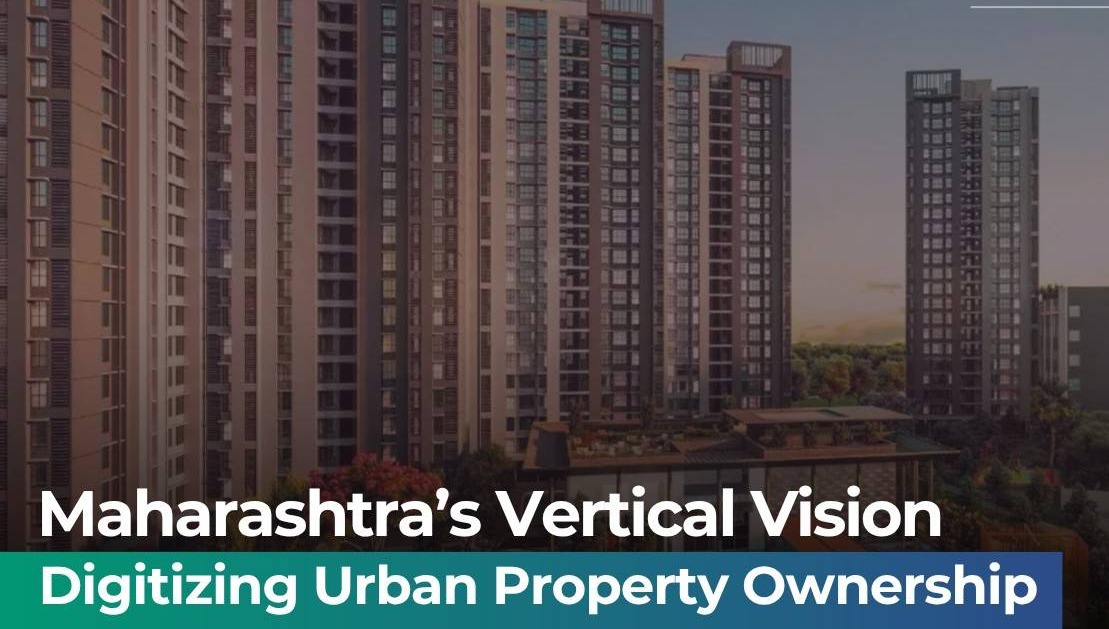
Maharashtra’s Vertical Property Card: A New Era in Flat Ownership Records
Digital transparency for apartment titles
Simplifying disputes and resale transactions
By Our Legal Correspondent
New Delhi: April 22, 2026:
Maharashtra has introduced a Vertical Property Card (VPC) system, a pioneering initiative aimed at bringing clarity and transparency to apartment ownership. Traditionally, land records in India have been horizontal—tracking ownership of plots of land. However, with urbanization and the rise of multi-storey buildings, this system has struggled to reflect the complexities of flat ownership. The VPC seeks to bridge this gap by creating a digital record for each flat, linked to the building’s master property card.
For a clear understanding of how courts resolve inheritance disputes and determine rights of legal heirs, read the detailed judgment analysis of Gurdial Singh (Dead) Through LRs vs Jagir Kaur (Dead) & Anr , which highlights key principles on succession, property rights, and evidentiary considerations in civil cases.
What is a Vertical Property Card?
The VPC is essentially a digital title document for individual flats. It records ownership details, transactions, encumbrances, and mortgage information for each unit in a building. Just as landowners have property cards for plots, flat owners will now have a similar official record. This initiative is part of the state’s larger push toward digitization of land and property records.
Key Legal and Administrative Issues
- Fragmented Ownership Records
- Until now, flat ownership was primarily documented through sale deeds and registration records.
- These documents often lacked integration with municipal and revenue records, leading to disputes.
- Transparency in Transactions
- Buyers often faced uncertainty about whether a flat was mortgaged or involved in litigation.
- The VPC will provide a single-window verification system, reducing fraud and misrepresentation.
- Integration with Land Records
- The VPC links each flat to the building’s master property card, ensuring consistency between land and apartment records.
- This integration is expected to streamline property tax assessments and urban planning.
- Legal Recognition
- The initiative aligns with provisions of the Real Estate (Regulation and Development) Act (RERA), which emphasizes transparency in real estate transactions.
- By formalizing flat ownership records, the VPC strengthens the enforceability of property rights.
Implications for Stakeholders
- Flat Owners: Gain a clear, government-recognized record of ownership, making resale and inheritance smoother.
- Buyers: Can verify ownership and encumbrances before purchase, reducing risks.
- Banks and Financial Institutions: Easier to assess mortgage eligibility and track loan-related encumbrances.
- Government: Improved revenue collection and reduced litigation burden.
Challenges Ahead
- Implementation Scale: Maharashtra has millions of flats; digitizing all records will be a massive administrative exercise.
- Accuracy of Data: Ensuring that historical records are correctly updated into the system is critical.
- Legal Disputes: Existing disputes over ownership may complicate the issuance of VPCs.
- Public Awareness: Flat owners must be educated about the importance of obtaining and maintaining their VPC.
Broader Context
The VPC initiative reflects a broader trend in India toward digital governance of property records. States like Karnataka and Andhra Pradesh have experimented with similar systems, but Maharashtra’s scale and urban density make this rollout particularly significant. If successful, it could serve as a model for other states, transforming how property ownership is documented across India.
[RESEARCH RESOURCES]
BUY & READ THE BOOK, WILL WRITING SIMPLIFIED, By Dr Ravinder Kumar Anand. [📘 Buy Will Writing Simplified online: Amazon | Flipkart ]
FAQ for Quick Understanding
Q1: What is a Vertical Property Card (VPC)?
A: It is a digital record of ownership for individual flats, linked to the building’s master property card.
Q2: Why was it introduced?
A: To bring clarity and transparency to flat ownership, which was previously documented only through sale deeds and registration records.
Q3: How does it help buyers?
A: Buyers can verify ownership, mortgages, and disputes before purchase, reducing fraud risks.
Q4: What role does it play in mortgages?
A: Banks can easily check if a flat is already mortgaged, simplifying loan approvals.
Q5: Does it replace sale deeds?
A: No, sale deeds remain necessary, but the VPC complements them by integrating ownership into official land records.
Q6: How does it benefit the government?
A: It improves property tax collection, reduces disputes, and enhances urban planning.
Q7: Are there challenges?
A: Yes—digitizing millions of flats, ensuring data accuracy, and resolving existing disputes are major hurdles.
In summary, Maharashtra’s Vertical Property Card is a landmark reform in property documentation. By digitizing and integrating flat ownership records, it promises greater transparency, reduced disputes, and smoother transactions. If implemented effectively, it could reshape the future of urban property governance in India.