
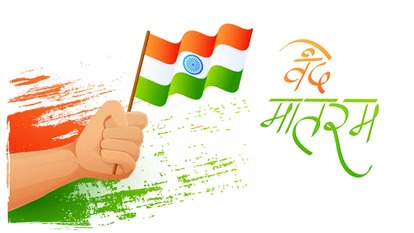
COURTKUTCHEHRY SPECIAL ON VANDE MATARAM OFFICIAL RENDITION RULES
Government Mandates Six-Stanza Rendition of Vande Mataram at Official Events
Standing at attention made compulsory during performance
Violations may invite disciplinary and legal consequences
By Legal Reporter
New Delhi: February 11, 2026:
In a historic move, the Government of India has issued new guidelines mandating the singing or playing of all six stanzas of Vande Mataram at official events. The Union Home Ministry’s directive, released on February 11, 2026, formalizes the ceremonial role of India’s national song, written by Bankim Chandra Chatterjee in the 1870s. The rendition, lasting three minutes and ten seconds, must now precede the national anthem, Jana Gana Mana, whenever both are performed together.
Also Read: Kerala’s First Visually Challenged Woman Judge Marks Breakthrough in Disability Rights
This is the first time the government has laid down a formal protocol for Vande Mataram, making it mandatory at state functions, award ceremonies, and events attended by the President and Governors.
New Rules Explained
According to the Ministry of Home Affairs (MHA):
- Six-Stanza Version: All six stanzas of Vande Mataram must be sung or played, including the four stanzas that were historically omitted in 1937.
- Duration: The approved rendition lasts 190 seconds (3 minutes and 10 seconds).
- Order of Performance: If both Vande Mataram and Jana Gana Mana are sung at the same event, Vande Mataram must be performed first.
- Standing Mandatory: Attendees must stand at attention during the performance, like the national anthem.
- Occasions: The song will be played at:
- Flag unfurling ceremonies
- Civilian awards like the Padma Awards
- Presidential and gubernatorial events (arrival, departure, and speeches)
- Cultural and ceremonial functions across states
Also Read: Calcutta High Court: Partition Decree Executable Only After Stamp Duty Payment
Consequences for Violations
The guidelines specify that failure to comply with the mandate may lead to:
- Disciplinary Action: For government officials and institutions, violations could result in administrative penalties.
- Legal Consequences: Disrespecting the national song may be treated as an offence under existing laws governing national symbols.
- Public Accountability: Schools, colleges, and organizations failing to implement the rules may face scrutiny from education boards and cultural departments.
Legal experts note that while the directive does not introduce new criminal provisions, it strengthens the enforceability of existing laws related to respect for national symbols.
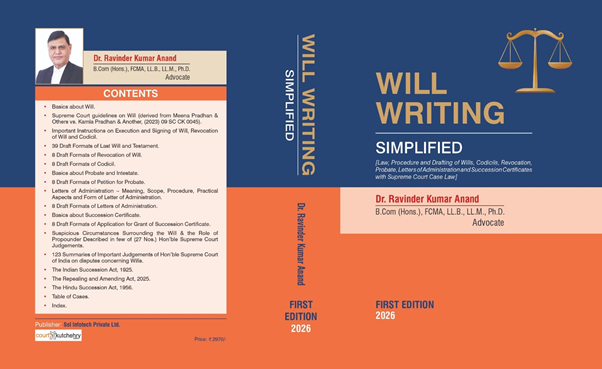
[📘 Legal professionals and students alike will benefit from Will Writing Simplified, which covers procedure and case law in detail.]
🔹 Buy online: Amazon | Flipkart
Also Read: Punjab & Haryana High Court Slams Misuse of Contempt Law, Imposes ₹3 Lakh Cost
Why This Matters
The move is seen as part of the government’s effort to strengthen national identity and cultural pride:
- It elevates Vande Mataram to a status closer to the national anthem.
- It ensures uniformity in how the song is performed across India.
- It revives the full six-stanza version, reconnecting citizens with the original composition.
Supporters argue that the directive will instil patriotism and discipline, while critics caution against over-regulation of cultural practices.
Broader Context
- Historical Background: Vande Mataram was adopted as India’s national song in 1950, but only the first two stanzas were officially recognized.
- Comparison with National Anthem: Jana Gana Mana runs for 52 seconds, while the new rendition of Vande Mataram lasts over three minutes.
- Global Practice: Many countries mandate ceremonial songs at official events, and India’s move aligns with international traditions of honouring national symbols.
Expert Opinions
- Cultural scholars say the revival of all six stanzas will deepen appreciation of Bankim Chandra Chatterjee’s work.
- Legal professionals highlight that the directive will likely be tested in courts if disputes arise over enforcement.
- Educators believe the mandate will influence school curricula, making Vande Mataram a regular part of morning assemblies.
Impact on Society
Also Read: CCPA Orders Barbeque Nation to Stop Levelling Mandatory Service Charges
The directive will affect:
- Government Events: Standardized ceremonies across states.
- Educational Institutions: Mandatory inclusion in school programs.
- Public Functions: Greater visibility of Vande Mataram in cultural life.
While compliance may initially pose logistical challenges, the move is expected to embed the national song more deeply into India’s civic culture.
Conclusion
The government’s mandate on Vande Mataram marks a new chapter in India’s ceremonial traditions. By requiring the full six-stanza rendition at official events, the directive reinforces respect for national symbols and strengthens cultural identity.
However, the consequences for violations underline the seriousness of the move, making it clear that patriotism and discipline are now inseparable from official protocol.
Keywords for Faster Searches
- Vande Mataram six-stanza mandate India
- National song official events rules
- Standing mandatory Vande Mataram
- Consequences for violating Vande Mataram rules
- Supreme Court and national symbols India
- Home Ministry Vande Mataram guidelines
- Cultural identity national song India
Also Read: Delhi High Court Slams Advocate for Misleading Family Court into Granting Divorce in Void Marriage