
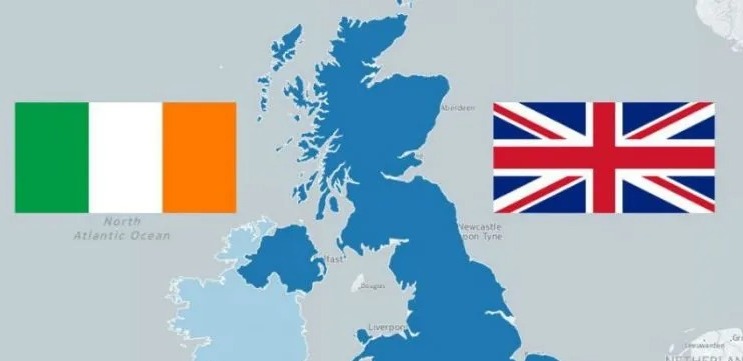
UK or Ireland: Which Gateway Best Serves Indian Investors?
Britain’s scale vs. Ireland’s EU access
Compliance rules differ sharply across both regimes
By Vishwas Kumar
New Delhi: May 11, 2026:
For Indian businessmen weighing UK versus Ireland for expansion, the choice hinges on balancing market size, compliance obligations, and long-term residency benefits. The UK offers scale and global connectivity, while Ireland provides EU access, lower tax rates, and lighter residency requirements.
For readers studying ancestral property disputes, succession rights, and validity of revenue entries in civil litigation, the Supreme Court judgment in Dhani Ram (Died Through LRs) & Others vs Shiv Singh offers important legal insight. The Court examined inheritance claims, ownership evidence, and principles governing partition and title disputes under Indian property and succession law.
Comparative Strategic Analysis
1. Market Opportunities
- UK:
- London remains a global financial hub, ideal for fintech, IT services, and pharmaceuticals.
- Strong demand in renewable energy, AI, and healthcare innovation.
- Access to US markets via E1/E2 visa treaties.
- Ireland:
- EU membership ensures seamless access to European trade and regulatory frameworks.
- Dublin is a hub for tech multinationals (Google, Facebook, Apple), making it attractive for Indian IT and SaaS firms.
- Low corporate tax (12.5%) incentivizes profit-shifting and global headquarters setup.
2. Visa & Residency Pathways
- UK:
- Innovator Founder Visa requires £50,000+ investment and endorsement.
- Expansion Worker Visa allows Indian corporates to open UK branches.
- Citizenship possible after ILR (5–6 years).
- Ireland:
- Immigrant Investor Program (IIIP) offers residency with €1M enterprise investment, €1M fund, €2M REIT, or €500K endowment.
- Start-up Entrepreneur Programme (STEP) requires €50K–€75K secured funding and innovative business plan.
- Citizenship possible after 5 years residency, with flexible stay requirements.
3. Compliance & Legal Issues
- UK:
- Strict endorsement criteria for Innovator visas; business must show scalability and innovation.
- Residency requirement: 180+ days per year for ILR eligibility.
- Closure of Tier 1 Investor Visa means no passive investment route.
- Ireland:
- IIIP requires proof of legitimate funds and job creation in enterprise route.
- STEP mandates High Potential Start-up status, with job creation and revenue benchmarks.
- Residency requirement is minimal (one visit per year for IIIP), easing compliance for Indian investors.
4. Risk Factors
- UK:
- Brexit limits EU market access.
- Higher residency obligations may deter passive investors.
- Endorsement bottlenecks can delay applications.
- Ireland:
- Smaller domestic market compared to UK.
- REIT investments lock capital for 3–5 years.
- Citizenship requires continuous 12-month residence before application.
Comparison Table
|
Factor |
UK |
Ireland |
|
Market Access |
Global, US treaties, Commonwealth |
EU single market, English-speaking |
|
Corporate Tax Rate |
25% (standard) |
12.5% (one of lowest in EU) |
|
Investment Threshold |
£50K (Innovator), £2M (Investor) |
€50K–€75K (STEP), €1M+ (IIIP) |
|
Residency Requirement |
180+ days/year |
Minimal (one visit/year for IIIP) |
|
Citizenship Timeline |
5–6 years |
5 years (with flexible residency) |
|
Best For |
Scale, global finance, tech hubs |
EU access, tax efficiency, startups |
Detailed FAQ
Q1: Which country offers easier residency for Indian investors?
Ireland, as IIIP requires only one annual visit, while UK mandates 180+ days per year.
Q2: Which is better for startups?
Both offer startup visas, but Ireland’s STEP is more flexible with lower funding requirements (€50K–€75K vs. UK’s £50K+ plus endorsement).
Q3: Which country is better for passive investors?
Ireland, since IIIP allows fund, REIT, or endowment investments without active business involvement.
Q4: Which country offers faster citizenship?
Both average 5–6 years, but Ireland’s flexible residency rules make it easier for Indian businessmen managing operations across multiple countries.
Q5: Which sectors are most promising?
- UK: Fintech, AI, renewable energy, healthcare.
- Ireland: IT services, SaaS, pharmaceuticals, education, renewable energy.
Key Takeaway:
For Indian businessmen, the UK suits scale-driven ventures seeking global finance and innovation hubs, while Ireland suits tax-efficient expansion and EU market access with lighter residency obligations. Strategic choice depends on whether the priority is global reach (UK) or EU integration and compliance ease (Ireland).