
TDS on Jointly Owned Property: What Tenants and Owners Must Know
Threshold Applies Per Owner, Not Per Property
Why Rent Splitting Matters in Tax Compliance
By Our Business Reporter
New Delhi: February 24, 2026:
Renting property in India has become more than just a financial arrangement—it’s also a matter of tax compliance. With rising urban rents, many tenants paying above ₹50,000 per month are required to deduct Tax Deducted at Source (TDS) under Section 194-IB of the Income Tax Act. But what happens when the property is jointly owned? Does the ₹50,000 threshold apply to the total rent or to each co-owner’s share? Recent clarifications and tribunal rulings have shed light on this important question, impacting millions of tenants and landlords across the country.
Also Read: Allahabad High Court: 13-Year Delay in Summary Trial Is Gross Abuse of Process
The Law: Section 194-IB Explained
- Applicability: Section 194-IB mandates that individuals (not just businesses) must deduct TDS at 5% if monthly rent exceeds ₹50,000.
- Who deducts: The tenant is responsible for deducting and depositing TDS with the government.
- Exemption: If rent is below ₹50,000 per month, no TDS is required.
[Recommended Legal Resource]
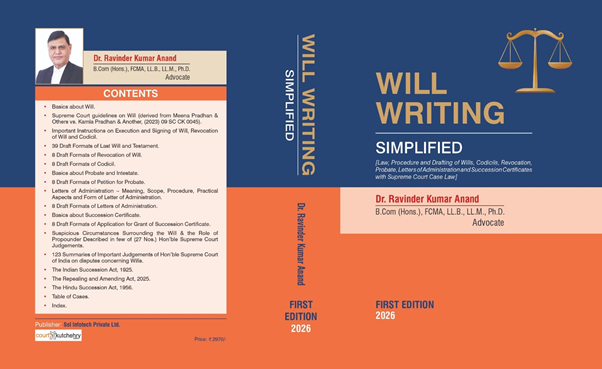
For those navigating property ownership and succession a valuable resource is the book Will Writing Simplified [Law, Procedure and Drafting of Wills, Codicils, Revocation, Probate, Letters of Administration and Succession Certificates with Supreme Court Case Law]. It provides clarity on inheritance and ownership structures. Available on Amazon and Flipkart, this book is a professional guide for common people and legal practitioners.
Also Read: Why Jeju Island Visa Rules Confuse Indian Travelers
Joint Ownership: The Key Question
The confusion arises when a property is owned by two or more people. For example, if a flat is rented at ₹80,000 per month, and it is jointly owned by two people with equal shares, does the tenant deduct TDS on ₹80,000 or on each owner’s ₹40,000 share?
Tribunal Ruling
The Indore Bench of the Income Tax Appellate Tribunal clarified that the threshold applies individually to each co-owner. If each owner’s share of rent is below ₹50,000, then no TDS is required—even if the total rent exceeds ₹50,000.
Practical Example
- Case 1: Rent = ₹80,000; Two owners (50% each).
- Each owner receives ₹40,000.
- No TDS required, since each share is below ₹50,000.
- Case 2: Rent = ₹1,20,000; Two owners (50% each).
- Each owner receives ₹60,000.
- TDS required, since each share exceeds ₹50,000.
Why Rent Splitting Must Match Ownership Share
Tax experts caution that rent division must reflect actual ownership percentages. If the rent is split artificially to avoid TDS, authorities may treat it as tax evasion. Proper documentation in the rental agreement is essential.
Compliance Tips for Tenants
- Always check the ownership structure of the property.
- Deduct TDS only if the rent paid to an individual owner exceeds ₹50,000.
- File Form 26QC within 30 days of deduction.
- Issue Form 16C (TDS certificate) to the landlord.
Also Read: CCPA Slaps ₹15 Lakh Penalty on Vajirao & Reddy for Misleading UPSC Ads
Penalties for Non-Compliance
Failure to deduct or deposit TDS can lead to:
- Interest charges.
- Penalties under the Income Tax Act.
- Disallowance of expenses for businesses.
Broader Context: Rising Urban Rents
With rents in cities like Delhi, Mumbai, and Bengaluru often crossing ₹50,000 per month, this provision affects a growing number of tenants. Salaried professionals, expatriates, and corporate tenants must be especially vigilant.
Expert Insight
Tax advisors emphasize that tenants should not panic if the total rent is high. What matters is the individual share of rent per co-owner. This interpretation aligns with the principle that tax liability is assessed per recipient, not per property.
Conclusion
The rule is simple yet powerful: TDS on rent applies per co-owner, not per property. Tenants must carefully assess ownership shares before deducting tax. With urban rents rising, awareness of this provision is crucial to avoid penalties and ensure smooth compliance.
Frequently Asked Questions (FAQ)
1. Do tenants need a TAN (Tax Deduction Account Number) to deduct TDS on rent?
No. Under Section 194-IB, tenants are not required to obtain a TAN. They can deposit TDS using their PAN.
2. What if rent is paid in cash?
Even if rent is paid in cash, the tenant must deduct TDS if the rent per co-owner exceeds ₹50,000. The mode of payment does not change the obligation.
3. How is TDS deposited?
Tenants must file Form 26QC online within 30 days of deduction and issue Form 16C (TDS certificate) to the landlord.
4. What if the property has three or more co-owners?
The same rule applies: check each co-owner’s share. If any individual’s share exceeds ₹50,000 per month, TDS must be deducted on that portion.
5. Can tenants split rent artificially to avoid TDS?
No. Rent division must reflect actual ownership shares. Artificial splitting can be treated as tax evasion.
6. What happens if tenants fail to deduct TDS?
They may face interest charges, penalties, and legal consequences under the Income Tax Act.
Also Read: The “Boring Money Formula” That Actually Builds Wealth
7. Is TDS applicable on security deposits or advance rent?
TDS applies only to rent payments. Security deposits are not subject to TDS unless adjusted against rent.
8. Does this rule apply to commercial properties too?
Yes. Section 194-IB applies to both residential and commercial properties rented by individuals or HUFs (Hindu Undivided Families).
Suggested Keywords for SEO & Faster Searches
- TDS on rent jointly owned property
- Section 194-IB Income Tax Act India
- Rent above ₹50,000 TDS rules
- Joint ownership rent tax compliance
- Income Tax Tribunal ruling on rent TDS
- Tenant TDS obligations India
- Property rent tax law India
- Will Writing Simplified book
Also Read: Bombay High Court: Single Mother Is a Complete Parent