
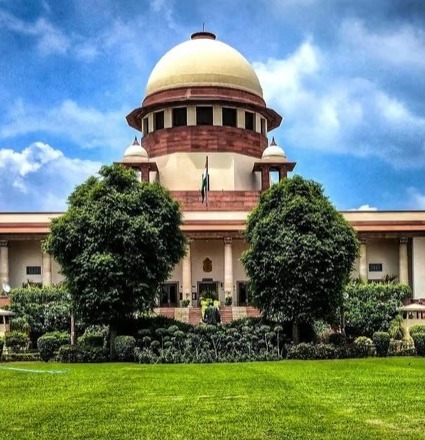
Supreme Court Succession Battles: How Landmark Rulings Defined Probate Law
From Lakshmamma to Narinder Singh Rao – Courts Reinforce Proof Standards in Testamentary Disputes
Kamalam Case Affirms Judicial Vigilance Against Suspicious Circumstances
By Vishwas Kumar
New Delhi: April 28, 2026:
The most cited supreme court judgements in succession disputes are: Nagulapati Lakshmamma, Kamalam, Narinder Singh Rao, and Niranjan Joshi. Together they form a cluster of precedents shaping Indian succession law. They ensure that testamentary freedom is respected but only when proof standards are rigorously met, balancing autonomy with protection against fraud. These rulings remain the go-to citations in probate litigation, guiding courts and litigants alike.
To see how courts evaluate competing inheritance claims and resolve complex succession disputes between legal heirs, read the judgment in Gurdial Singh vs Jagir Kaur, which explains key principles on proof of title, rights of legal representatives, and adjudication of property disputes under Indian law.
1. Nagulapati Lakshmamma v. Mupparaju Subbaiah (1998) 5 SCC 285; AIR 1998 SC 2904
- Context: A dispute over the validity of a will executed by Lakshmamma, challenged by heirs who alleged fabrication.
- Key Issue: Whether the will was proved in accordance with Section 63 of the Indian Succession Act and Section 68 of the Evidence Act.
- Significance:
- The Court held that mere production of a registered will is insufficient; attesting witnesses must testify to execution.
- It reinforced that suspicious circumstances must be dispelled by the propounder.
- Impact: This case is widely cited in probate disputes to emphasize the strict evidentiary burden in proving wills.
2. N. Kamalam v. Ayyasamy (2001) 7 SCC 503; AIR 2001 SC 2802
- Context: Concerned a will executed by a testator favouring one heir, challenged by others on grounds of undue influence.
- Key Issue: Whether exclusion of natural heirs and surrounding circumstances rendered the will suspicious.
- Significance:
- The Court reiterated that the propounder must explain exclusion of heirs and unusual bequests.
- It clarified that courts must be vigilant in scrutinizing wills where suspicious circumstances exist.
- Impact: Frequently cited to highlight the judicial approach in balancing testamentary freedom with protection against fraud.
3. Narinder Singh Rao v. Air Vice-Marshal Mahinder Singh Rao (2013) 9 SCC 425; AIR 2013 SC 1470
- Context: A bitter family dispute between brothers over property bequeathed under a will.
- Key Issue: Whether the will was genuine and whether appellate courts could interfere with concurrent findings.
- Significance:
- The Court emphasized that High Courts cannot interfere with concurrent findings unless perversity is shown.
- It reinforced principles from M.B. Ramesh and Shende that wills require strict proof and cannot rely on presumptions under Section 90 Evidence Act.
- Impact: This case is often cited in appeals to underline judicial restraint in second appeals under Section 100 CPC.
4. Niranjan Umeshchandra Joshi v. Mrudula Jyoti Rao (2006) 13 SCC 433; AIR 2007 SC 614
- Context: Dispute over a will executed in favor of one heir, challenged by others.
- Key Issue: Whether the will was proved and whether suspicious circumstances were adequately explained.
- Significance:
- The Court held that suspicious circumstances must be dispelled by cogent evidence.
- It reinforced that mere attestation is not enough; the propounder must establish free will and absence of coercion.
- Impact: Cited in probate cases to highlight the heightened burden when natural heirs are excluded.
Analytical Themes Across Cases
- Burden of Proof: The propounder of a will must prove execution and dispel suspicion.
- Suspicious Circumstances: Exclusion of heirs, unnatural bequests, or delay in seeking probate are red flags.
- Judicial Vigilance: Courts balance testamentary freedom with protection against fraud.
- Appellate Restraint: High Courts cannot casually overturn concurrent findings; perversity must be shown.
[RESEARCH RESOURCES]
EXTRACTS FROM BOOK, WILL WRITING SIMPLIFIED, By Dr Ravinder Kumar Anand. [📘 Buy Will Writing Simplified online: Amazon | Flipkart ]
| N. Kamalam (Dead) and Another v. Ayyasamy and Another., (2001) 08 SC CK 0033: (2001) 7 SCC 503: AIR 2001 SC 2802: Civil Appeal Nos. 3164-66 of 1997. |
| N.P. Saseendran v. N.P. Ponnamma & Ors., (2025) 03 SC CK 0067: 2025 SCC OnLine SC 626: Civil Appeal No. 4312 of 2025 (Arising out of SLP (C) No. 698 of 2023). |
| Nagulapati Lakshmamma v. Mupparaju Subbaiah., (1998) 04 SC CK 0003: (1998) 5 SCC 285; 1998 SCC OnLine SC 290; AIR 1998 SC 2904: Civil Appeal Nos. 1401 and 1402 of 1988. |
| Narinder Singh Rao v. Air Vice-Marshal Mahinder Singh Rao & Others., (2013) 03 SC CK 0034: (2013) 9 SCC 425: AIR 2013 SC 1470: Civil Appeal Nos. 6918–19 of 2011. |
| Nikhila Divyang Mehta & Anr. Vs. Hitesh P. Sanghvi & Ors., (2025) 04 SC CK 0040: Civil Appeal No. 5180 of 2025. |
| Niranjan Umeshchandra Joshi v. Mrudula Jyoti Rao and Others., (2006) 12 SC CK 0022: (2006) 13 SCC 433: AIR 2007 SC 614: Civil Appeal No. 5060 of 2005. |
FAQs
Q1: Why is Nagulapati Lakshmamma often cited?
Because it clarified that mere registration of a will is insufficient; attesting witnesses must prove execution.
Q2: Does exclusion of heirs invalidate a will?
Not automatically. But it raises suspicion, requiring stronger proof from the propounder.
Q3: Can old wills be presumed genuine under Section 90 Evidence Act?
No. The Supreme Court has consistently held that wills require stricter proof and are excluded from Section 90 presumptions.
Q4: What is the role of appellate courts in probate disputes?
They must exercise restraint in second appeals, interfering only when findings are perverse or legally flawed.