
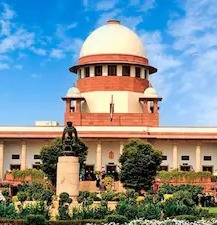
Supreme Court Upholds Fresh TNPSC Recruitment: Fair Play Over Vested Rights
Administrative lapses cannot penalize eligible candidates
Transparency and equal opportunity reinforced in public employment
By Legal Correspondent
New Delhi: June 20, 2026:
The Supreme Court has upheld the Madras High Court’s directions for a fresh recruitment process for Tamil Nadu Public Service Commission (TNPSC) Motor Vehicle Inspector posts, ruling that candidates cannot be prejudiced by administrative delays in workshop approval renewals. The Court emphasized fairness, transparency, and equal opportunity, clarifying that inclusion in provisional lists does not confer a vested right to appointment. Introduction
The case of Kavita Kanwar Appellant vs Pamela Mehta & Ors Respondent highlights important legal principles involving civil disputes, judicial interpretation, and evidentiary analysis. This judgment offers valuable guidance for advocates, litigants, and legal researchers looking to understand precedent-based judicial reasoning and court decisions.
Recruitment disputes in India often highlight the tension between administrative efficiency and fairness. The Supreme Court’s ruling in June 2026 on the TNPSC Motor Vehicle Inspector recruitment process underscores the judiciary’s commitment to ensuring a level playing field. By upholding the Madras High Court’s directions for a fresh selection, the Court reaffirmed that candidates cannot be disadvantaged due to bureaucratic delays in workshop approvals.
Background of the Case
Notification: TNPSC issued Notification No. 3/2018 inviting applications for 113 Motor Vehicle Inspector Grade II posts.
Process: Written exam, certificate verification, and oral interview.
Initial Selection: 32 candidates were provisionally appointed in November 2019.
Challenge: Other candidates argued that delays in renewal of automobile workshop approvals unfairly excluded them.
High Court Ruling (Dec 2023): Directed fresh verification and recruitment.
Supreme Court Appeal (2026): Few candidates challenged the High Court’s directions.
Key Legal Principles
Administrative Fairness: Candidates cannot be penalized for delays beyond their control.
Equal Opportunity: Recruitment must ensure a level playing field.
Transparency: Disclosure of marks for candidates outside the zone of consideration enhances public trust.
No Vested Right: Inclusion in provisional lists does not guarantee appointment.
Court’s Reasoning
Workshop Approvals: Candidates who gained experience in workshops pending renewal or serving government vehicles must be considered.
Retrospective Renewal: State’s decision to grant retrospective approvals was justified.
PSTM Certificates: Certificates issued by Heads of Institutions sufficient for Tamil Medium quota claims.
Marks Disclosure: Individual marks of non-selected candidates may be disclosed in public interest.
Implications
For Candidates: Ensures fairness; no one disadvantaged by administrative lapses.
For TNPSC: Must adopt transparent processes and respect judicial directions.
For Public Employment: Reinforces constitutional principles of equality under Articles 14 and 16.
For Policy: Encourages reforms in recruitment to minimize litigation.
Comparative Perspective
India: Courts intervene to ensure fairness in recruitment.
UK: Judicial review limited but fairness principles apply.
US: Equal opportunity enforced through anti-discrimination laws.
Critical Analysis
The ruling balances fairness with administrative efficiency. However, repeated litigation highlights systemic issues in recruitment processes. Stronger institutional mechanisms are needed to prevent disputes and ensure timely appointments.
Conclusion
The Supreme Court’s decision strengthens the principles of fairness, transparency, and equal opportunity in public employment. By upholding fresh recruitment, the Court ensures that merit prevails over administrative lapses, reinforcing trust in India’s recruitment systems.
FAQ Section (Searchable Index Format)
1. Why was the TNPSC recruitment challenged?
Because delays in workshop approval renewals unfairly excluded eligible candidates.
2. What did the Supreme Court decide?
It upheld the Madras High Court’s directions for a fresh recruitment process.
3. Can provisional selection confer a right to appointment?
No. Inclusion in a provisional list does not create a vested right.
4. What about candidates with workshop experience pending renewal?
They must be considered, as delays were administrative and beyond their control.
5. What is PSTM quota?
Persons Studied in Tamil Medium quota; institutional certificates are sufficient proof.
6. Will marks of non-selected candidates be disclosed?
Yes, individual marks may be disclosed in public interest, though answer sheets need not be furnished.
7. What constitutional principles apply?
Articles 14 and 16 ensure equality and fairness in public employment.
8. How does this ruling affect future recruitment?
It sets a precedent for fairness, transparency, and equal opportunity, discouraging arbitrary exclusions.