

Supreme Court’s Tiger Global Ruling Sparks Tax Scrutiny of Foreign VC and PE Funds
Income Tax Department issues notices to overseas investors
Apex court denies treaty benefits, reshaping India’s tax landscape
By Legal Reporter
New Delhi: February 11, 2026:
India’s tax landscape is undergoing a major shift after the Supreme Court’s ruling in the Tiger Global case, which denied tax treaty benefits to the US-based investment firm. Following this judgment, the Income Tax Department has issued notices to at least seven foreign venture capital and private equity funds, many of which had routed investments into India through Mauritius and Singapore. The ruling has sent shockwaves across global investment circles, as it challenges long-standing practices of using tax treaties to avoid capital gains tax on exits from Indian companies.
Also Read: Kerala’s First Visually Challenged Woman Judge Marks Breakthrough in Disability Rights
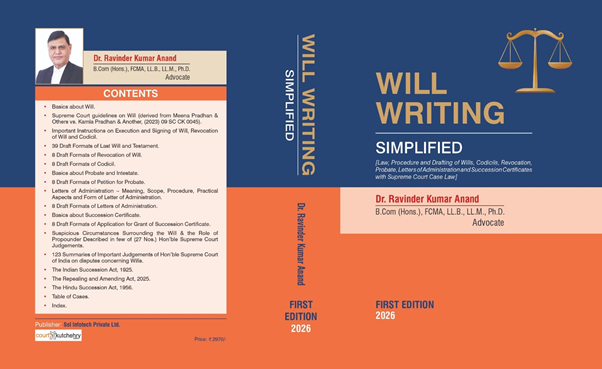
[Legal professionals and students alike will benefit from Will Writing Simplified, which covers procedure and case law in detail.]
🔹 Buy online: Amazon | Flipkart
Background of the Case
Also Read: Calcutta High Court: Partition Decree Executable Only After Stamp Duty Payment
- Tiger Global, a US investment firm, had claimed tax exemptions under India’s treaties with Mauritius and Singapore.
- The Supreme Court ruled that the firm could not avail treaty benefits since it lacked sufficient “substance” in its Mauritius and Singapore entities.
- The judgment emphasized that mere paper companies or shell entities cannot claim treaty advantages.
- Following this, the Income Tax Department began scrutinizing other foreign funds that had exited Indian investments without paying capital gains tax.
Supreme Court’s Observations
The apex court clarified several key points:
- Substance Over Form: Tax treaty benefits are available only if the foreign entity has genuine commercial substance in the treaty jurisdiction.
- No Treaty Shopping: Investors cannot set up shell companies in Mauritius or Singapore solely to avoid taxes in India.
- GAAR (General Anti-Avoidance Rule): The ruling strengthens GAAR provisions, allowing tax authorities to pierce through artificial structures.
- Global Impact: The judgment sets a precedent that will affect not just Tiger Global but also other foreign investors using similar structures.
Notices to Foreign Funds
- Over the past two weeks, notices have been sent to at least seven overseas VC and PE funds.
- These funds are being asked to provide detailed information about their operations, ownership, and financial structures in Mauritius and Singapore.
- Tax officers in Mumbai and Bengaluru are leading the scrutiny, with several assessments set to become time-barred by March 31, 2026.
- The department is specifically citing the Tiger Global judgment in its communications.
Why This Matters
Also Read: Punjab & Haryana High Court Slams Misuse of Contempt Law, Imposes ₹3 Lakh Cost
This ruling and subsequent notices mark a turning point in India’s tax enforcement:
- Foreign Investors: Must now demonstrate genuine business activity in treaty jurisdictions to claim tax benefits.
- Indian Tax System: Gains credibility by curbing treaty shopping and tax avoidance.
- Global Investment Climate: Investors may reconsider routing funds through Mauritius and Singapore, opting for more transparent structures.
Tax experts believe this could lead to higher compliance costs for foreign funds but also greater transparency in India’s investment ecosystem.
Broader Legal Context
- Mauritius and Singapore Treaties: Historically allowed investors to avoid capital gains tax on Indian exits.
- GAAR Provisions: Empower tax authorities to disregard transactions designed solely for tax avoidance.
- Supreme Court’s Role: By denying treaty benefits to Tiger Global, the Court reinforced the principle that substance must prevail over form in tax matters.
This ruling aligns with India’s broader push to prevent base erosion and profit shifting (BEPS), in line with global tax reforms.
Expert Opinions
- Tax lawyers say the ruling will discourage aggressive tax planning and treaty shopping.
- Chartered accountants warn that foreign funds must now maintain real offices, employees, and operations in treaty jurisdictions.
- Policy analysts note that while the ruling may initially deter some investors, it will ultimately strengthen India’s reputation for fair and transparent taxation.
Also Read: CCPA Orders Barbeque Nation to Stop Levelling Mandatory Service Charges
Impact on Businesses and Investors
- Foreign VC and PE funds: Must reassess their structures and ensure compliance with Indian tax laws.
- Indian startups and companies: May see slower inflows from funds that previously relied on tax treaty benefits.
- Global investors: Will need to balance tax efficiency with compliance, possibly shifting to direct investment models.
Conclusion
The Supreme Court’s Tiger Global ruling has reshaped India’s tax landscape by denying treaty benefits to shell entities and reinforcing GAAR provisions. The subsequent notices to foreign VC and PE funds highlight the government’s determination to curb tax avoidance and ensure fair taxation.
This judgment will serve as a guiding precedent for future tax disputes, compelling investors to adopt transparent and compliant structures when investing in India.
Keywords for Faster Searches
- Supreme Court India Tiger Global ruling
- Tax treaty benefits Mauritius Singapore
- Income Tax notices foreign VC PE funds
- GAAR India foreign investment taxation
- Capital gains tax India foreign investors
- Landmark SC judgment tax avoidance India
Also Read: Delhi High Court Slams Advocate for Misleading Family Court into Granting Divorce in Void Marriage