
Beyond the Agreement to Sell: Supreme Court Mandates Express Surrender to Sever Tenancy Rights
Unregistered Sale Agreements Fail to Shield Tenants from Eviction as Apex Court Reaffirms Precedence of Property Laws
Supreme Court Clarifies Legal Framework Governing Landlord-Tenant Relationships Amid Unexecuted Purchase Agreements
By Legal Editor
New Delhi: August 15, 2026:
The legal interplay between real property conveyencing and leasehold rights has reached a definitive clarification through a landmark ruling by the Supreme Court of India. In Nazim Shaikh Hasan v. Nasir Mushtaq Shaikh & Others, a Division Bench comprising Justice Prashant Kumar Mishra and Justice N.V. Anjaria established that an executory agreement to sell between a landlord and tenant does not ipso facto extinguish the pre-existing tenancy. To terminate leasehold rights, the agreement or the unambiguous conduct of the parties must demonstrate an express or implied surrender under statutory property principles. The Court further ruled that unregistered sale agreements executed post-2001 cannot be invoked to seek statutory protection against eviction.
Key Statutory Provisions and Judicial Precedents
The judgment synthesizes long-standing principles of property law, contract interpretation, and procedural compliance under Indian jurisprudence:
Section 111 of the Transfer of Property Act, 1882 (Determination of Lease): The Court emphasized sub-clauses (e) and (f), governing express and implied surrender. A lease is determined only when a lessee yields up their interest to the lessor by explicit agreement or by operation of law.
Section 53A of the Transfer of Property Act, 1882 (Part Performance): Protection under Section 53A requires that possession be taken or continued in unequivocal part performance of the agreement to sell. The Court affirmed that continuous physical occupation originating from an earlier tenancy cannot be automatically re-characterized as possession under a contract for sale.
Section 17(1A) of the Registration Act, 1908 (Mandatory Registration): Inserted via amendment on September 24, 2001, Section 17(1A) mandates that documents containing contracts to transfer immovable property for consideration must be registered to claim protection under Section 53A. Unregistered contracts retain zero legal effect for part performance defence.
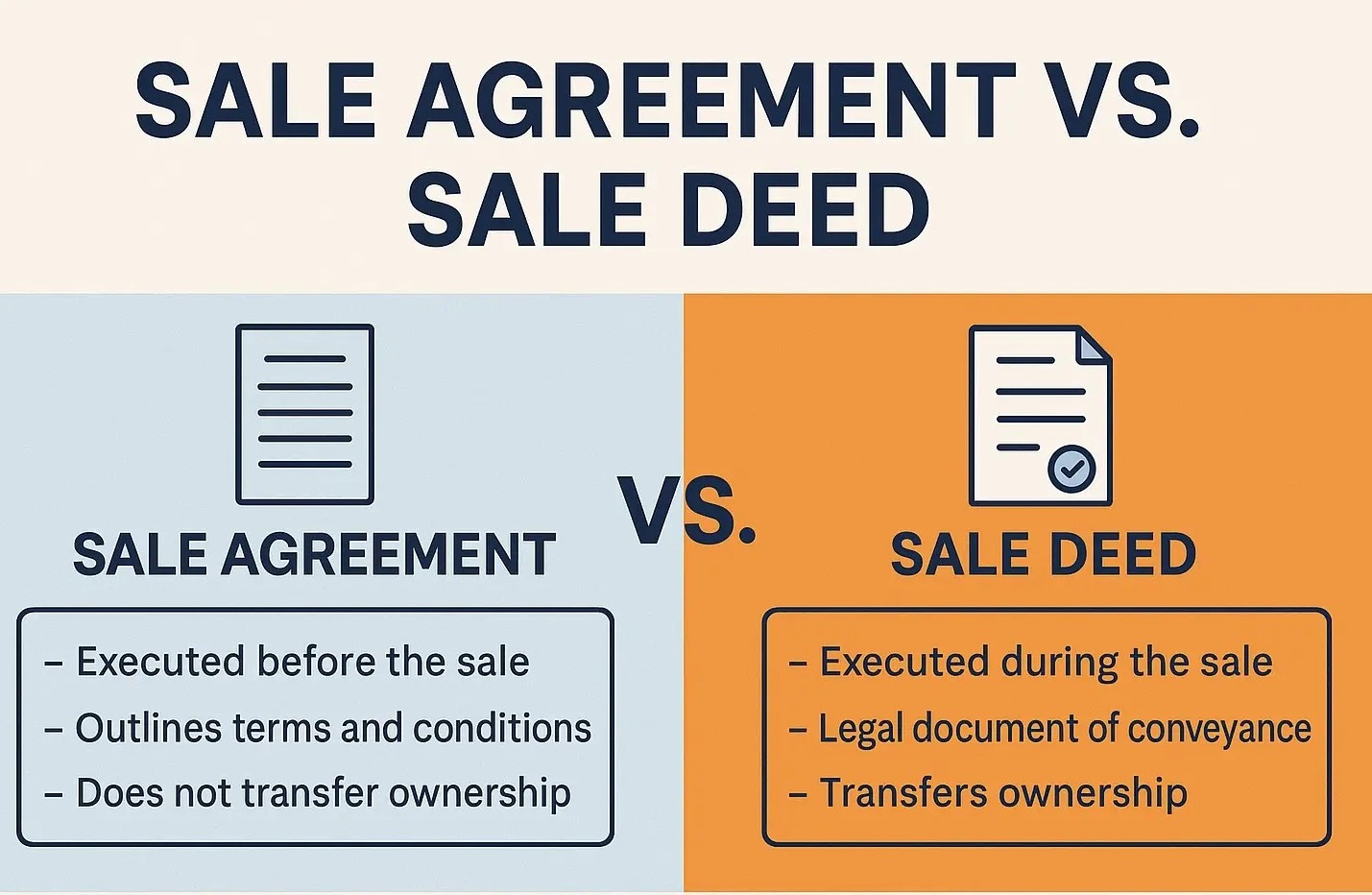
Section 54 of the Transfer of Property Act, 1882 (Sale Defined): An agreement to sell creates no title, charge, or interest in immovable property; title transfers exclusively through a validly executed and registered deed of conveyance.
─────────────────────────────────┐
│ CRITICAL LEGAL PROPOSITIONS ESTABLISHED │
├─────────────────────────────────────────────────────────────────────────────┤
│ 1. Mere Execution ≠ Determination of Tenancy │
│ An agreement to sell does not automatically alter tenant status. │
│ │
│ 2. Requirement of Express/Implied Surrender │
│ Leases end only via Section 111(e) or 111(f) conditions. │
│ │
│ 3. Strict Standard for Section 53A Part Performance │
│ Possession must strictly originate from the sale contract. │
│ │
│ 4. Mandatory Registration under Section 17(1A) │
│ Post-2001 unregistered sale agreements cannot defeat eviction suits. │
Distinguishing Judicial Precedents
Analytical Framework: Anatomy of the Ruling
The litigation originated from a 200 sq. ft. commercial shop in Pune. The tenant, occupying the property at a monthly rent, entered into an unregistered agreement to sell with the landlady. The buyer paid earnest money but failed to remit the remaining balance within the stipulated timeframe. When the landlady filed an eviction suit before the Small Causes Court on grounds of rent default and bona fide requirement, the tenant asserted that the landlord-tenant relationship merged into a vendor-vendee relationship, stripping the court of jurisdiction.
TENANCY CONTINUITY FLOWCHART
─────────────┐
│ Execution of Unregistered Agreement to Sell (2004) │
─────────────┘
│
▼
─────────────┐
│ Does the contract explicitly surrender tenancy rights? │
─────────────┘
│ │
YES │ │ NO
▼ ▼
┌───────────────────────────────────┐
│ Tenancy determined under §111 │ │ Tenancy subsists uninterrupted │
│ Parties become Vendor / Vendee │ │ Landlord maintains rent rights │
└─────────────────┬─────────────────┘
│
▼
│ Can Tenant claim §53A protection? │
└─────────┬───────────────────┬─────┘
│ │
YES │ │ NO
▼ ▼
┌───────────────────────┐ ┌───────────┐
│ Registered contract? │ │ Dismissed │
└───────┬───────┬───────┘ └───────────┘
│ │
YES │ │ NO (§17(1A) Bar)
▼ ▼
┌───────────┐ ┌───────────────────────┐
│ Protected │ │ Eviction Order Valid │
└───────────┘ └───────────────────────┘
The Supreme Court rejected the tenant's reliance on R. Kanthimathi, noting that the contract contained a specific clause mandating that if loan financing failed, the agreement stood cancelled and the buyer had to hand over possession back in its original status. This conditional clause explicitly preserved the status quo ante, reinforcing the survival of the tenancy.
Furthermore, the Court addressed the procedural bar under Section 17(1A) of the Registration Act, 1908. Because the 2004 agreement was unregistered, the tenant could not invoke Section 53A of the Transfer of Property Act to defend possession against eviction. The failure to file a timely suit for specific performance further negated the tenant's claims.
Searchable Index FAQ
SEARCHABLE LEGAL INDEX & FAQ
===============================================================================
[1.0] TENANCY & AGREEMENTS TO SELL
└─ [1.1] Does an agreement to sell automatically cancel a lease?
└─ [1.2] What constitutes an implied surrender of leasehold rights?
[2.0] STATUTORY PROTECTION & REGISTRATION
└─ [2.1] Can a tenant use Section 53A to stop eviction?
└─ [2.2] Why is Section 17(1A) of the Registration Act crucial?
[3.0] JURISDICTION & REMEDIES
└─ [3.1] Does Small Causes Court retain jurisdiction during purchase disputes?
└─ [3.2] What remedies remain for a buyer-tenant upon seller breach?
===============================================================================
1.0 Tenancy & Agreements to Sell
[1.1] Does executing an agreement to sell automatically terminate an existing lease?
No. Execution of an agreement to sell does not ipso facto alter or end a landlord-tenant relationship. The tenancy remains operational unless the agreement contains explicit terms surrendering lease rights or the parties engage in unequivocal conduct inconsistent with an ongoing lease.
[1.2] What constitutes express or implied surrender of a tenancy under Section 111 of the TP Act?
Express surrender occurs when the parties explicitly state in writing or mutual agreement that the leasehold interest is yielded back to the landlord. Implied surrender occurs by operation of law—for example, when the tenant accepts a new lease or takes actions completely incompatible with the continuation of the original tenancy, such as stopping rent payments under an explicit contractual waiver.
2.0 Statutory Protection & Registration
[2.1] Can a tenant invoke Section 53A of the Transfer of Property Act to block an eviction suit?
Only under strict conditions. The tenant must prove that their physical possession ceased to be under the lease and commenced afresh exclusively as a transferee under the sale agreement. Merely continuing in physical occupation while holding an unfulfilled purchase contract does not satisfy Section 53A.
[2.2] How does Section 17(1A) of the Registration Act impact unexecuted property transactions?
Following the statutory amendment on September 24, 2001, any agreement to sell executed to claim part performance protection under Section 53A must be registered. If the agreement remains unregistered, it cannot be admitted to establish rights under Section 53A, rendering it ineffective as a legal shield against eviction.
3.0 Jurisdiction & Remedies
[3.1] Does an agreement to sell strip the Small Causes Court of its jurisdiction over tenancy disputes?
No. Because an unregistered agreement to sell does not confer title or automatically determine tenancy, the parties retain their legal status as landlord and tenant. The Small Causes Court retains full jurisdiction to adjudicate eviction suits grounded on rent defaults, bona fide requirement, or unauthorized alterations.
[3.2] What is the legal recourse for a tenant if the sale fails to materialise?
If the landlord breaches the agreement to sell, the tenant cannot simply withhold rent or claim ownership. The tenant must file a civil suit for Specific Performance of Contract within the three-year limitation period or seek refund of earnest money. Failure to pursue specific performance leaves the tenant vulnerable to eviction under standard rent control statutes.
Judicial Precedent — Principle Applied / Distinguished — Relevance to Tenancy Determination
R. Kanthimathi v. Beatrice Xavier — Distinguished — Tenancy terminates only if the contract explicitly records surrender of leasehold rights and receipt of substantial sale consideration.
Shah Mathuradas Maganlal & Co. v. Nagappa Shankarappa Malage — Applied — Surrender of lease requires mutual consent or an act of law independent of party intentions.
Suraj Lamp & Industries Pvt. Ltd. v. State of Haryana — Applied — Sale agreements do not create property interest; registered deeds remain obligatory for title transfer.
D.S. Parvathamma v. A. Srinivasan — Applied — Lessee claiming Section 53A must prove leasehold possession ceased and transferee possession commenced.
Ameer Minhaj v. Dierdre Elizabeth Issar — Applied — Unregistered agreements post-2001 cannot be admitted to enforce part performance rights.