
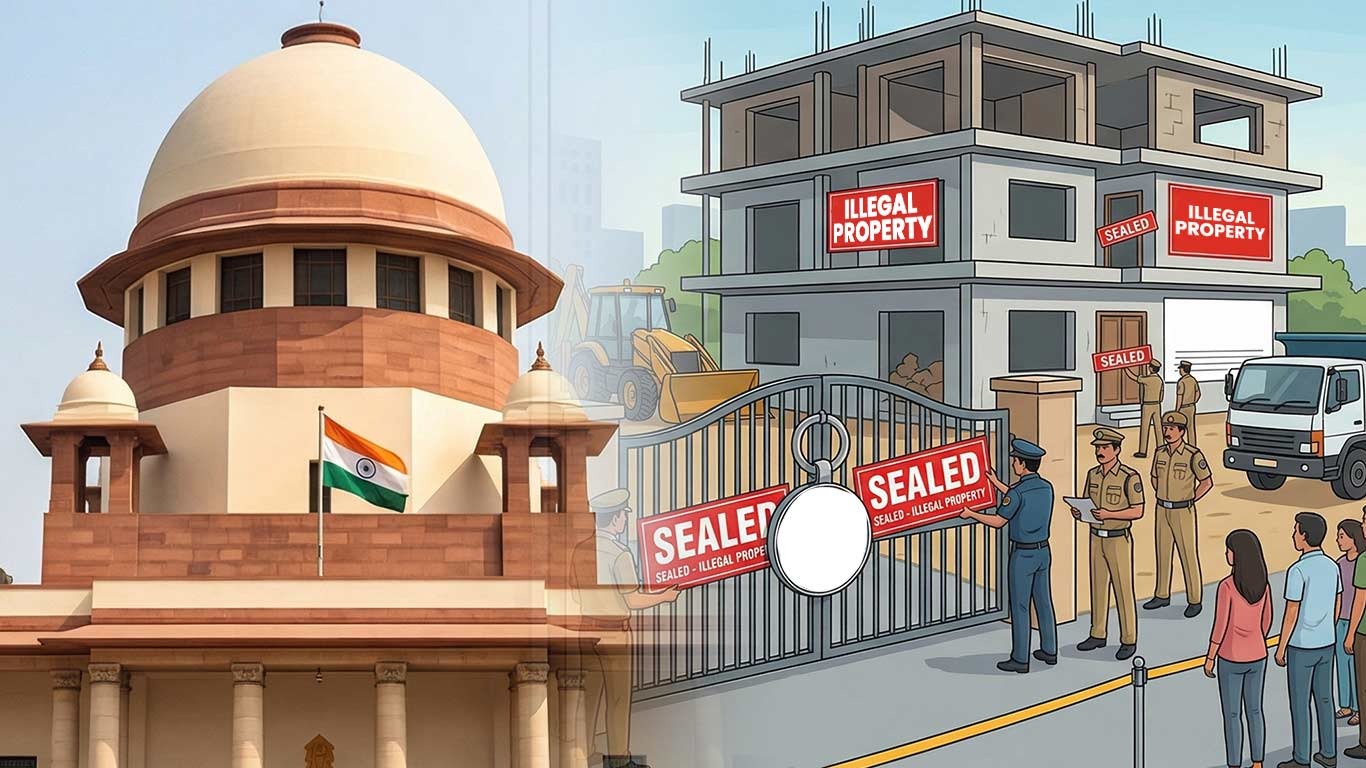
No Time Immunity for Illegal Constructions: Supreme Court Demolishes the "Delay Standard" in Urban Planning
High Court Oversight and the Myth of Administrative Laches: Why Time Cannot Regularize Town Planning Violations
Reclaiming Setbacks and EWS Schemes: A Blueprint for Strict Enforcement Across Indian Municipalities
By Legal Editor
New Delhi: July 23, 2026:
The jurisprudence governing urban planning and municipal administration in India has long struggled with the tension between administrative laxity and legal compliance. Property owners frequently weaponize administrative delay, inaction, or tacit tolerance by local authorities as an equitable defence against enforcement actions. However, in a landmark pronouncement that fundamentally recalibrates municipal enforcement dynamics, the Supreme Court of India—led by a Bench comprising Justices J.B. Pardiwala and K.V. Viswanathan—reaffirmed that the mere passage of time cannot cure an underlying legal nullity. Dealing decisively with systemic urban planning violations in Meerut, Uttar Pradesh, the apex court asserted that courts, as guardians of public rights, must not hesitate to deliver unpalatable truths to violators. The ruling dismantles the pervasive assumption that illegalities solidify into rights through passage of time, setting a stringent precedent for municipal compliance nationwide.
The Factual Matrix and Systemic Encroachment in Meerut
The proceedings before the Supreme Court arose out of a contempt action monitoring compliance with municipal planning regulations across Meerut and its peri-urban fringes. The factual matrix revealed a widespread breakdown of urban planning mechanisms: residential premises across various development schemes had been systematically converted into commercial entities, including private schools, maternity clinics, diagnostic centers, hospitals, and commercial bank branches. These conversions proceeded without sanctioned usage plans, structural safety clearances, or adherence to statutory setback requirements.
In its preliminary orders in April 2026, the Supreme Court had characterized the situation in Meerut as "shocking and highly disturbing," pointing out that commercial establishments were operating within residential areas without adequate fire safety measures or layout approvals. The court ordered the immediate sealing of 44 identified commercial properties and granted local development authorities a strict timeline to execute demolitions of non-compliant structural additions.
By July 2026, compliance filings submitted by the confirmed that all 44 commercial units had been sealed, students relocated to accredited schools, and patients transferred to lawful medical facilities. However, the Parishad sought judicial permission to compound unauthorized floor additions in Economically Weaker Section (EWS) housing units, citing statutory relaxation provisions. The Supreme Court rejected this plea, expanding the scope of enforcement across the entire jurisdiction of Meerut, including vulnerable peri-urban sectors like Uldepur.
Key Statutory Provisions and Legal Frameworks Referenced
The judgment centers on several key statutory provisions, regulatory limits, and judicial doctrines governing urban land management and administrative law in India:
│ Supreme Court Order (July 2026) │
───────────────────┐
▼ ▼ ▼
┌─────────────────────────────┐
│ UP Housing & Development │ │ Rule of Law & Anti- │ │ Public Safety & Fire │
│ Board Regulations, 1982 │ │ Compounding Doctrine │ │ Safety Statutes │
├─────────────────────────────┤ ├─────────────────────────────┤ ├─────────────────────────────┤
│ • Reg 16: Prohibits │ │ • Passage of time cannot │ │ • Mandatory setback │
│ compounding non-master- │ │ cure statutory illegalities │ │ clearances required to │
│ plan developments. │ │ • Reject "fait accompli" │ │ prevent catastrophic │
│ • Strictly protects EWS │ │ pleas for commercial │ │ urban fires and secure │
│ residential layouts. │ │ conversions. │ │ emergency ingress. │
1. Uttar Pradesh Housing and Development Board Regulations, 1982 (Regulation 16)
The primary defence advanced by the state housing board relied on compounding provisions contained within the . Compounding is an administrative procedure whereby municipal bodies regularize minor structural deviations in exchange for monetary penalties or compounding fees.
However, the Supreme Court scrutinized Regulation 16, which explicitly restricts compounding powers. The court held that Regulation 16 does not grant blanket authority to regularize constructions that violate the foundational Master Plan of a city or alter the designated land use of a scheme. The court held that EWS housing schemes are designed with specific density, infrastructural, and structural parameters. Allowing unauthorized vertical or horizontal expansions under the guise of compounding compromises structural stability and deprives the community of intended civic amenities. Consequently, the court ruled that any structural expansion inconsistent with Master Plan parameters is inherently non-compoundable.
2. Mandatory Setback Norms and Building Bye-Laws
Building bye-laws mandate specific "setback" zones—open spaces around a structure that must remain free from permanent construction. Setbacks serve vital public health and safety functions, ensuring adequate light, ventilation, and access for emergency services such as fire engines.
In its ruling, the apex court instituted a zero-tolerance policy regarding setback encroachments. Rejecting all applications for regularisation or compounding in setback areas, the court directed the immediate demolition of all unauthorized setback constructions across all property categories. The bench specified that property owners must be issued a 15-day notice to voluntarily remove offending portions. Failure to comply obligates local authorities to carry out the demolition directly, recovering all operational expenses from the property owner as arrears of land revenue.
3. Judicial Doctrine: Nullus Commodum Capere Potest De Injuria Sua Propria
A core legal principle underlying the decision is the doctrine that no man can take advantage of his own wrong (nullus commodum capere potest de injuria sua propria). Litigants frequently argue that because an illegal structure has stood for years without administrative intervention, demolishing it would cause disproportionate hardship.
The Supreme Court dismantled this argument, holding that administrative delay, municipal negligence, or corrupt oversight cannot turn an unlawful action into a legal right. The bench clarified that inaction by municipal officers does not create an estoppel against statutory enforcement. What is unauthorized at its inception remains unauthorized, regardless of how much time passes.
4. Constitutional Duties and Public Safety Mandates
The Supreme Court explicitly linked urban planning compliance to the fundamental Right to Life guaranteed under Article 21 of the Constitution of India. Highlighting tragic fire incidents where citizens and children lost their lives due to trapped structures in commercialized residential zones, the bench stressed that building regulations are vital safety safeguards.
When residential streets are illegally converted into commercial zones containing schools, hospitals, and banks, narrow access roads become choked with vehicular traffic, blocking emergency services. The court emphasized that strict enforcement of planning laws is a constitutional obligation to protect public safety and maintain the Rule of Law.
Analytical Implications for Urban Governance and Municipal Enforcement
The judgment delivered by Justices Pardiwala and Viswanathan shifts urban management away from discretionary regularization toward strict statutory enforcement.
HISTORICAL ENFORCEMENT PARADIGM SUPREME COURT RECALIBRATION (2026)
┌──────────────────────────────────────────┐ ┌──────────────────────────────────────────┐
│ • Discretionary regularisation fees. │ │ • Zero tolerance for setback violations. │
│ • Delay treated as tacit approval. │ ──►│ • Time passage cannot cure illegality. │
│ • Selective action against small units. │ │ • Universal surveys across all zones. │
│ • EWS compounding allowed casually. │ │ • Compounding banned if against plan. │
└──────────────────────────────────────────┘ └──────────────────────────────────────────┘
Eliminating the "Fait Accompli" Defence
Historically, developers and property owners executed unauthorized constructions under the assumption that once a building was fully built and occupied, courts would hesitate to order demolition due to the economic waste involved. This "fait accompli" strategy relied on protracted litigation to delay action until regularisation schemes were introduced. By ordering mandatory demolitions regardless of the age of the structure, the Supreme Court has removed the financial incentive for pre-emptive illegal construction.
Non-Discriminatory Enforcement Mechanisms
To prevent selective enforcement—where small property owners are targeted while influential commercial violators are ignored—the Supreme Court directed the Chairman of the Uttar Pradesh Awas Evam Vikas Parishad to conduct comprehensive, non-discriminatory surveys across Meerut and outlying regions such as Uldepur. The mandate requires identifying all unauthorized commercial uses of residential premises and ensuring uniform enforcement action across the board.
Financial Accountability via Land Revenue Recovery
By empowering municipal authorities to recover demolition costs as arrears of land revenue under state statutes, the Supreme Court shifts the financial burden of enforcement from the public treasury to the lawbreaker. Arrears of land revenue trigger stringent recovery processes, including property attachment, ensuring that municipalities can reclaim enforcement costs directly from non-compliant property owners.
Frequently Asked Questions (FAQ): Searchable Legal Index
FAQ INDEX & DIRECTORY
┌───────────────────────────────────┬───────────────────────────────────────────────────────┐
│ Section A: General Principles │ • Q1: Legal meaning of "Time can't cure illegality" │
│ │ • Q2: Impact on long-standing illegal constructions │
├───────────────────────────────────┼───────────────────────────────────────────────────────┤
│ Section B: Compounding & Setbacks │ • Q3: What is compounding under Regulation 16? │
│ │ • Q4: Why setback violations cannot be regularized │
├───────────────────────────────────┼───────────────────────────────────────────────────────┤
│ Section C: EWS & Commercial Usage │ • Q5: Conversion of EWS residential units to commercial│
│ │ • Q6: Process for notice, demolition, and cost recovery│
└───────────────────────────────────┴───────────────────────────────────────────────────────┘
Section A: General Legal Principles on Urban Enforcement
Q1: What does the Supreme Court mean by the principle "Time cannot cure illegality"?
Answer: The principle establishes that the passage of time, administrative delay, or official inaction does not transform an unlawful structure or land-use violation into a legal right. Even if an unauthorized building has existed for decades without municipal interference, it remains legally invalid and subject to mandatory demolition or enforcement action.
Q2: Can a property owner claim protection against demolition because local authorities failed to act promptly?
Answer: No. Judicial precedent dictates that administrative laches (delay) or failure by municipal officers to take timely action does not create an estoppel against statutory laws. Property owners cannot use municipal negligence to regularize structures built in violation of approved planning permissions.
Section B: Compounding Regulations and Setback Deviations
Q3: What is "compounding" in urban planning, and why was it refused under Regulation 16?
Answer: Compounding is a statutory mechanism allowing local planning authorities to regularize minor, non-consensual building deviations by collecting monetary fees. Under Regulation 16 of the Uttar Pradesh Housing and Development Board Regulations, 1982, compounding is explicitly barred if the unauthorized construction alters the designated Master Plan, violates basic land-use classifications, or exceeds prescribed structural density parameters.
Q4: Why has the Supreme Court adopted a zero-tolerance policy for setback violations?
Answer: Setbacks are mandatory open spaces surrounding buildings required for structural ventilation, light, and emergency access (such as fire engine maneuvering). Encroaching on setback areas threatens public safety and structural integrity. Consequently, the Supreme Court has ruled that setback violations cannot be compounded or regularized under any circumstances.
Section C: Land Use Conversions and Recovery Procedures
Q5: Can residential properties, including Economically Weaker Section (EWS) units, be converted into commercial spaces?
Answer: No. Converting residential housing—especially EWS units designed for specific social housing needs—into commercial enterprises like schools, clinics, or bank branches without formal master-plan amendments is illegal. Such conversions overload local infrastructure, create traffic bottlenecks, and present severe fire safety hazards.
Q6: What procedure must authorities follow before demolishing non-compliant structures?
Answer: Authorities are required to issue a 15-day notice to the property owner, specifying the offending structural additions or unauthorized usages. If the owner fails to clear the violation within the 15-day window, municipal authorities must execute the demolition directly.
Q7: How are the expenses of municipal demolition recovered from non-compliant owners?
Answer: Demolition expenses incurred by local municipal bodies are recovered directly from the defaulting property owner as arrears of land revenue. This statutory recovery method permits state authorities to issue demand notices and attach property assets if the owner refuses to pay the enforcement costs.
Statistical Summary of Supreme Court Meerut Directives
DEMOLITION AND RECOVERY FLOWCHART
┌─────────────────────────┐ ┌─────────────────────────┐ ┌─────────────────────────┐
│ Identify Unauthorized │ ──► │ Issue 15-Day Mandatory │ ──► │ Voluntary Removal by │
│ Structure or Setback │ │ Demolition Notice │ │ Owner within 15 Days? │
└─────────────────────────┘ └─────────────────────────┘ └────────────┬────────────┘
│
┌───────────────────────┴───────────────────────┐
▼ ▼
[ YES: Resolved ] [ NO: Force Demolition ]
│
▼
┌───────────────────────────────┐
│ Execute Municipal Demolition │
│ & Recover Costs as Arrears │
│ of Land Revenue │
└───────────────────────────────┘
Conclusion: Reasserting the Rule of Law in Urban Spaces
The Supreme Court’s decision regarding illegal constructions in Meerut provides a clear directive for urban governance across India. By rejecting administrative delay as a justification for illegal construction, barring the compounding of setback violations, and holding commercial encroachers accountable through land revenue recoveries, the court has re-established the supremacy of statutory planning over discretionary regularisation.
Urban planning laws are not mere administrative guidelines to be bypassed through financial compounding; they are essential statutory protections designed to ensure public safety, health, and urban order. As municipalities across India contend with unplanned growth and commercial encroachments, the Supreme Court's mandate provides a clear legal principle: obedience to the law is a public right, and time cannot transform an illegality into a right.
Enforcement Parameter — Statutory / Judicial Mandate — Implementation Mechanism
Identified Commercial Entities — 44 High-Value Properties Sealed — Immediate closure, student/patient transfer, complete sealing
Setback Violations — Non-Compoundable (Reg. 16) — Mandatory demolition; zero tolerance across all structures
Notice Period — Mandatory Statutory Notice — 15-day cure notice prior to forced municipal demolition
Cost Recovery Mechanism — Public Monies Protection — Expenses recovered from owner as arrears of land revenue
Geographic Scope — Comprehensive Master Plan Area — Town-wide surveys extending to peri-urban fringes (e.g., Uldepur)
Primary Bench — Supreme Court of India — Hon'ble Justices J.B. Pardiwala and K.V. Viswanathan