
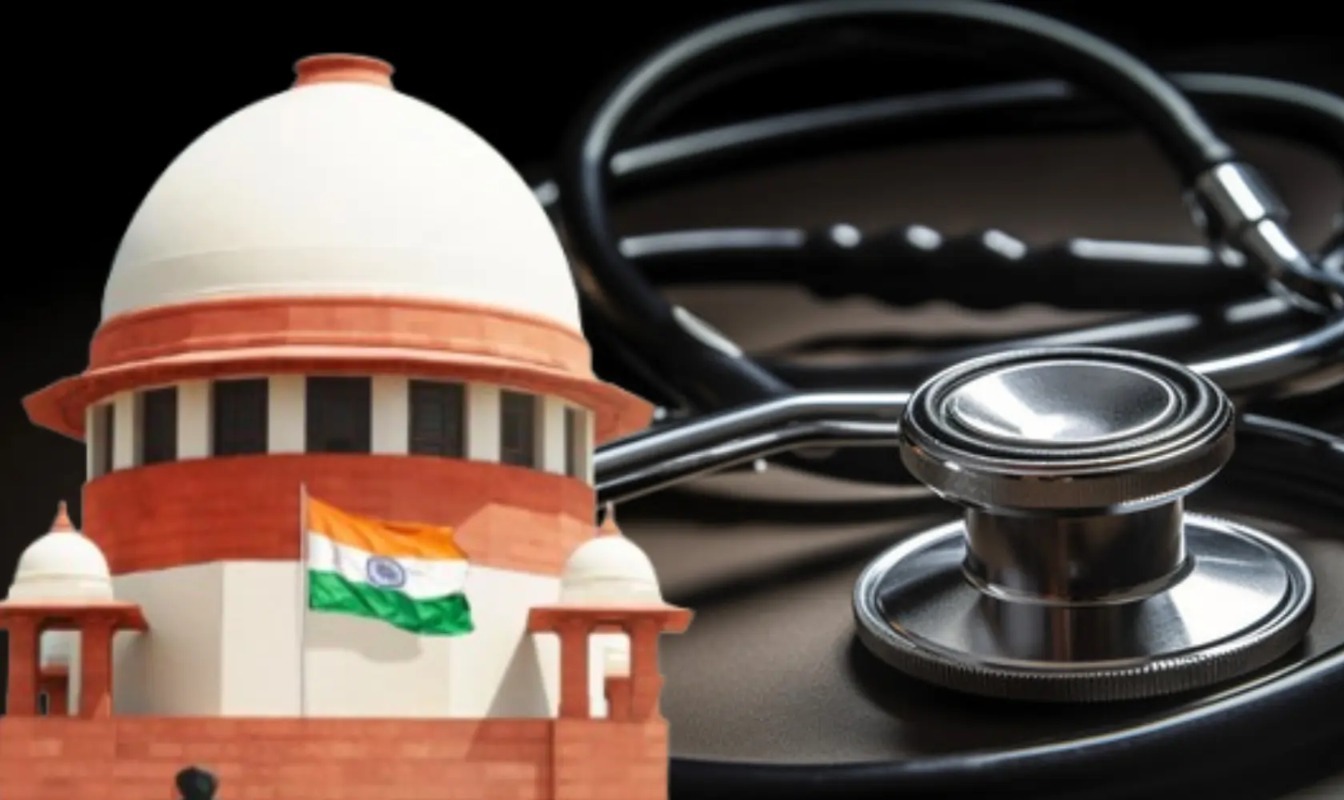
CRITICAL SHIELD FOR MEDICAL DOCTORS: SUPREME COURT DISMISSES CRIMINAL CHARGES AGAINST ACCUSED ANAESTHETIST
High Court Overruled as Apex Bench Enforces Mandatory Peer Specialist Review to Thwart Unwarranted Prosecution
Proximity and Intent Mandated: Why Telephonic Post-Operative Care Fails the High Threshold of Criminal Negligence
By Legal Editor
New Delhi: July 13, 2026:
In a monumental development for healthcare jurisprudence, the Supreme Court of India has delivered a sweeping judgment that reinforces the legal armour protecting medical professionals against arbitrary criminal prosecution. In the landmark case of Supriya Kumari M.C. v. State of Kerala & Ors. (2026 INSC 537), a Division Bench comprising Justice Pankaj Mithal and Justice Prasanna B. Varale quashed criminal charges pending against a senior anaesthetist under Section 304-A and Section 34 of the Indian Penal Code, 1860 (now superseded by Section 106 and Section 61 of the Bharatiya Nyaya Sanhita, BNS, 2023).
This ruling aggressively expands the protective parameters initially instituted in the benchmark case of Jacob Mathew v. State of Punjab (2005) 6 SCC 1. The Apex Court has established an absolute procedural mandate: investigative authorities cannot prosecute a medical professional for criminal negligence using an expert medical board that lacks a specialized peer from the exact branch of medicine under review. By declaring a panel devoid of a peer specialist inherently incompetent, the court has effectively neutralized the systemic vulnerability wherein generalist medical reviews are weaponized to drive criminal indictments against highly specialized clinicians.
The Genesis of the Dispute: A Tragedy Misattributed
The litigation stems from an incident dating back to May 28, 2002, when a patient, K.P. Muralidhar, was admitted to the Kannur-based Dhanalakshmi Hospital to undergo a routine surgical procedure for hemorrhoids (piles). The surgery was performed on May 29, 2002, under the clinical supervision of the appellant, a senior anaesthetist. Following the completion of the operative procedure, the patient was successfully stabilized and transferred to the post-operative ward. The appellant completed her scheduled clinical shift at 5:00 p.m. and departed the hospital premises only after ensuring the patient exhibited stable vital parameters.
Later that evening, at approximately 8:00 p.m., the patient began experiencing acute, severe post-operative pain. An on-duty staff nurse contacted the off-duty appellant at her residence via telephone to report the complication. The appellant advised the administration of Sensorcaine (bupivacaine), an standard and universally accepted analgesic agent for post-operative pain management.
Tragically, after the injection was administered by the nurse, the patient's condition rapidly disintegrated, culminating in a fatal cardiac collapse at approximately 4:00 a.m. on May 30, 2002. The subsequent post-mortem examination revealed a profound underlying physiological anomaly: the deceased suffered from asymptomatic coronary artery disease characterized by an 80% blockage in the left coronary artery, concluding the immediate cause of death to be acute coronary insufficiency.
A First Information Report (FIR) was subsequently registered, initially targeting the operating surgeon, with the appellant later formally arraigned in the chargesheet. Although the Kerala High Court initially set aside the chargesheet while permitting further investigation, a subsequent four-member medical expert panel constituted by the state authorities unanimously concluded on July 10, 2008, that the patient’s death was a direct byproduct of "gross negligence." The panel posited that the fatality could have been averted had the analgesic been introduced directly by a qualified medical officer rather than a staff nurse and criticized the appellant for failing to remain present to observe the physiological impact of the drug. Based entirely on this report, the state filed a fresh chargesheet under Sections 304-A and 34 of the IPC.
Deconstructing the Legal Failure: The Structural Flaws of the Expert Panel
The primary legal axis upon which the Supreme Court dismantled the prosecution’s case was the structural configuration of the expert medical panel. Under the mandatory protocols outlined in Jacob Mathew, an investigating officer must obtain an independent, unbiased, and competent medical opinion—ideally from a government medical officer qualified in the specific branch of medicine involved—before initiating criminal proceedings against a doctor.
In the present case, the Supreme Court exposed a fatal structural error: the four-member panel did not include an anaesthetist or a specialist in epidural pain management. Justice Varale, authoring the judgment, observed:
"The absence of a peer specialist renders the panel inherently incompetent to evaluate the technical nuances of epidural anaesthesia and catheter management... The prosecution's reliance on this flawed expert report violates the protective legal safeguards laid down by the Supreme Court to prevent the harassment of medical professionals."
The court rejected the panel’s assertion that the appellant was grossly negligent for failing to wait and monitor the drug's effect, branding the conclusion "medically absurd" given that the emergency occurred hours after her shift had formally concluded. By allowing a panel of non-specialists to adjudicate the clinical standard of care required for epidural interventions, the state violated the fundamental tenets of the Bolam Test (Bolam v. Friern Hospital Management Committee [1957] 1 WLR 582), which dictates that a professional is not negligent if they act in accordance with a practice accepted as proper by a responsible body of medical professionals skilled in that particular art.
Causation vs. Remoteness: Fastening Liability Under Section 304-A IPC
A secondary, equally critical pillar of the judgment centered on the doctrine of proximate causation (causa causans). For a criminal charge under Section 304-A IPC to be sustained, the prosecution must establish an unbroken, direct, and proximate link between the allegedly negligent act of the accused and the eventual demise of the victim. The Supreme Court ruled that the appellant’s actions were far too remote from the ultimate cause of death to attract criminal liability.
The medical evidence conclusively verified that the immediate cause of death was an acute myocardial infarction triggered by an pre-existing, undisclosed 80% coronary artery blockage. The prosecution argued that if the nurse improperly executed the mechanical delivery of the injection—causing it to enter the soft tissue rather than the epidural space—the failure to alleviate the surgical pain induced systemic stress that ultimately catalyzed the fatal cardiac event.
The Supreme Court rejected this extended chain of causation, clarifying that even if the mechanical failure of the nurse to locate the epidural space resulted in a sub-optimal clinical outcome, it could never be legally attributed to the off-duty consultant. Sensorcaine was universally recognized as the correct pharmacological choice for the scenario. The telephonic issuance of standard post-operative instructions from home does not constitute gross criminal rashness. The court ruled that fastening criminal liability onto an off-duty consultant for an underlying, undisclosed cardiac ailment stretches the legal doctrine of proximate cause past permissible limits.
The Intersection of Civil, Consumer, and Criminal Liability
The Supreme Court also addressed the interplay between parallel legal proceedings. Prior to the finalization of the criminal appeal, the appellant had been completely exonerated by the competent consumer forums, which explicitly determined that the doctor had not committed an actionable error or authorized an improper protocol.
Citing established jurisprudence in Videocon Industries Ltd. and Prem Raj, the Apex Court reaffirmed that when an accused professional is fully exonerated on identical factual merits within a civil or consumer jurisdiction, allowing a parallel criminal prosecution to persist on the exact same bundle of allegations constitutes a gross abuse of the process of law. The court drew a sharp, unequivocal line between civil tortious liability and criminal culpability:
Civil Liability/Deficiency of Service: Occurs when there is an error, mistake, or operational lapse in the execution of medical care (such as a staff nurse failing to accurately place an epidural catheter), which may warrant financial compensation under consumer protection statutes.
Criminal Liability (Section 304-A IPC / Section 106 BNS): Demands an exceptionally high threshold of negligence characterized by total recklessness or a complete absence of basic clinical prudence (mens rea). The act must be something that no medical professional in their ordinary senses and prudence would ever commit.
Broader Medico-Legal Implications for the Healthcare Sector
This ruling serves as a vital safeguard for the medical community against the threat of unmerited criminal prosecution. By mandating the presence of peer specialists on investigative expert boards, the Supreme Court has insulated clinicians from arbitrary prosecution driven by hostile litigious complaints or generalized medical reviews. It reassures practitioners that providing standard telephonic cross-coverage and relying on trained institutional nursing staff to execute routine clinical tasks will not expose them to criminal prosecution if a mechanical error or an unmapped systemic pathology causes a patient to deteriorate.
SEARCHABLE LEGAL INDEX & FREQUENTLY ASKED QUESTIONS (FAQ)
1. Architectural Safeguards & Investigative Frameworks
[FAQ 1.1] What are the mandatory investigative prerequisites established under the Jacob Mathew guidelines?
[FAQ 1.2] Can an investigating officer arrest a medical professional immediately following an allegation of clinical negligence?
[FAQ 1.3] What constitutes a "peer specialist," and why is their presence mandatory on an expert medical panel?
2. Conceptual Thresholds of Culpability
[FAQ 2.1] How does the Indian judiciary distinguish between civil medical negligence and criminal medical negligence?
[FAQ 2.2] What is the relevance of the Bolam Test in evaluating criminal charges against a doctor?
[FAQ 2.3] Does a telephonic prescription or clinical instruction given to institutional nursing staff constitute gross criminal negligence?
3. Doctrines of Causation & Judicial Cross-Effect
[FAQ 3.1] What does the legal doctrine of causa causans or proximate nexus mean in medical negligence prosecutions?
[FAQ 3.2] If a doctor is fully exonerated by a Consumer Forum, can the police continue a criminal prosecution on the same facts?
[FAQ 3.3] How have the medical negligence provisions shifted under the new Bharatiya Nyaya Sanhita (BNS), 2023?
1. Architectural Safeguards & Investigative Frameworks
[FAQ 1.1] What are the mandatory investigative prerequisites established under the Jacob Mathew guidelines?
Under the controlling precedent of Jacob Mathew v. State of Punjab (2005) 6 SCC 1, reaffirmed in the 2026 ruling, an investigating officer is strictly prohibited from initiating a criminal prosecution or registering a standard criminal case against a practicing doctor without first securing an independent, competent, and impartial medical opinion. This opinion should preferably be sourced from a medical professional employed within government services who is formally qualified in the specific branch of medicine under review. The expert must objectively evaluate the gathered evidence to determine whether a prima facie case of gross rashness or recklessness exists.
[FAQ 1.2] Can an investigating officer arrest a medical professional immediately following an allegation of clinical negligence?
No. Unless the independent expert medical opinion explicitly establishes a clear case of gross, reckless disregard for human life, a doctor cannot be casually arrested or subjected to routine custodial interrogation. The Supreme Court has repeatedly observed that indiscriminate arrests disrupt public healthcare services and unfairly damage a clinician's professional standing based on unverified allegations.
[FAQ 1.3] What constitutes a "peer specialist," and why is their presence mandatory on an expert medical panel?
A peer specialist is a medical professional who possesses identical or equivalent specialized qualifications, training, and clinical experience in the specific branch of medicine relevant to the disputed procedure (e.g., an anaesthetist reviewing an epidural block). The Supreme Court's ruling in Supriya Kumari M.C. clarifies that a generalized medical board lacking such a specialist is inherently incompetent. Non-specialists cannot accurately assess the highly technical nuances, operational risks, and standard protocols inherent to complex, specialized medical procedures.
2. Conceptual Thresholds of Culpability
[FAQ 2.1] How does the Indian judiciary distinguish between civil medical negligence and criminal medical negligence?
The distinction lies entirely within the severity of the deviation from accepted professional standards:
Civil Negligence: Arises from a failure to exercise a reasonable degree of everyday care, resulting in an error of judgment, a procedural oversight, or a deficiency in service. This is remediable via monetary compensation under civil courts or consumer forums.
Criminal Negligence: Demands a significantly higher threshold. The prosecution must demonstrate gross negligence or an absolute, reckless disregard for patient safety—an act or omission so egregious that no medical professional of ordinary prudence and senses would ever commit it. It requires an element of mens rea (a guilty mind or total indifference to fatal risks).
[FAQ 2.2] What is the relevance of the Bolam Test in evaluating criminal charges against a doctor?
Derived from the historic English common law case Bolam v. Friern Hospital Management Committee (1957), the test dictates that a doctor cannot be held legally liable for negligence if their actions conform to a standard protocol accepted as proper by a responsible, competent body of peer professionals skilled in that specific field. It establishes that simply because an alternative clinical approach or school of thought existed, or because a procedure yielded an unfavourable outcome, the chosen methodology does not constitute a criminal offense.
[FAQ 2.3] Does a telephonic prescription or clinical instruction given to institutional nursing staff constitute gross criminal negligence?
No. The Supreme Court held that providing standard telephonic post-operative care instructions to on-duty institutional staff when off-duty constitutes standard medical practice. If the prescribed medication is pharmacologically correct for the patient's condition, any subsequent mechanical error committed by the nurse during its physical administration falls outside the physical control of the off-duty doctor and cannot form the basis of a criminal prosecution.
3. Doctrines of Causation & Judicial Cross-Effect
[FAQ 3.1] What does the legal doctrine of causa causans or proximate nexus mean in medical negligence prosecutions?
Under Section 304-A of the IPC (and Section 106 of the BNS), the prosecution must establish a direct, immediate, and proximate causal relationship between the doctor's specific act and the patient's death. If an underlying, unmapped medical condition (such as an asymptomatic 80% coronary artery blockage) acts as the immediate cause of a fatal cardiac event, the chain of causation is legally broken. A remote connection—such as arguing that post-operative pain stress triggered the cardiac arrest—is legally insufficient to sustain a criminal conviction.
[FAQ 3.2] If a doctor is fully exonerated by a Consumer Forum, can the police continue a criminal prosecution on the same facts?
No. The Supreme Court confirmed that once a competent civil court or consumer forum completely exonerates a medical professional on the factual merits of a case, permitting a parallel criminal prosecution to continue on the exact same bundle of allegations constitutes a gross abuse of judicial process. Because the standard of proof required for civil liability is lower ("preponderance of probabilities") than criminal liability ("beyond a reasonable doubt"), an inability to establish even civil liability automatically invalidates the foundation for a criminal charge.
[FAQ 3.3] How have the medical negligence provisions shifted under the new Bharatiya Nyaya Sanhita (BNS), 2023?
Section 304-A of the IPC has been replaced by Section 106 of the BNS, 2023. While Section 106(1) generally increases the maximum punishment for causing death by negligence to five years, it includes a specific, distinct statutory proviso for qualified medical practitioners: causing death by an act of medical negligence carries a maximum prison sentence of two years along with a fine. The fundamental judicial requirements regarding independent expert peer opinions and the high threshold of gross criminal negligence established under Jacob Mathew and Supriya Kumari M.C. remain fully active and binding interpretations under the new statutory framework.