

Supreme Court Clarifies: Quarrel With Daughter-in-Law Not Cruelty or Dowry Harassment
Court Quashes Case Against Parents-in-Law, Says Allegations Were Vague
Judges Stress Need for Specific Evidence in Dowry Harassment Complaints
By Legal Reporter
New Delhi: March 10, 2026:
Also Read: Bombay High Court Orders Transparency in Mundkar Cases
In a significant ruling delivered on March 9, 2026, the Supreme Court of India held that quarrels between parents-in-law and a daughter-in-law cannot, by themselves, constitute cruelty or dowry harassment. The judgment came in a case where a woman accused her in-laws of harassment, but the only allegation was that they “quarrelled” with her. The Court emphasized that vague and identical allegations cannot sustain criminal charges under Section 498A of the Indian Penal Code (IPC) and Sections 3 & 4 of the Dowry Prohibition Act.
[Recommended Legal Resources]
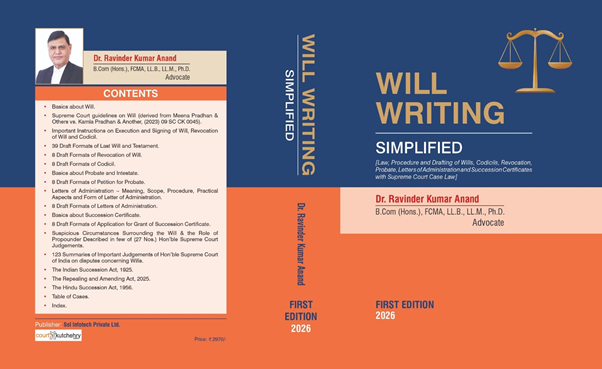
📘 Legal professionals, families and students alike will benefit from Will Writing Simplified, which covers procedure and case law in detail.
🔹 Buy on Amazon
🔹 Buy on Flipkart
Also Read: Bombay High Court Clarifies Jurisdiction in Debt Recovery Case
Case Background
- The complainant-wife filed charges against her husband and in-laws, alleging dowry harassment.
- The parents-in-law, both doctors, challenged the proceedings, arguing that the accusations were baseless.
- The Supreme Court bench of Justices Vikram Nath and Sandeep Mehta noted that the only claim against them was that they “quarrelled” with the woman.
- The Court ruled that such allegations, without specific acts of cruelty or demands for dowry, cannot amount to an offence.
Key Observations by the Court
Also Read: ITAT: Technical Errors Cannot Block Trust Registration
- Quarrel ≠ Cruelty: A quarrel does not meet the legal threshold for cruelty under Section 498A IPC.
- Need for Specific Evidence: Courts require clear, detailed allegations to establish harassment or dowry demands.
- Protection Against Misuse: The ruling aims to prevent misuse of dowry laws through vague complaints.
- Parity Principle: Since the husband’s case was already quashed, the Court extended the same relief to the in-laws.
Broader Legal Context
This judgment adds to a growing body of rulings where the Supreme Court has cautioned against the misuse of dowry harassment laws:
- In 2025, the Court acquitted a mother-in-law in a dowry case due to lack of evidence.
- High Courts have also stressed that contradictions and vague witness statements weaken prosecution cases.
Implications of the Ruling
- For Families: Provides relief to in-laws wrongly implicated in dowry cases.
- For Women: Ensures that genuine cases of harassment must be backed by specific evidence.
- For Legal System: Reinforces the principle that criminal law cannot be invoked on vague allegations.
Also Read: ITAT: Conversion of Company into LLP Means Dissolution
Conclusion
The Supreme Court’s ruling is a landmark clarification in matrimonial law. It balances the protection of women against dowry harassment with safeguards against misuse of criminal provisions. Legal experts believe this judgment will serve as a precedent in future cases, ensuring that only well-substantiated complaints proceed to trial.
Keywords for Faster Searches
- Supreme Court ruling dowry harassment
- Section 498A IPC cruelty definition
- Quarrel with daughter-in-law case law
- Dowry Prohibition Act Supreme Court judgment
- Misuse of dowry laws India
- Supreme Court in-laws acquitted dowry case
Also Read: Gujarat High Court Declares Fraudulent Mutation Entry Void