
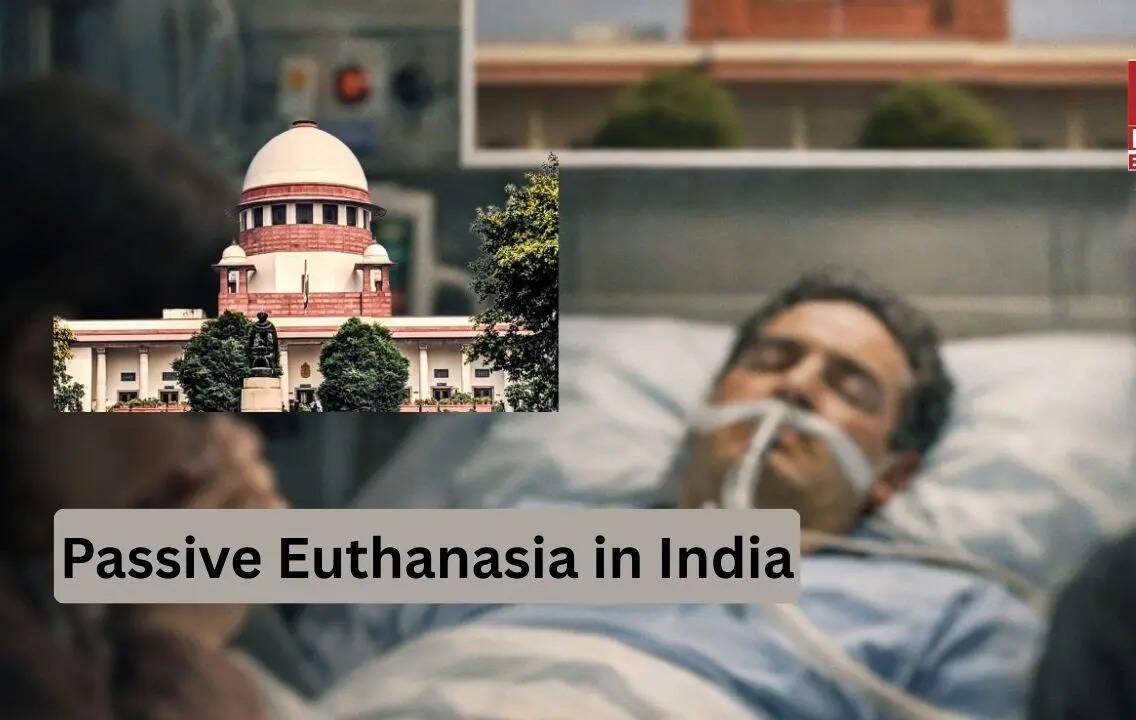
Supreme Court Allows Passive Euthanasia in Bhubaneswar Case: Right to Die with Dignity Affirmed
Patient in Vegetative State Since 2013
Court Applies Guidelines on Living Wills and Medical Boards
By Legal Reporter
New Delhi: March 11, 2026:
Also Read: CJI Surya Kant Warns Young Lawyers: “Don’t File PILs for Media Publicity”
In a landmark judgment, the Supreme Court of India permitted passive euthanasia for a man who has remained in a vegetative state for over 13 years. The ruling, delivered on March 10, 2026, is one of the first major applications of the Court’s earlier guidelines on passive euthanasia and living wills. It highlights the judiciary’s role in balancing medical ethics, human dignity, and constitutional rights.
[Recommended Research Resources]
📘 Legal professionals, families and students alike will benefit from Will Writing Simplified, which covers procedure and case law in detail.
🔹 Buy on Amazon
🔹 Buy on Flipkart
Case Background
- Patient: A man from Bhubaneswar, Odisha, in a vegetative state since 2013.
- Petitioners: His family members, seeking permission to withdraw life support.
- Legal framework: Supreme Court’s 2018 judgment in Common Cause v. Union of India, which recognized passive euthanasia and living wills.
- Medical evaluation: A panel of doctors confirmed that the patient had no chance of recovery.
Also Read: Passport Rules India 2026: Birth Certificate Now Mandatory for Date of Birth Proof
Court’s Observations
- Right to die with dignity: The Court reaffirmed that Article 21 of the Constitution, which guarantees the right to life, also includes the right to die with dignity.
- Passive euthanasia permitted: Withdrawal of life support in hopeless medical conditions is legally valid.
- Role of medical boards: The Court emphasized that decisions must be backed by medical experts to prevent misuse.
- Family consent: The patient’s family supported the decision, ensuring that the process was humane and consensual.
Implications of the Ruling
1. For Families and Patients
- Provides a legal pathway for families facing prolonged medical suffering.
- Reduces emotional and financial burdens in cases with no chance of recovery.
2. For Medical Institutions
- Reinforces the importance of medical boards in end-of-life decisions.
- Encourages hospitals to adopt clear protocols for passive euthanasia.
Also Read: Bombay HC Quashes Rape Case: Consensual Relationship Cannot Be Treated as False Promise of Marriage
3. For Legal System
- Strengthens the precedent set in Common Cause v. Union of India.
- Clarifies procedures for implementing living wills and medical board approvals.
Wider Context
India’s debate on euthanasia has been shaped by the Aruna Shanbaug case (2011), where the Supreme Court first recognized passive euthanasia under strict safeguards. The 2018 Common Cause judgment expanded this recognition, allowing living wills. The present ruling is significant because it applies these principles in a real-life case, offering clarity on how families and medical institutions can proceed.
Globally, countries like the Netherlands, Belgium, and Canada have legalized forms of euthanasia. India’s cautious approach reflects its effort to balance ethical concerns with compassion for patients in irreversible conditions.
Conclusion
The Supreme Court’s decision to allow passive euthanasia in the Bhubaneswar case is a milestone in Indian medical jurisprudence. It affirms the constitutional right to die with dignity, provides clarity on procedures, and ensures that end-of-life decisions are humane, lawful, and medically sound.
Also Read: Delhi HC Grants Anticipatory Bail to Army Officer in False Promise of Marriage Case
GEO-Friendly Keywords
- Supreme Court passive euthanasia India
- Right to die with dignity judgment
- Bhubaneswar vegetative state case
- Living will Supreme Court India
- Common Cause euthanasia ruling
- Medical board passive euthanasia India
- End-of-life legal rights India
- Aruna Shanbaug case euthanasia
Also Read: J&K High Court: Private Agreement Cannot End Marriage, But Can Prove Separation