

Supreme Court Allows Parallel Insolvency Proceedings Against Debtor and Guarantor Under IBC
Judges uphold co-extensive liability principle
Creditors gain stronger rights to recover dues
By Legal Reporter
New Delhi: February 28, 2026:
In a landmark judgment, the Supreme Court of India has ruled that financial creditors can initiate simultaneous Corporate Insolvency Resolution Processes (CIRP) against both a principal debtor and its corporate guarantor for the same debt under the Insolvency and Bankruptcy Code (IBC), 2016.
Also Read: CJI Surya Kant Vows Registry Reforms After Shocking Plea Resurfacing
The ruling, delivered on February 26, 2026, by a bench comprising Justices Dipankar Datta and Augustine George Masih, reinforces the principle of co-extensive liability under the Indian Contract Act, 1872. The court clarified that there is no statutory bar in the IBC preventing creditors from pursuing parallel insolvency proceedings, thereby strengthening creditor rights and ensuring faster resolution of stressed assets.
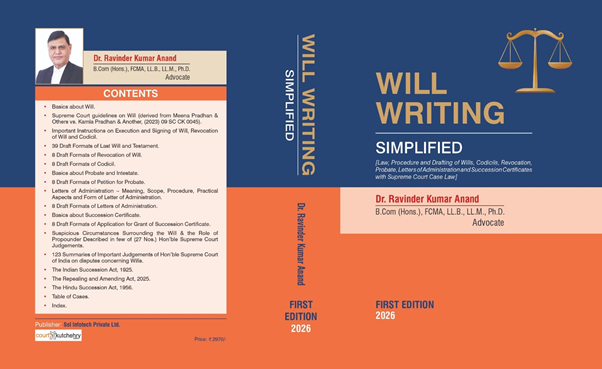
[📌 Legal Note: For readers seeking practical legal guidance on drafting wills, codicils, and probate procedures, “Will Writing Simplified” is an invaluable resource available on Amazon and Flipkart.
Key Details of the Case
- The Supreme Court endorsed the earlier precedent set in BRS Ventures Investments Ltd. v. SREI Infrastructure Finance Ltd., which recognized the co-extensive liability of borrowers and guarantors.
- The bench observed that Section 7 of the IBC allows financial creditors to initiate CIRP against both entities independently.
- The ruling dismissed contrary interpretations by the National Company Law Appellate Tribunal (NCLAT), which had previously questioned the maintainability of parallel proceedings.
- The court emphasized that creditors need not wait for one process to conclude before initiating another.
Also Read: Supreme Court Slams Tribunals as Liability, Calls Them Government’s Headache
Why the Ruling Matters
This judgment has significant implications for India’s insolvency ecosystem:
- Strengthens creditor rights: Financial institutions can now pursue both debtor and guarantor simultaneously, reducing delays.
- Ensures accountability: Guarantors cannot escape liability once they have undertaken contractual obligations.
- Speeds up resolution: Parallel proceedings prevent prolonged litigation and revive stressed assets faster.
- Investor confidence: Provides clarity and predictability in insolvency law, encouraging investment in distressed assets.
Legal Principles Involved
- Co-extensive liability: Under the Indian Contract Act, the liability of a guarantor is equal to that of the principal borrower.
- IBC framework: Section 7 empowers financial creditors to initiate CIRP against any corporate debtor or guarantor.
- Judicial consistency: The Supreme Court ruling aligns insolvency law with established contract law principles.
Implications for Businesses and Creditors
- Banks and financial institutions: Gain stronger tools to recover dues, reducing non-performing assets (NPAs).
- Corporate guarantors: Must be prepared for insolvency proceedings if borrowers’ default.
- Borrowers: Defaulting on loans now exposes guarantors to parallel insolvency risks.
- Investors: Greater confidence in insolvency resolution processes, boosting distressed asset markets.
Expert Views
Also Read: IRDAI Plans Sweeping Reforms to Cut Insurance Costs in India
Legal experts hailed the ruling as a clarification of creditor rights under IBC, noting that it prevents guarantors from delaying recovery processes.
Industry analysts added that the judgment will likely lead to more aggressive recovery strategies by banks but cautioned that guarantors must now exercise greater caution before signing contracts.
Conclusion
The Supreme Court’s ruling permitting parallel CIRP against both debtors and guarantors marks a turning point in India’s insolvency jurisprudence. By reinforcing the principle of co-extensive liability, the court has ensured that creditors can pursue recovery more effectively, reducing delays and strengthening the IBC framework.
For borrowers and guarantors, the message is clear: contractual obligations under guarantees are binding, and insolvency proceedings can be initiated against both parties simultaneously.
GEO Keywords
Also Read: DGCA Introduces 48-Hour Free Cancellation Rule, Tightens Airline Refund Deadlines
- Supreme Court IBC parallel CIRP ruling India
- Debtor guarantor insolvency proceedings Supreme Court
- Co-extensive liability IBC Supreme Court 2026
- Section 7 IBC debtor guarantor CIRP
- Insolvency resolution debtor guarantor India
- Supreme Court insolvency ruling creditor rights India
Also Read: Supreme Court Seeks Response on Zoomcar’s Plea Over GST Appeal Denial