
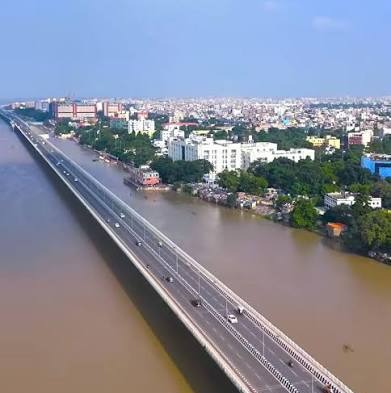
Safeguard the Ganga: Supreme Court’s Firm Mandate on Riverbed Encroachments Along Patna’s Riparian Zone
Judiciary Overrules Subordinate Injunctions to Enforce Environmental Compliance Within Six-Week Deadline
Statutory Imperatives, Ecological Preservation, and the Precautionary Principle Intersect in Historic Directives
By Legal Editor
New Delhi: July 25, 2026:
In a decisive effort to protect the ecological integrity of the River Ganga, the Supreme Court of India issued an unambiguous directive instructing the State Government of Bihar to clear all unauthorized constructions, temporary encroachments, and illegal structural developments along the floodplains of Patna. Specifically focusing on the vulnerable stretch between Nauzar Ghat and Nurpur Ghat, the apex court established a strict six-week timeline for complete compliance.
Crucially, the Court asserted judicial supremacy over sub-ordinate statutory proceedings by declaring that its order must be executed irrespective of any stay, status quo, or interim orders issued by the High Court or district civil courts. This intervention in underscores the judiciary's increasing intolerance toward administrative inertia and judicial gridlock in matters of environmental conservation.
───────────────────────────┐
│ SUPREME COURT ENVIRONMENTAL DIRECTIVE │
─────────────────────────────┤
│ Target Zone │ Patna Riparian Belt (Nauzar Ghat to Nurpur Ghat) │
│ Primary Goal │ Removal of unauthorized constructions & encroachments │
│ Timeline │ Mandatory compliance within 6 weeks │
│ Legal Precept │ Article 142 & Public Trust Doctrine │
│ Overriding Rule│ SC Mandate supersedes all lower court interim stays │
─────────────────────────────┘
Key Laws, Rules, and Statutory Principles Under Discussion
The judicial proceedings surrounding the clearance of riverbed encroachments in Bihar integrate various constitutional, statutory, and regulatory provisions. A complete legal analysis reveals several critical statutory frameworks and established principles governing this judgment:
1. The Environment (Protection) Act, 1986 & River Ganga Authorities Order
The foundational statutory framework governing river protection in India stems from the Environment (Protection) Act, 1986 (EPA). Under Section 3 of the EPA, the Central Government created statutory directives specifically geared toward maintaining minimum environmental flows and preventing unauthorized activity within floodplain zones.
The River Ganga (Rejuvenation, Protection and Management) Authorities Order, 2016 issued under the EPA explicitly prohibits construction activity on the active floodplains and riverbeds of the Ganga. The regulation designates active floodplains as non-construction zones to maintain seasonal hydrological flow, prevent flood catastrophes, and allow natural aquifer recharge.
2. The National Green Tribunal Act, 2010
The dispute originated from proceedings under the National Green Tribunal Act, 2010 (NGT Act). Under Section 14 and Section 15 of the NGT Act, the Tribunal holds civil jurisdiction over substantial environmental questions and possesses the power to grant relief, compensation, and restoration of damaged ecosystems.
When original applications before the NGT were dismissed due to procedural lack of specific violator details, the matter escalated to the Supreme Court under Section 22 of the NGT Act, which provides a direct right of appeal to the apex court on any point of law.
3. Article 142 of the Constitution of India
To ensure that procedural delays do not defeat substantive justice, the Supreme Court exercised its extraordinary constitutional powers under Article 142 of the Constitution of India. Article 142 empowers the apex court to pass any order necessary for doing complete justice in a pending matter. By issuing an overarching directive that overrides subordinate court stays and injunctions, the Court invoked this constitutional prerogative to prevent conflicting lower-court litigations from stalling statutory environmental enforcement.
4. Constitutional Duties: Article 21 and Article 51A(g)
The judicial jurisprudence rests firmly upon the expansion of Article 21 (Right to Life), which incorporates the fundamental right to a clean, wholesome, and unpolluted environment. Complementing Article 21 is Article 51A(g), which establishes a fundamental duty upon every citizen to protect and improve the natural environment, including forests, lakes, rivers, and wildlife.
────────────┐
│ STATUTORY LEGAL PILLARS │
└──────────────────────────┬─────────────────────────────┘
▼ ▼ ▼
┌───────────────────────────┐
│ Environment Protection │ │ NGT Act, 2010 (S. 22) │ │ Constitution of India │
│ Act, 1986 │ │ Statutory Right of Appeal│ │ Articles 21, 142 & 51A(g) │
│ River Ganga Order (2016) │ │ to the Supreme Court │ │ Fundamental Right & Duty │
└───────────────────────────┘
5. Public Trust and Precautionary Doctrines
The Court relied on two seminal environmental jurisprudence principles:
The Public Trust Doctrine: Grounded in ancient common law, this doctrine dictates that natural resources such as rivers, lakes, air, and public lands are held by the State in trust for the general public. The State cannot alienate or permit private degradation of public natural assets.
The Precautionary Principle: Mandates that where there are threats of serious or irreversible damage, lack of full scientific certainty shall not be used as a reason for postponing cost-effective measures to prevent environmental degradation.
Judicial Analysis: Overcoming Procedural Hurdles
A central challenge in environmental litigation within urban areas is the proliferation of concurrent litigations in local civil courts and High Courts. Unauthorized occupants often obtain interim stay orders against municipal demolition notices, leading to protracted legal battles while fragile ecosystems suffer permanent degradation.
By directing that the state execute the six-week clearance mandate regardless of interim orders issued by lower judicial authorities, the Supreme Court established a crucial precedent: Specialized statutory obligations regarding ecological preservation take precedence over routine civil disputes regarding property possession when riverbed survival is threatened.
The Supreme Court bench comprising emphasized that the State of Bihar, along with statutory bodies like the National Mission for Clean Ganga (NMCG), holds a mandatory legal obligation to safeguard the river corridor.
Environmental and Hydrological Implications
The Nauzar Ghat to Nurpur Ghat stretch along Patna represents a ecologically sensitive riparian zone. Unregulated civil structures along these banks contribute to several severe problems:
Hydrological Obstruction: Permanent structures alter the natural velocity and course of river currents, causing severe silt deposition and erratic water channel displacement.
Floodplain Degradation: Encroachments eliminate the river's natural flood buffers, increasing the vulnerability of surrounding urban populations during monsoonal overflows.
Point-Source Pollution: Unauthorized developments discharge untreated domestic sewage directly into the Ganga, defeating statutory objectives under the National Mission for Clean Ganga.
Comparative Statutory Compliance Framework
Conclusion: A Precedent for Riparian Protection
The Supreme Court’s definitive directive against illegal constructions along the Ganga River sets a strong legal precedent across India. By setting a strict six-week deadline and explicitly removing lower-court legal barriers, the Court sent a clear message: economic and property interests cannot override the ecological health of vital river basins. Implementing this ruling effectively will require coordinated action from state enforcement agencies, urban planning departments, and environmental authorities.
Quick Search Index & Detailed Legal FAQ
Use this structured index to quickly find clear answers to common legal questions raised by this judgment:
Search Index Links:
#FAQ-1: What is the primary directive issued by the Supreme Court?
#FAQ-2: Which specific locations are targeted under this judicial order?
#FAQ-3: How does the Supreme Court handle existing stay orders from lower courts?
#FAQ-4: What laws regulate construction on riverbeds and floodplains in India?
#FAQ-5: What role does the National Mission for Clean Ganga play in this dispute?
#FAQ-6: Why is the removal of floodplain encroachments ecologically critical?
Detailed Legal FAQs
Q1: What is the primary directive issued by the Supreme Court in this matter?
A: The Supreme Court directed the State Government of Bihar to remove all unauthorized structures, temporary and permanent constructions, and illegal encroachments along the banks of the River Ganga in Patna. The State was given a strict six-week compliance period.
Q2: Which specific locations are targeted under this judicial order?
A: The order specifically targets the riparian corridor between Nauzar Ghat and Nurpur Ghat located along the banks of the River Ganga in the Patna urban area.
Q3: How does the Supreme Court handle existing stay orders or interim injunctions from lower courts?
A: Exercising its constitutional power, the Supreme Court ruled that its directive must be implemented unconditionally, overriding any interim orders, injunctions, or status quo directions previously issued by the High Court or district civil courts.
Q4: What laws regulate construction on riverbeds and floodplains in India?
A: Construction on riverbeds is governed by:
The Environment (Protection) Act, 1986
The River Ganga (Rejuvenation, Protection and Management) Authorities Order, 2016
The National Green Tribunal Act, 2010
Municipal corporation legislation and state-level riverbed protection policies.
Q5: What role does the National Mission for Clean Ganga (NMCG) play in this legal process?
A: The NMCG acts as the principal statutory authority responsible for implementing the Ganga River Authorities Order, 2016. It monitors river pollution, oversees floodplain conservation, and acts as a central party in litigation regarding ecological restoration.
Q6: Why is the removal of floodplain encroachments ecologically critical?
A: Floodplains serve as natural buffers during high-water flow, assist in artificial and natural groundwater recharge, and filter urban runoff. Unregulated structural development causes severe siltation, heightens localized flooding risks, destroys aquatic habitats, and degrades water quality through untreated wastewater discharge.
Law / Regulation — Key Provision — Primary Objective — Application in Encroachment Removal
Environment (Protection) Act, 1986 — Section 3, Section 5 — Directs executive authorities to enforce prohibition orders against polluters — Provides legal basis for removing illegal structures along the riverbank
Ganga River Authorities Order, 2016 — Paragraph 24 — Explicitly bars construction activity within defined riverbed zones — Serves as the primary statutory prohibition against Patna encroachments
Constitution of India — Article 142 — Grants’ supreme jurisdiction to pass orders for complete justice — Overrides lower court stay orders to ensure compliance within six weeks
National Green Tribunal Act, 2010 — Section 14, 15, 22 — Adjudicates environmental disputes and handles statutory appeals — Mechanism through which the Supreme Court standardizes enforcement