

Supreme Court Restores Insolvency Proceedings Against Omkara Assets: IBC Overrides Delayed Company Scheme
Court rules Insolvency and Bankruptcy Code have primacy over Companies Act schemes
Case highlights clash between financial discipline and long-pending litigation
By Legal Reporter
New Delhi: February 27, 2026:
In a significant ruling, the Supreme Court of India has restored insolvency proceedings against Omkara Assets Reconstruction Private Limited, holding that the Insolvency and Bankruptcy Code (IBC) overrides delayed schemes under the Companies Act. The judgment, delivered on February 24, 2026, underscores the primacy of the IBC in ensuring financial discipline and preventing companies from using outdated arrangements to stall creditor action.
The case, Omkara Assets Reconstruction Pvt. Ltd. v. Amit Chaturvedi & Ors. (2026 INSC 189), is being seen as a landmark decision that clarifies the relationship between insolvency law and company law, particularly in situations where schemes of arrangement have lingered for years without resolution.
[Additional Valuable Resource]
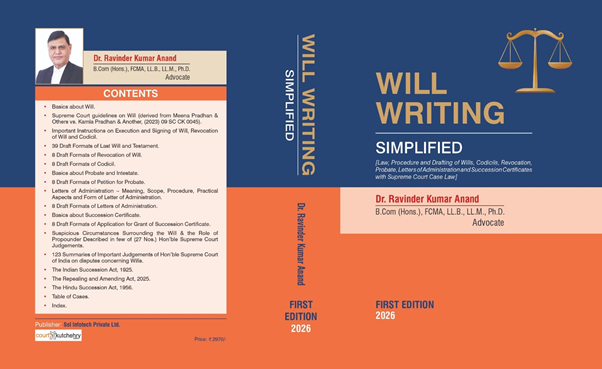
If you want practical guidance on drafting wills, codicils, and probate procedures, Will Writing Simplified is an invaluable resource. BUY NOW: Amazon 🔹 Flipkart
Background of the Case
- Omkara Assets Reconstruction sought to initiate Corporate Insolvency Resolution Process (CIRP) under Section 7 of the IBC against the corporate debtor for a default exceeding ₹154 crore.
- The debtor resisted, citing a Scheme of Arrangement (SOA) initiated in 2008 under Sections 391–394 of the Companies Act, 1956, before the Punjab and Haryana High Court.
- Although the High Court sanctioned the scheme in 2019, creditors had withdrawn their consent as early as 2009 due to the debtor’s inaction.
- The Supreme Court held that such tardy schemes cannot stall insolvency proceedings under the IBC, which was enacted to provide a time-bound resolution framework.
Supreme Court’s Observations
- Primacy of IBC: Section 238 of the IBC gives it overriding effect over other laws, including the Companies Act.
- Financial discipline: The Court emphasized that insolvency law was designed to prevent prolonged litigation and protect public funds.
- Tardy litigators: The judgment criticized parties who use outdated schemes to delay resolution, calling them “tardy litigators” jeopardizing the economy.
- Judicial consistency: The Court clarified that while schemes of arrangement under the Companies Act are valid, they cannot obstruct insolvency proceedings once defaults are established.
Why This Case Matters
- For creditors: Ensures that lenders are not trapped in endless litigation over outdated schemes.
- For companies: Reinforces the need for timely compliance and resolution of debts.
- For insolvency law: Strengthens the IBC’s role as the primary mechanism for debt resolution in India.
Also Read: New Income Tax Draft Rules: No PAN Needed for Property Deals Below ₹20 Lakh from April 1
Expert Views
- Legal experts: The ruling reaffirms the supremacy of the IBC, ensuring that companies cannot misuse older provisions to delay insolvency.
- Financial analysts: The decision will boost confidence among lenders and investors, as it ensures quicker resolution of defaults.
- Policy commentators: The case highlights India’s commitment to modern insolvency practices aligned with global standards.
Broader Implications
- Judicial precedent: The ruling will guide future cases where company law schemes clash with insolvency proceedings.
- Economic impact: Strengthens India’s insolvency framework, improving investor confidence.
- Corporate governance: Encourages companies to act responsibly and avoid using outdated schemes to evade accountability.
Conclusion
The Supreme Court’s decision in Omkara Assets Reconstruction Pvt. Ltd. v. Amit Chaturvedi & Ors. is a landmark ruling that reinforces the primacy of the Insolvency and Bankruptcy Code over delayed schemes under the Companies Act. By restoring insolvency proceedings, the Court has sent a strong message that financial discipline and creditor rights cannot be compromised by tardy litigation.
Also Read: Lok Sabha Speaker Reconstitutes Panel Probing Cash Row Against Justice Yashwant Varma
This judgment will serve as a guiding precedent for future disputes, ensuring that India’s insolvency framework remains robust, efficient, and aligned with global best practices.
Keywords for SEO & Faster Searches
- Supreme Court Omkara Assets insolvency case
- IBC vs Companies Act scheme ruling
- Omkara Assets Reconstruction v Amit Chaturvedi 2026
- Corporate Insolvency Resolution Process Supreme Court
- Section 238 IBC overriding effect
- Supreme Court insolvency law India 2026
- Tardy litigators insolvency judgment India
- Omkara Assets Supreme Court ruling