

Supreme Court: OBC Creamy Layer Cannot Be Decided on Income Alone
Court Says Social Status and Parental Occupation Must Be Considered
Ruling Ensures Fairer Access to Reservation Benefits
By Legal Reporter
New Delhi: March 12, 2026:
Also Read: Supreme Court Clarifies: No Automatic Right to Submit New Evidence in Appeals
In a landmark judgment delivered on 11 March 2026, the Supreme Court of India clarified that the determination of “creamy layer” status among Other Backward Classes (OBCs) cannot be based solely on parental income. The Court held that excluding candidates from reservation benefits only on income grounds is “unsustainable in law.”
The ruling came in appeals filed by the Centre against High Court decisions that had struck down discriminatory yardsticks used to classify OBC candidates, particularly those whose parents worked in Public Sector Undertakings (PSUs).
Case Background
- Issue: Whether parental income alone can determine creamy layer status.
- Government’s Practice: Department of Personnel and Training (DoPT) classified candidates as “creamy layer” based on parental income over the preceding three years.
- Court’s Findings:
- Income alone is not a valid criterion.
- Social status, parental occupation, and service category must be considered.
- Different yardsticks for PSU employees and government employees were discriminatory.
Also Read: Cancer Drug Duty Cuts in India: How Patients Will Benefit
Legal Significance
- Articles 14 & 16 of the Constitution: Guarantee equality before law and equal opportunity in public employment.
- Reservation Policy: Designed to uplift socially and educationally backward classes, not merely economically weaker sections.
- Judicial Principle: Treating equals unequally by applying different income criteria violates constitutional guarantees.
[Recommended Research Resources]
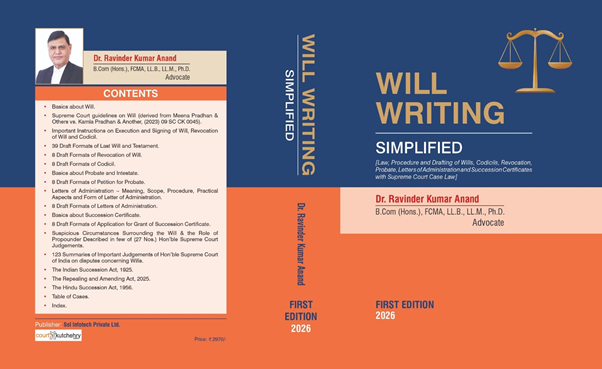
📘 Legal professionals and students alike will benefit from Will Writing Simplified, which covers procedure and case law in detail.
🔹 Buy on Amazon
🔹 Buy on Flipkart
Broader Implications
Also Read: Supreme Court Extends Tribunal Members’ Term till September 2026
- For OBC Candidates: Ensures fairer access to reservation benefits, especially for children of PSU employees.
- For Government Policy: Requires reworking of creamy layer guidelines to include social and occupational factors.
- For Judiciary: Strengthens consistency in reservation law, preventing arbitrary exclusions.
- For Society: Reinforces the principle that backwardness is not defined only by income but also by social and occupational disadvantages.
How Candidates Should Deal with the Changes
- Check Updated Guidelines: Candidates must review revised DoPT notifications once issued.
- Maintain Documentation: Keep records of parental occupation, service category, and income for verification.
- Seek Legal Advice: In case of disputes, candidates can rely on this Supreme Court precedent.
- Awareness Campaigns: Coaching institutes and universities should inform students about the new interpretation.
Conclusion
The Supreme Court’s ruling marks a turning point in India’s reservation policy. By rejecting income-only criteria, the Court has ensured that social and occupational disadvantages remain central to determining creamy layer status. This judgment will benefit thousands of OBC candidates and reshape how reservation benefits are applied in competitive examinations and public employment.
Also Read: Supreme Court Protects Auction Purchasers: No Need to Prove Delivery of Possession
GEO Keywords for Faster Searches
- Supreme Court OBC creamy layer judgment 2026
- Income not sole criterion creamy layer India
- OBC reservation Supreme Court ruling
- PSU employees creamy layer case
- Articles 14 and 16 reservation law India
- DoPT creamy layer guidelines Supreme Court
- OBC creamy layer Supreme Court March 2026
Also Read: Supreme Court Clarifies Interest Payment in Arbitral Awards