
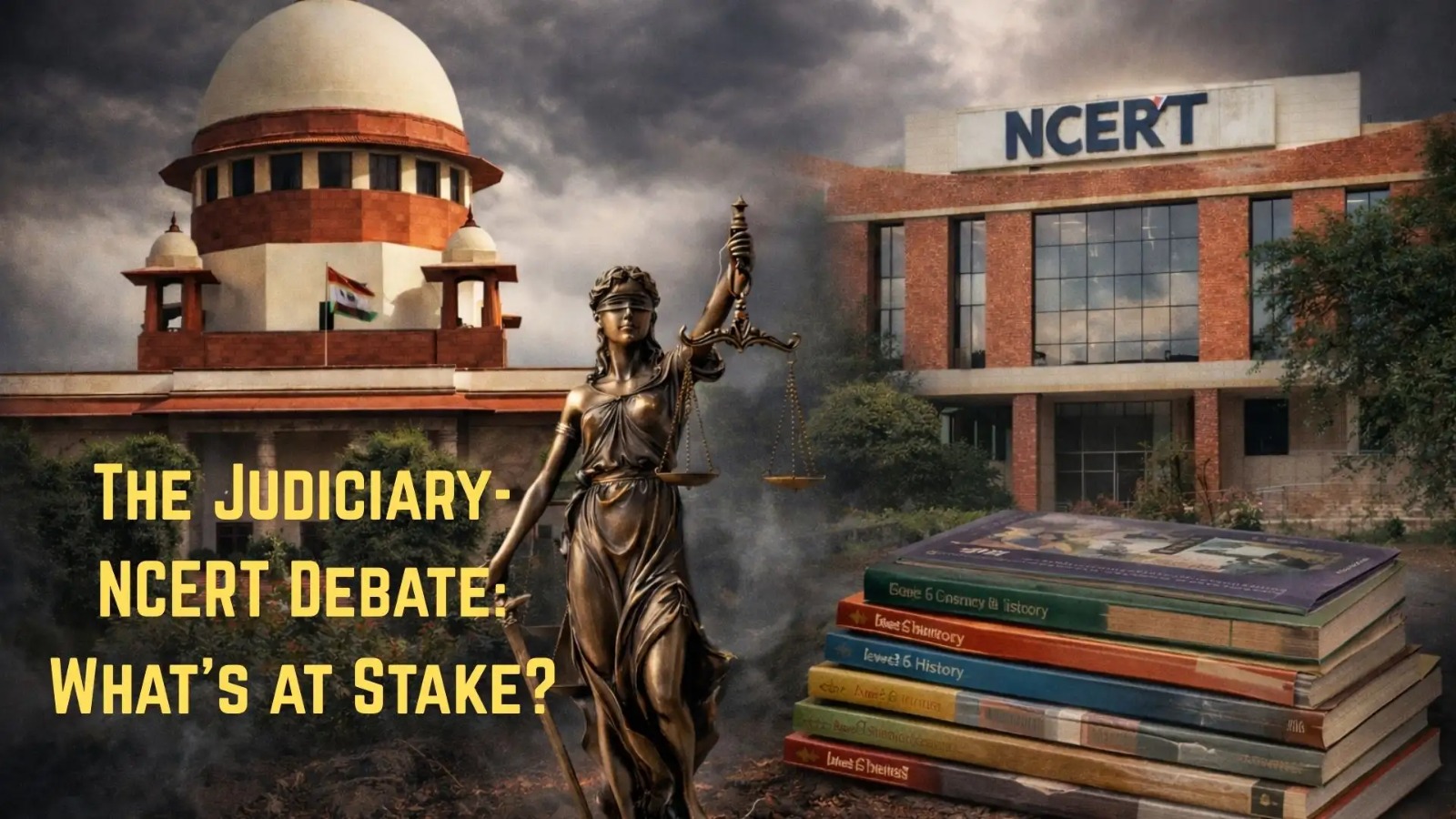
Supreme Court Slams NCERT Over Judiciary Chapter Rewrite, Blacklists Experts
Court Orders Centre and States to Dissociate from Authors
Judges Stress Need for Domain Experts in Curriculum Development
By Legal Reporter
New Delhi: March 11, 2026:
Also Read: CJI Surya Kant Warns Young Lawyers: “Don’t File PILs for Media Publicity”
In a landmark order, the Supreme Court of India has expressed deep concern over the National Council of Educational Research and Training (NCERT)’s handling of a controversial Class 8 Social Science textbook chapter on the judiciary. The chapter, which discussed “corruption in the judiciary,” triggered widespread criticism for its tone and content. The Court found NCERT’s decision to rework the chapter without involving jurists or domain experts “disturbing,” and directed the Centre, states, and publicly funded institutions to blacklist the authors responsible.
Background of the Controversy
- The NCERT Class 8 textbook included a chapter highlighting corruption in the judiciary.
- The chapter was prepared by a team led by Professor Michel Danino, with contributions from Suparna Diwakar and Alok Prasanna Kumar.
- Critics argued that the content was misleading, lacked balance, and undermined the judiciary’s credibility.
- NCERT later claimed the chapter had been rewritten, but the Supreme Court found the process opaque and lacking expert involvement.
Supreme Court’s Key Observations
- Judiciary cannot be portrayed casually: The Court emphasized that criticism of institutions must be objective and backed by expertise.
- Blacklisting of authors: The three academics involved were declared unfit to contribute to educational material for future generations.
- Directive to Centre and States: All governments, universities, and publicly funded institutions must dissociate from the authors.
- Need for domain experts: The Court ordered the Centre to form a panel of legal experts, including a former judge, to oversee curriculum development.
- Transparency in NCERT processes: The Court criticized NCERT for failing to disclose who reviewed the rewritten chapter.
Also Read: Passport Rules India 2026: Birth Certificate Now Mandatory for Date of Birth Proof
Impact of the Judgment
- Curriculum Integrity: The ruling ensures that sensitive subjects like the judiciary are handled by qualified experts.
- Educational Accountability: NCERT must now involve domain specialists before publishing textbooks.
- Public Trust: The judgment reinforces the importance of protecting institutions from misrepresentation in school education.
Wider Legal and Social Significance
This case highlights the delicate balance between academic freedom and institutional respect. While the Court clarified that healthy criticism of the judiciary is permissible, it stressed that such content must be prepared responsibly. The ruling sets a precedent for curriculum development in India, ensuring that textbooks reflect accuracy, fairness, and constitutional values.
[Legal Research]
📘 Legal professionals and students alike will benefit from Will Writing Simplified, which covers procedure and case law in detail.
🔹 Buy on Amazon
🔹 Buy on Flipkart
Also Read: Bombay HC Quashes Rape Case: Consensual Relationship Cannot Be Treated as False Promise of Marriage
Conclusion
The Supreme Court’s intervention in the NCERT textbook controversy underscores the judiciary’s role in safeguarding institutional integrity. By blacklisting the authors and mandating expert oversight, the Court has sent a clear message: education must be rooted in responsibility, expertise, and respect for constitutional institutions.
Keywords for Faster Searches
- Supreme Court NCERT judiciary chapter
- NCERT textbook controversy 2026
- Judicial corruption chapter Class 8
- SC blacklists NCERT experts
- Michel Danino NCERT case
- Supreme Court curriculum ruling India
- NCERT rewriting judiciary chapter
- Education accountability Supreme Court
Also Read: Delhi HC Grants Anticipatory Bail to Army Officer in False Promise of Marriage Case