
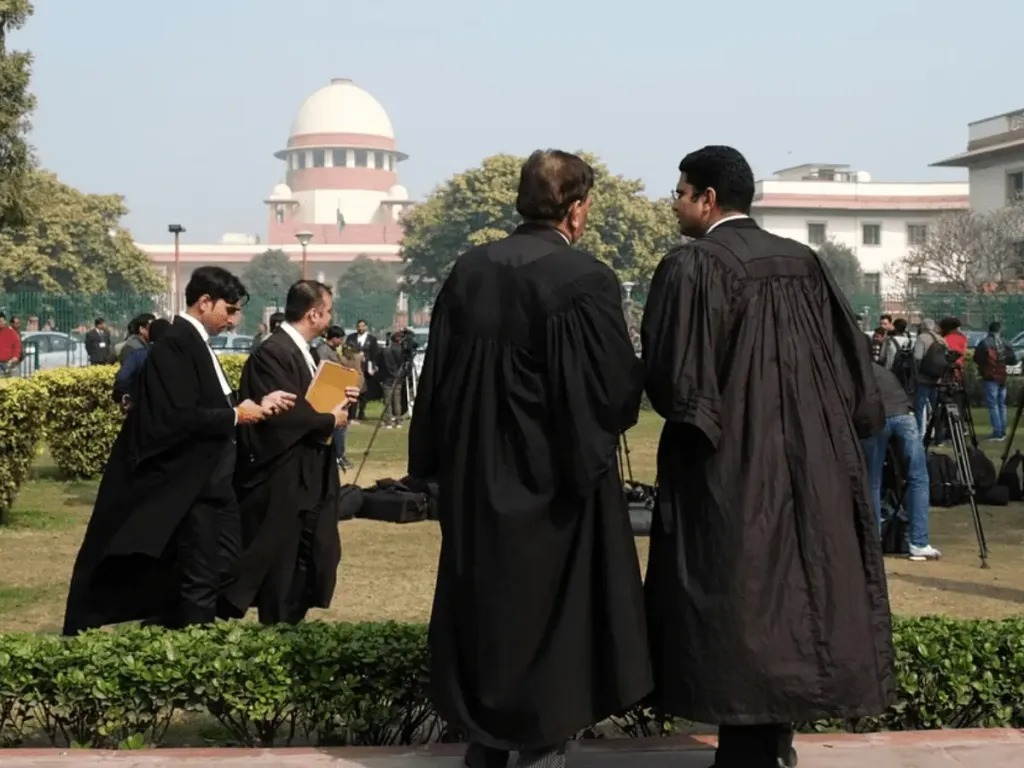
Supreme Court Examines Plea for National Registry and Social Media Code for Lawyers
Petition Seeks Uniform Regulation of Advocates Across India
Balancing Free Speech with Professional Ethics in the Digital Age
By Legal Reporter
New Delhi: June 19, 2026:
The Supreme Court of India has sought the Centre’s and the Bar Council of India’s (BCI) views on a petition demanding a national registry of advocates and a code of conduct for lawyers’ social media activity. This case raises important questions about professional regulation, free speech, and the digital responsibilities of legal practitioners.
Landmark civil judgments often provide valuable guidance on property rights, succession disputes, and judicial interpretation of legal claims between parties. To understand the court’s observations, legal reasoning, and final ruling, read the complete judgment in Savitri Bai and Another Appellant vs Savitri Bai Respondent.
Background of the Case
A petition was filed before the Supreme Court seeking:
Creation of a national registry of advocates.
A social media conduct code to regulate lawyers’ online behaviour.
The Court issued notice to the Union government and the Bar Council of India (BCI), asking for their responses.
The plea argues that unregulated online conduct by lawyers can harm the dignity of the profession and mislead the public.
Key Legal Framework
1. Advocates Act, 1961
Governs the legal profession in India.
Section 7: Empowers the BCI to regulate professional conduct.
Section 49: Allows BCI to frame rules on professional ethics.
Currently, regulation focuses on courtroom and client conduct, not social media.
2. Bar Council of India Rules
Prescribe standards of professional conduct and etiquette.
Prohibit advertising and solicitation of clients.
Do not explicitly address social media use, leaving a regulatory gap.
3. Constitutional Principles
Article 19(1)(a): Freedom of speech and expression.
Article 19(2): Permits reasonable restrictions in the interest of public order, decency, and morality.
Lawyers, as officers of the court, are subject to higher ethical standards.
4. Judicial Precedents
Courts have emphasized that lawyers must uphold dignity and integrity.
In Supreme Court Bar Association vs. Union of India (1998), the Court stressed the importance of professional discipline.
Social media conduct has not yet been comprehensively addressed in Indian case law.
Analytical Insights
Registry Benefits: A national registry would streamline verification of lawyers, reduce impersonation, and enhance transparency.
Social Media Risks: Unregulated online posts may spread misinformation, erode public trust, or amount to indirect solicitation.
Balancing Rights: Any code must balance free speech with professional ethics, ensuring lawyers can express opinions without undermining judicial dignity.
Global Comparisons: Countries like the UK and US have bar associations that issue social media guidelines, emphasizing caution in public commentary.
Implementation Challenges: Enforcement across India’s diverse legal community may be complex, requiring cooperation between state bar councils and the BCI.
FAQ Section (Searchable Index Format)
Q1: What is the petition before the Supreme Court about?
It seeks a national registry of advocates and a social media conduct code for lawyers.
Q2: Who regulates lawyers in India?
The Bar Council of India (BCI) under the Advocates Act, 1961.
Q3: Does the Advocates Act cover social media conduct?
No, it regulates professional ethics but does not explicitly address online behaviour.
Q4: Why is a national registry needed?
To verify lawyers’ credentials, prevent impersonation, and improve transparency.
Q5: What constitutional rights are involved?
Lawyers’ freedom of speech (Article 19(1)(a)), subject to restrictions under Article 19(2).
Q6: Can lawyers advertise on social media?
No, BCI rules prohibit advertising and solicitation, though enforcement is uneven online.
Q7: What risks arise from unregulated social media use?
Spread of misinformation.
Indirect client solicitation.
Damage to judicial dignity.
Q8: How do other countries regulate lawyers online?
Bar associations in the US and UK issue guidelines cautioning lawyers against unprofessional online conduct.
Q9: What role does the Supreme Court play here?
It is examining whether a national framework is needed and has sought views from the Centre and BCI.
Q10: What could be the outcome?
Possible directions to the BCI to frame rules, or recommendations for legislative action.
Conclusion
The Supreme Court’s consideration of a national registry and social media code for advocates reflects the evolving challenges of regulating the legal profession in the digital age. While lawyers enjoy constitutional free speech rights, their role as officers of the court demands higher ethical standards. The case could lead to landmark reforms, ensuring that India’s legal community adapts responsibly to the realities of online communication.