
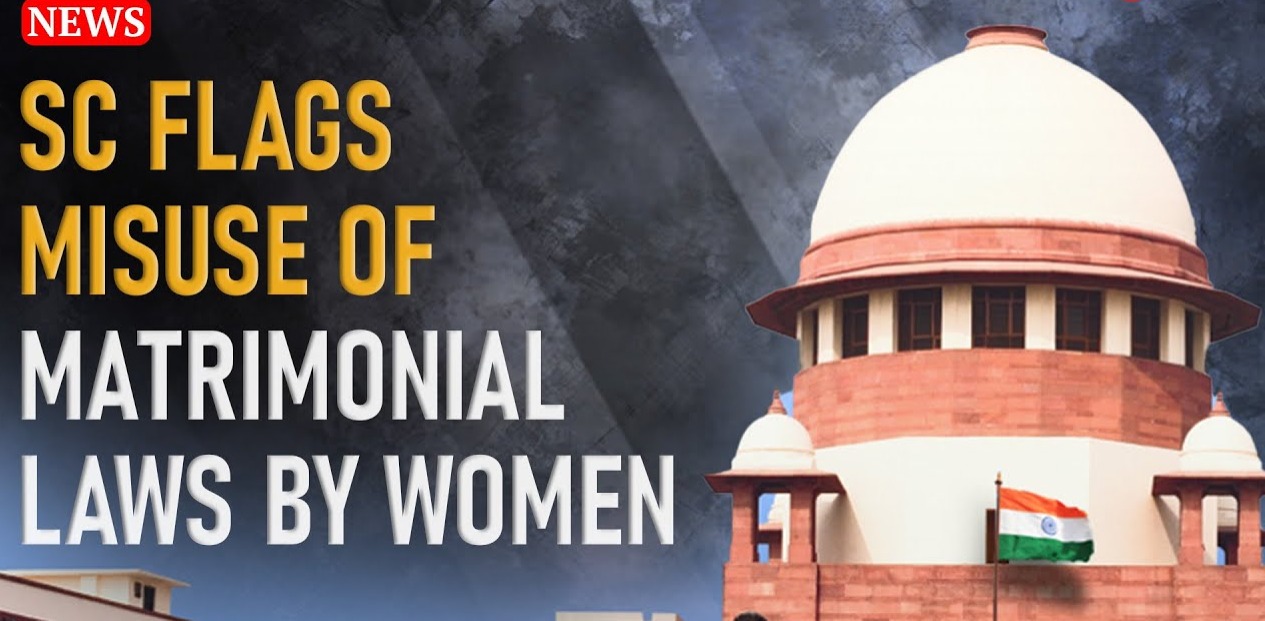
Misuse of Matrimonial Laws: Supreme Court’s Warning and the Need for Reform
When Justice Becomes a Tool for Settlements
Balancing Protection of Women with Safeguards Against Abuse
By Vishwas Kumar
New Delhi: May 30, 2026:
The Supreme Court of India has recently raised alarm over the misuse of matrimonial laws, noting a surge in frivolous cases filed by women under provisions like dowry harassment, domestic violence, and even POCSO. This trend, according to the Court, not only burdens the judiciary but also overshadows genuine cases of abuse, creating ethical, social, and legal dilemmas.
For readers exploring family law and matrimonial disputes, the judgment in In Re: Matrimonial Matters is a significant legal resource that addresses procedural and substantive issues arising in matrimonial litigation. The case highlights the judiciary's approach toward expeditious disposal of family disputes, access to justice, and the protection of parties involved in marriage-related proceedings. Lawyers, law students, and individuals dealing with family law issues may find this judgment particularly useful for understanding the evolving legal principles governing matrimonial matters in India.
Analytical Introduction
The debate around the misuse of matrimonial laws in India has resurfaced with renewed urgency following recent observations by the Supreme Court. In a series of rulings and oral remarks, the Court has highlighted how protective statutes—originally designed to shield women from systemic abuse—are increasingly being weaponised in marital disputes to secure financial settlements or exert pressure on spouses and their families. This development has sparked a wider conversation about the balance between safeguarding vulnerable individuals and preventing exploitation of the legal system.
Historical Context of Matrimonial Laws
India’s matrimonial laws evolved against a backdrop of entrenched patriarchy and widespread abuse of women within households. Section 498A of the Indian Penal Code, introduced in 1983, was a landmark provision aimed at curbing cruelty and dowry harassment. The Dowry Prohibition Act of 1961 sought to criminalise the practice of dowry, while the Protection of Women from Domestic Violence Act, 2005, expanded the definition of abuse to include emotional, sexual, and economic violence. These laws were celebrated as progressive steps toward gender justice, providing women with legal recourse against exploitation.
However, as with many protective statutes, the potential for misuse was embedded in their design. Section 498A, for instance, is cognisable and non‑bailable, meaning arrests can be made without a warrant and bail is not a matter of right. While this was intended to deter abuse, critics argue that it has also enabled frivolous complaints, sometimes filed as leverage in divorce or custody battles. The Supreme Court itself has acknowledged this tension, noting that while the law remains vital for genuine victims, its misuse undermines its credibility.
The Supreme Court’s Recent Concerns
In May 2026, the Supreme Court issued strong remarks against the rising trend of false cases in matrimonial disputes. The Court observed that women were increasingly filing exaggerated or fabricated complaints under provisions like Section 498A, the Domestic Violence Act, and even the POCSO Act, often as part of strategies to secure lucrative settlements. In one case, the Court quashed allegations under POCSO after finding that a minor’s testimony appeared “parrot‑like,” suggesting coaching by her mother during a custody dispute.
The Court emphasised that advocates have a duty to discourage clients from pursuing frivolous litigation. It warned that misuse not only burdens the judiciary but also delegitimises genuine grievances. This dual concern—protecting victims while preventing exploitation—captures the essence of the current debate.
Constitutional Dimensions
The misuse of matrimonial laws implicates several constitutional rights. Article 14 guarantees equality before law, which is compromised when men are unfairly targeted by false allegations. Article 21 protects life and liberty, including reputation and dignity, both of which suffer when individuals face baseless criminal charges. Article 39A mandates equal access to justice, but frivolous cases clog the system, delaying relief for genuine litigants. Thus, the issue is not merely about statutory misuse but about constitutional fairness.
Judicial Precedents
The judiciary has long grappled with balancing protection and misuse. In Achin Gupta v. State of Haryana (2024), the Supreme Court held that Section 498A cannot be applied mechanically to trivial marital quarrels. Earlier, in Rajesh Sharma v. State of UP (2017), the Court directed the formation of family welfare committees to scrutinise complaints before arrests, though this directive was later diluted. These precedents reflect the judiciary’s evolving attempt to calibrate safeguards against misuse without diluting protection for genuine victims.
Comparative Perspectives
Globally, jurisdictions face similar challenges. In the United States, family courts discourage frivolous litigation, and false allegations can attract sanctions. The UK emphasises mediation, with penalties for misuse of domestic violence claims. Australia imposes cost orders and even perjury charges for false allegations in family law disputes. India’s current debate mirrors these international struggles, underscoring the universal tension between protection and misuse in matrimonial law.
Sociological and Ethical Dimensions
The sociological impact of misuse is profound. Families accused under false cases face stigma, social isolation, and reputational damage, even if acquitted. Genuine victims risk being disbelieved due to the proliferation of false complaints, eroding trust in protective laws. Ethically, misuse undermines the very purpose of these statutes, turning shields into swords. Lawyers face moral dilemmas, torn between client advocacy and societal responsibility. The Supreme Court’s reminder of the Bar’s ethical duties is therefore timely.
Economic Implications
False cases often lead to coerced settlements, draining financial resources. Legal costs mount, employment opportunities suffer, and families are forced into defensive litigation. The economic burden is not limited to individuals; the judiciary itself faces resource strain due to docket explosion. This economic dimension adds urgency to the need for reform.
Humanising the Issue: Case Narratives
Consider the case of a husband’s family facing over ten criminal complaints, including rape and attempt to murder, all later quashed for lack of evidence. The family endured years of litigation, social stigma, and financial ruin. In another case, a minor was allegedly tutored to accuse her father under POCSO, leading to prolonged custody battles. These narratives humanise the issue, showing how misuse devastates lives beyond the courtroom.
The Need for Reform
The Supreme Court’s observations highlight the need for structural reforms. Mandatory mediation before criminal complaints could prevent escalation. Stricter scrutiny of allegations, penalties for proven false cases, and swift quashing of frivolous litigation are essential. Comparative models suggest that cost orders and sanctions can deter misuse while preserving access to justice. At the same time, reforms must ensure that genuine victims retain strong remedies and swift relief.
Conclusion:
The misuse of matrimonial laws is not merely a legal issue; it is a constitutional, sociological, economic, and ethical challenge. The Supreme Court’s recent warnings underscore the urgency of reform, reminding society that justice must be balanced—protecting the vulnerable while restraining the unscrupulous. As India grapples with this dilemma, it must craft a framework that preserves the integrity of matrimonial laws, ensuring they remain shields for the oppressed rather than weapons for opportunistic litigants.
Analytical Narrative: Laws and Judicial Concerns
- Key Laws Involved:
- Section 498A IPC (cruelty by husband or relatives).
- Dowry Prohibition Act, 1961.
- Protection of Women from Domestic Violence Act, 2005.
- POCSO Act, 2012.
- Supreme Court Observations (May 2026):
- False cases are being filed as “arm‑twisting tactics” to secure lucrative settlements.
- Courts must separate genuine grievances from vexatious litigation.
- Advocates have a duty to discourage frivolous complaints. timesofindia.indiatimes.com livelaw.in
- Constitutional Dimensions:
- Article 14 — equality before law, requiring fairness for both genders.
- Article 21 — protection of life and liberty, including reputation.
- Article 39A — equal access to justice, which misuse undermines.
Judicial Precedents
- Achin Gupta v. State of Haryana (2024): SC held that Section 498A cannot be applied mechanically to day‑to‑day quarrels.
- Recent SC rulings (2026): Quashed multiple criminal cases where allegations were vague, unsupported by evidence, and appeared retaliatory. livelaw.in
Comparative Perspectives
- United States: Courts discourage frivolous divorce litigation; sanctions may be imposed for false allegations.
- United Kingdom: Family courts emphasize mediation; misuse of domestic violence claims can attract penalties.
- Australia: False claims in family law disputes can lead to costs orders and perjury charges.
Sociological, Economic, and Ethical Impacts
- Sociological:
- Genuine victims risk being disbelieved due to proliferation of false cases.
- Families face stigma and prolonged litigation.
- Economic:
- Lucrative settlements incentivize misuse.
- Legal costs and defensive litigation drain resources.
- Ethical:
- Misuse undermines the credibility of protective laws.
- Lawyers face moral dilemmas between client advocacy and societal responsibility.
Case Studies
- Tutored Allegations under POCSO: SC quashed a case where a minor’s statements were found to be parrot‑like reproductions, allegedly coached by her mother. timesofindia.indiatimes.com
- Multiple Complaints in One Matrimonial Dispute: Over ten cases filed against a husband’s family, including rape and attempt to murder, later quashed for lack of evidence. livelaw.in
Extended FAQ with Answers
- What is Section 498A IPC?
It criminalises cruelty by a husband or his relatives towards a woman, including harassment for dowry. - Why is it controversial?
Because it is non‑bailable and cognisable, critics argue it is often misused for harassment or to secure settlements. - What did the Supreme Court recently say about misuse?
The Court warned against frivolous cases, noting they burden the judiciary and undermine genuine complaints. - What is the Dowry Prohibition Act?
A 1961 law banning the giving or taking of dowry and penalising related offences. - How is domestic violence legally defined?
Under the Domestic Violence Act, it includes physical, emotional, sexual, and economic abuse within a household. - What is the POCSO Act?
The Protection of Children from Sexual Offences Act, 2012, designed to safeguard minors from sexual crimes. - Can false POCSO cases be filed in matrimonial disputes?
Yes, courts have noted instances where children are tutored to make allegations during custody battles. - What role do advocates play in discouraging misuse?
Lawyers are ethically bound to advise clients against filing frivolous or false cases. - What is a frivolous case?
A case filed without merit, often to harass or pressure the other party. - How do courts identify false allegations?
Through lack of evidence, inconsistencies in testimony, and patterns of multiple exaggerated complaints. - What is the impact on genuine victims?
False cases erode credibility, making it harder for real victims to be believed. - Can misuse lead to punishment?
Yes, false allegations can attract perjury charges or cost orders. - What constitutional rights are affected?
Rights to equality (Article 14), life and liberty (Article 21), and fair access to justice (Article 39A). - How does Article 14 apply?
It ensures equality before law, meaning men cannot be unfairly targeted by misuse. - How does Article 21 apply?
Reputation and dignity are part of life and liberty; false cases infringe these rights. - What is Article 39A?
It mandates equal access to justice, which misuse undermines by clogging courts. - What is the Achin Gupta precedent?
The SC held that Section 498A cannot be applied to trivial marital quarrels. - How do courts balance protection and misuse?
By quashing false cases while ensuring genuine victims retain strong remedies. - What is the role of mediation?
Mediation helps resolve disputes amicably and can prevent escalation into criminal litigation. - How does misuse affect family reputation?
Families face stigma, social isolation, and damaged reputations even if acquitted. - What is the economic impact of false cases?
Legal costs, coerced settlements, and loss of employment opportunities drain resources. - Can settlements be coerced?
Yes, false cases are sometimes used to pressure husbands into paying large sums. - How do false cases burden courts?
They add to backlog, delaying justice for genuine litigants. - What is docket explosion?
Overcrowding of court dockets due to excessive litigation, including frivolous cases. - How do false cases affect anticipatory bail?
Courts face difficulty distinguishing genuine threats from exaggerated allegations. - What remedies exist for the accused?
Quashing petitions, anticipatory bail, and seeking compensation for malicious prosecution. - Can costs be imposed for false cases?
Yes, courts can order litigants to pay costs for wasting judicial time. - How do other countries handle misuse?
Many impose penalties, sanctions, or cost orders against false claims. - What is the US approach?
Family courts discourage frivolous litigation; false claims can lead to sanctions. - What is the UK approach?
Courts emphasise mediation, and false domestic violence claims can attract penalties. - What is the Australian approach?
False allegations can result in cost orders and even perjury charges. - Can false allegations amount to perjury?
Yes, knowingly lying under oath is punishable as perjury. - How do courts protect children in disputes?
By appointing child welfare committees, counsellors, and prioritising the child’s best interests. - What ethical duties do lawyers have?
To discourage misuse, uphold justice, and avoid filing cases without merit. - How does misuse affect gender justice?
It undermines trust in women’s rights laws and fuels backlash against genuine victims. - Can misuse undermine women’s rights?
Yes, it risks delegitimising protective laws and weakening support for reforms. - What reforms are needed?
Stricter scrutiny of complaints, penalties for false cases, and mandatory mediation. - Should mediation be mandatory?
Many experts argue yes, to resolve disputes before criminalisation. - How can genuine victims be protected?
By ensuring swift relief, sensitive handling, and separating false cases from real ones. - What lessons can society learn?
That justice must be balanced — protecting victims while preventing exploitation of laws.
Op‑Ed Style Closing Vision
The Supreme Court’s warning about misuse of matrimonial laws is a clarion call for reform. Protective statutes like Section 498A IPC and the Domestic Violence Act were enacted to shield women from systemic abuse. Yet, when these laws are weaponised for monetary gain or revenge, they lose credibility, and genuine victims suffer.
The judiciary’s concern is not about denying women protection but about ensuring fairness. Every false case dilutes the seriousness of real abuse, burdens courts, and destroys families. The ethical responsibility lies not only with litigants but also with lawyers, who must resist encouraging frivolous complaints. The Bar, as the custodian of justice, must uphold its noble traditions by guiding clients towards resolution rather than retaliation.
India must now consider structural reforms. Mandatory mediation before criminal complaints, stricter scrutiny of allegations, and penalties for proven false cases could restore balance. Courts must continue to quash vexatious litigation swiftly, but legislative clarity is also needed. Comparative models from the UK and Australia show that mediation and cost orders can deter misuse while preserving access to justice.
At the same time, reforms must not undermine genuine victims. Women facing real abuse must retain strong legal remedies and swift relief. The challenge is to separate wheat from chaff — to protect the vulnerable while restraining the unscrupulous. This requires sensitivity, judicial vigilance, and societal awareness.
The ethical dimension is profound. Marriage is not merely a contract but a social institution. When disputes escalate into false criminal cases, the sanctity of family life is eroded. Children caught in such battles suffer lasting trauma. Society must recognise that justice cannot be a bargaining chip; it must be a shield for the oppressed, not a sword for the opportunistic.
Looking ahead, India must craft a balanced framework that safeguards women while preventing misuse. This is not a gender issue alone; it is a justice issue. Protecting the integrity of matrimonial laws will strengthen trust in the legal system and preserve the social fabric. The Supreme Court has sounded the alarm; it is now up to legislators, lawyers, and society to respond.
If India succeeds, it will reaffirm that justice is not about settlements but about truth, not about revenge but about fairness. The future of matrimonial law must be principled, compassionate, and balanced — ensuring that every genuine cry for help is heard, and every false cry is silenced.