
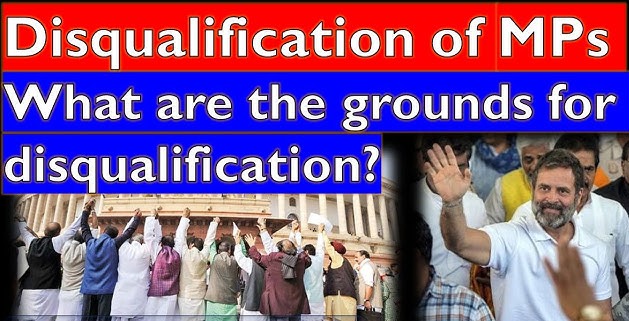
Disqualification of Legislators on Conviction: Supreme Court’s Lily Thomas Ruling
Immediate Disqualification Strengthens Electoral Integrity
Criminalisation of Politics Faces Judicial Pushback
By Legal Reporter
New Delhi: June 16, 2026:
The criminalisation of politics has been a persistent challenge in India. Legislators facing serious criminal charges often continue to hold office, undermining public trust. In Lily Thomas v. Union of India (2013), the Supreme Court delivered a landmark judgment mandating immediate disqualification of MPs and MLAs upon conviction for certain offences. This ruling reshaped the legal landscape, reinforcing accountability and transparency in governance.
The scope of Article 21 of the Constitution of India has expanded significantly through landmark Supreme Court judgments, covering the right to life, personal liberty, privacy, dignity, legal aid, and access to justice for every citizen.
Case Background
Petitioner: Advocate Lily Thomas filed a PIL challenging provisions that allowed convicted legislators to continue in office pending appeal.
Legal Provision Challenged: Section 8(4) of the Representation of the People Act, 1951 (RPA), which permitted convicted legislators to retain their seat if they filed an appeal within three months.
Supreme Court’s Decision: Struck down Section 8(4) as unconstitutional, holding that conviction leads to immediate disqualification.
Key Legal Issues
Validity of Section 8(4) RPA
Allowed legislators to escape disqualification by filing appeals.
Court held these violated constitutional principles of equality and integrity.
Constitutional Provisions
Article 102 and Article 191: Grounds for disqualification of MPs and MLAs.
Court clarified that Parliament cannot dilute these constitutional mandates.
Right to Clean Politics
Citizens have a right to be governed by representatives free from criminal convictions.
Court’s Observations
Immediate Disqualification: Convicted legislators cannot continue in office.
No Special Privilege: Legislators are subject to the same law as ordinary citizens.
Strengthening Democracy: Ruling aimed at curbing criminalisation of politics.
Relevant Laws and Precedents
Representation of the People Act, 1951
Section 8: Disqualification on conviction for certain offences.
Section 8(4): Struck down by Supreme Court.
Constitution of India
Article 102: Disqualification of MPs.
Article 191: Disqualification of MLAs.
Judicial Precedents
Union of India v. Association for Democratic Reforms (2002): Voters’ right to know.
Public Interest Foundation v. Union of India (2018): Political parties must disclose candidates’ criminal records.
Wider Implications
For Legislators: Immediate disqualification upon conviction; no protection through appeals.
For Political Parties: Must exercise caution in fielding candidates with criminal backgrounds.
For Voters: Enhanced trust in electoral process.
For Democracy: Strengthens accountability and reduces criminalisation.
Comparative Perspective
India: Immediate disqualification upon conviction.
US: Convicted legislators often resign; rules vary by state.
UK: Conviction for serious offences leads to disqualification.
Inference: India’s ruling aligns with global standards of integrity in public office.
Conclusion
The Lily Thomas ruling is a cornerstone in India’s fight against criminalisation of politics. By mandating immediate disqualification of convicted legislators, the Supreme Court reinforced the principle that public office is a trust, not a privilege. This judgment continues to shape electoral integrity and democratic accountability.
FAQs
1. What was the Lily Thomas case about?
It challenged Section 8(4) of RPA, which allowed convicted legislators to retain office pending appeal.
2. What did the Supreme Court decide?
Struck down Section 8(4), mandating immediate disqualification upon conviction.
3. Which constitutional articles were involved?
Articles 102 and 191, dealing with disqualification of MPs and MLAs.
4. What offences lead to disqualification?
Conviction for offences listed under Section 8 of RPA, including corruption, serious crimes, and electoral offences.
5. Can legislators avoid disqualification by filing appeals?
No. The Supreme Court removed this protection.
6. How does this ruling affect political parties?
They must avoid fielding candidates with criminal backgrounds.
7. What precedent did this ruling set?
Immediate disqualification upon conviction, strengthening electoral integrity.
8. How does India compare globally?
Similar to UK and US, where conviction leads to disqualification or resignation.
9. What principle did the Court reinforce?
That legislators are subject to the same law as ordinary citizens.