
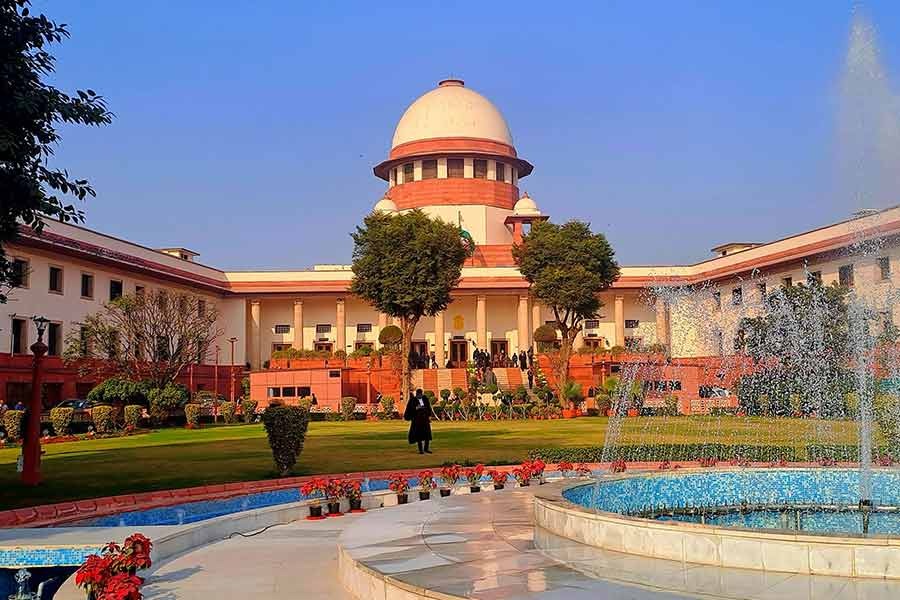
Supreme Court Precedents Shield Wills from Suspicion
Burden of Proof Lies with Propounder
Landmark Judgments on Wills (Most Cited)
By Vishwas Kumar
New Delhi: April 13, 2026
Key landmark Supreme Court judgments on Wills in India—such as H. Venkatachala Iyengar v. B.N. Thimmajamma, Shashi Kumar Banerjee v. Subodh Kumar Banerjee, and Jaswant Kaur v. Amrit Kaur—have consistently held that suspicious circumstances surrounding a Will must be dispelled by the propounder. These precedents form the backbone of pleadings when defending a Will against allegations of undue influence or fabrication.
To gain deeper clarity on will validity and probate principles, refer to this Supreme Court judgment on wills – K. S. Dinachandran vs Shyla Joseph & Ors , which highlights key legal principles governing testamentary disputes in India.
1. Landmark Judgments on Wills (Most Cited)
- H. Venkatachala Iyengar v. B.N. Thimmajamma (1959)
Established that the burden of proof lies on the propounder of the Will, who must satisfy the conscience of the court that the Will is genuine. - Shashi Kumar Banerjee v. Subodh Kumar Banerjee (1964)
Clarified that mere suspicion is insufficient; evidence must show that the Will was duly executed and attested. - Jaswant Kaur v. Amrit Kaur (1977)
Held that suspicious circumstances must be explained satisfactorily, failing which the Will cannot be accepted. - Indu Bala Bose v. Manindra Chandra Bose (1982)
Reaffirmed that proof of attestation and absence of coercion are crucial. - Bharpur Singh v. Shamsher Singh (2009)
Emphasized that registration of a Will is not mandatory but strengthens authenticity.
2. Categories for Pleadings (Suspicious Circumstances Defence)
- Execution & Attestation: Proof of compliance with Section 63 of the Indian Succession Act and Section 68 of the Evidence Act.
- Mental Capacity: Evidence of sound mind and free will of the testator.
- Absence of Undue Influence: Demonstrating voluntary execution without coercion.
- Consistency with Circumstances: Showing that bequests align with natural expectations.
- Supporting Evidence: Registration, medical records, and credible witness testimony.
3. Draft Pleadings (Sample)
IN THE HON’BLE COURT OF [Jurisdiction]
Written Statement on Behalf of Defendant (Propounder of the Will):
- That the Will dated [date] executed by Late [Testator’s Name] is valid, genuine, and binding.
- That the Will was executed in full compliance with Section 63 of the Indian Succession Act and duly attested by two independent witnesses.
- That the testator was of sound disposing mind, as evidenced by medical records and witness testimony.
- That allegations of suspicious circumstances are unfounded. Reliance is placed on H. Venkatachala Iyengar v. B.N. Thimmajamma and Shashi Kumar Banerjee v. Subodh Kumar Banerjee, wherein the Hon’ble Supreme Court held that mere suspicion cannot invalidate a Will.
- That the Will reflects the natural intention of the testator, distributing property among close relations, thereby negating any allegation of undue influence.
- Prayer: It is respectfully prayed that the Hon’ble Court may uphold the validity of the Will and dismiss the baseless objections.
4. Analytical Commentary:
The jurisprudence on Wills in India has evolved through landmark Supreme Court rulings that balance testamentary freedom with safeguards against fraud. The most cited case, H. Venkatachala Iyengar v. B.N. Thimmajamma, laid down the principle that the propounder must prove the Will’s authenticity beyond suspicion. This precedent is critical because it shifts the burden of proof onto the party seeking to rely on the Will, ensuring that courts scrutinize testamentary documents carefully.
In Shashi Kumar Banerjee v. Subodh Kumar Banerjee, the Court clarified that suspicion alone cannot invalidate a Will. This ruling is vital in defending against vague allegations, as it requires objectors to substantiate claims with evidence. Similarly, Jaswant Kaur v. Amrit Kaur emphasized that suspicious circumstances—such as exclusion of natural heirs or unusual bequests—must be explained satisfactorily. This case is often cited when defending Wills that deviate from expected inheritance patterns.
The principle of attestation was reinforced in Indu Bala Bose v. Manindra Chandra Bose, where the Court insisted on strict compliance with statutory requirements. This ensures that procedural safeguards are respected, thereby reducing the scope for forgery. Bharpur Singh v. Shamsher Singh further clarified that registration, while not mandatory, adds weight to the genuineness of a Will. This precedent is particularly useful when defending a registered Will against allegations of fabrication.
Together, these judgments create a layered defence strategy. First, compliance with statutory execution and attestation requirements is established. Second, evidence of the testator’s mental capacity and voluntary action is presented. Third, precedents are invoked to argue that mere suspicion is insufficient. Finally, corroborative evidence such as registration or medical records is used to dispel doubts.
By weaving these precedents into pleadings, a lawyer can construct a robust defence against allegations of suspicious circumstances. The analytical strength lies in demonstrating that the Supreme Court has consistently upheld testamentary freedom while requiring strict proof of authenticity. Thus, the precedents serve both as shields against baseless objections and as guiding principles for courts to evaluate Wills objectively.
[RECOMMENDED RESEARCH RESOURCES]
For a comprehensive understanding of inheritance disputes and testamentary laws, explore this complete collection of Supreme Court judgments on wills , covering key rulings on will validity, probate, and succession disputes in India.
EXTRACTS FROM BOOK, WILL WRITING SIMPLIFIED, By Dr Ravinder Kumar Anand. [📘 Buy Will Writing Simplified online: Amazon | Flipkart ]
5. FAQs
Q1: Is registration of a Will mandatory?
No, but registration strengthens authenticity (Bharpur Singh v. Shamsher Singh).
Q2: Who bears the burden of proof?
The propounder of the Will (H. Venkatachala Iyengar v. B.N. Thimmajamma).
Q3: Can mere suspicion invalidate a Will?
No, suspicion must be backed by evidence (Shashi Kumar Banerjee v. Subodh Kumar Banerjee).
Q4: What constitutes suspicious circumstances?
Unnatural bequests, exclusion of heirs, or doubtful execution.
Q5: How can suspicious circumstances be dispelled?
Through compliance with statutory requirements, credible witnesses, medical records, and logical explanation of bequests.