
Beyond the Frontlines: How India’s Supreme Court Intervened to Restore Dignity, Justice, and Legal Redress for Victims of Human Trafficking in Overseas Conflicts
Judicial Intervention Reclaims Human Dignity: Supreme Court Mandates Nodal Officer, Forensic DNA Protocol, and Free Legal Aid for Families of Deceived Indian Combatants
Navigating Transnational Jurisdiction: Unpacking the Criminal, Consular, and Human Rights Frameworks Shielding Vulnerable Citizens Abroad
By Legal Editor
New Delhi: August 01, 2026:
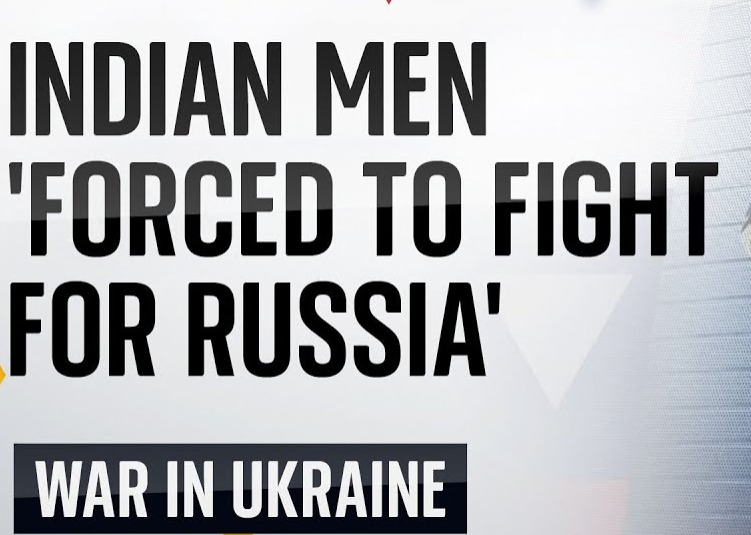
When young Indian nationals left their homes expecting lucrative employment across construction, hospitality, and service sectors abroad, few could have anticipated that an intricate web of human trafficking would deposit them directly into active war zones. Reports and judicial submissions reveal a harrowing pattern: upon arrival in Russia, job seekers routinely had their passports and identity credentials confiscated, were coerced into signing military service contracts in languages they could not comprehend and were deployed onto the frontlines of the ongoing Russia-Ukraine war. Facing tragic casualties, missing persons, and decomposed mortal remains, the grieving families turned to the highest judicial forum of the nation for relief.
On July 31, 2026, a Supreme Court bench headed by Chief Justice of India Surya Kant issued significant directions to the Ministry of External Affairs (MEA), the National Legal Services Authority (NALSA), and State Legal Services Authorities. The Court ordered the immediate appointment of a dedicated MEA Nodal Officer, facilitated standardized forensic DNA profiling to verify remains, mandated vernacular communication channels, and instructed state legal aid authorities to assist distressed families in pursuing formal compensation claims before foreign embassies.
Beyond immediate humanitarian relief, this landmark judicial action underscores a delicate intersection of domestic statutory obligations, constitutional rights guarantee, international human rights treaties, and criminal laws governing transnational recruitment frauds.
The Constitutional and Statutory Core of Judicial Intervention
The intervention of the Supreme Court is rooted primarily in Article 21 of the Constitution of India, which guarantees the fundamental Right to Life and Personal Liberty. The judiciary has long expanded the scope of Article 21 to encompass the right to human dignity, extending even after death (Pt. Parmanand Katara v. Union of India). The right of deceased individuals to receive proper identification, respectful handling, and burial or cremation in accordance with religious customs forms an intrinsic part of this guarantee. By mandating forensic DNA testing and structured repatriation, the Court affirmed that the state's constitutional obligation to preserve human dignity does not cease at international borders.
Furthermore, the statutory framework governing Indian citizens seeking employment abroad relies heavily on the Emigration Act, 1983. Under Section 10 and Section 24 of the Emigration Act, no person or recruiting agency can lawfully recruit Indian citizens for employment abroad without a valid certificate issued by the Protector General of Emigrants (PGE). Recruitment processes that bypass registered recruitment agents violate statutory mandates and often constitute illegal human smuggling and deceptive trade practices under Section 24.
When fraudulent agents trick job seekers with false employment promises only to forcibly enrol them in foreign armed forces, the criminal threshold crosses into human trafficking. This falls under Section 370 of the Indian Penal Code (IPC) / Section 143 of the Bharatiya Nyaya Sanhita (BNS), 2023, which penalizes recruiting, transporting, harbouring, or receiving persons by means of threat, force, fraud, or deception for exploitation.
| LEGAL FRAMEWORK GOVERNING CITIZENS ABROAD |
+-----------------------------------+-------------------------------------------------------------------+
| Statutory / Constitutional Provision| Scope and Application in Transnational Human Trafficking Cases |
+-----------------------------------+-------------------------------------------------------------------+
| Article 21, Constitution of India | Guarantees right to life, personal dignity, and dignified treatment|
| | of mortal remains post-mortem. |
| Section 10 & 24, Emigration Act | Mandates official PGE authorization for overseas recruiting; |
| | penalizes unregistered fraudulent agents. |
| Section 370 IPC / Section 143 BNS | Prohibits recruitment through fraud, deception, or coercion; |
| | classifies forced battlefield deployment as criminal trafficking. |
| Legal Services Authorities Act | Mandates free legal aid via NALSA/SLSA to economically |
| | distressed victims and families for diplomatic claims. |
| Passport Act, 1967 | Governs custody of travel documents; confiscation by foreign |
| | entities constitutes an infraction under consular protection law. |
Consular Obligations, International Law, and Legal Aid Protocols
Under customary international law and the Vienna Convention on Consular Relations, 1963 (VCCR)—to which India and Russia are state parties—consular posts are explicitly empowered to safeguard the interests of nationals, assist them in dealings with local administrative and judicial organs, and facilitate communication during emergencies (Article 5 of VCCR). When Indian nationals lose their passports or travel documents due to unlawful confiscation by foreign entities or mercenaries, international consular assistance protocols require immediate diplomatic intervention to issue Emergency Certificates (EC) and verify legal identities.
To bridge the gap between distressed citizens and complex administrative machinery, the Court highlighted the Legal Services Authorities Act, 1987. Under Section 12 of the Act, economically weaker sections, victims of human trafficking, and individuals in deep distress are entitled to free, competent legal services. The Supreme Court's mandate directing NALSA and State Legal Services Authorities (SLSAs) to provide active legal representation ensures that families are not left navigating foreign embassy channels, compensation claims, and complex probate processes without legal support.
Standardizing Forensic DNA Identification and Procedural Safeguards
In active conflict zones, mortal remains repatriated after extended periods are frequently severely decomposed or fragmented. Visual identification becomes impossible, creating severe evidentiary hurdles for death registration, probate, insurance clearance, and ex-gratia compensation.
By directing the Ministry of External Affairs to appoint a Nodal Officer and establish a standardized DNA testing pipeline, the Court aligned domestic administrative procedure with international humanitarian protocols. Under guidelines recommended by Interpol and the International Committee of the Red Cross (ICRC) for Disaster Victim Identification (DVI), DNA profiling from reference samples (such as immediate blood relatives like parents or children) provides the gold standard for conclusive identification.
+-------------------------------------------------------------------------------------------------------+
| PROCEDURAL DNA IDENTIFICATION FLOWCHART |
+-------------------------------------------------------------------------------------------------------+
| [Affected Family Member] ---> (SLSA Legal Aid Facilitation) ---> (MEA Nodal Officer Designated) |
| | |
| v |
| [Mortal Remains Received] <--- (Forensic DNA Profile Cross-Match) <--- (Reference Sample Collected) |
| | |
| v |
| [Official Death Certificate Issued] ---> (Compensation Claims & Ex-Gratia Settlement via Embassy) |
+-------------------------------------------------------------------------------------------------------+
The MEA Nodal Officer serves as a centralized liaison between domestic forensic laboratories (such as CFSL), state police authorities, foreign military mortuaries, and the diplomatic mission. Establishing this streamlined protocol guarantees evidentiary validity in domestic and international courts, preventing administrative delay or denial of justice to families waiting for final closure.
Searchable FAQ Index: Key Legal Points and Consumer Rights
Category A: Judicial Directions & Constitutional Mandates
FAQ 1: What specific directions did the Supreme Court issue regarding Indian combatants in the Russia-Ukraine war?
The Supreme Court directed the Ministry of External Affairs (MEA) to appoint a dedicated Nodal Officer to coordinate directly with affected families. The MEA must facilitate forensic DNA matching for decomposed remains, establish vernacular communication channels, and coordinate with NALSA and SLSAs to assist families in filing legal compensation claims before foreign authorities.
FAQ 2: Which fundamental rights protect Indian nationals deployed illegally in foreign conflicts?
Article 21 of the Constitution guarantees the right to life, personal liberty, and human dignity. This protection applies to citizens abroad through consular intervention protocols and extends post-mortem to guarantee respectful treatment, proper identification via DNA testing, and dignified last rites.
FAQ 3: Why was the appointment of a single MEA Nodal Officer made mandatory by the court?
A single Nodal Officer removes bureaucratic friction and ensures direct, transparent communication between distressed families, foreign embassies, state legal aid authorities, and forensic laboratories, avoiding administrative delays.
Category B: Human Trafficking, Emigration Laws & Criminal Liability
FAQ 4: How does Indian law classify recruitment agencies that trick citizens into war zones?
Recruitment under false pretences (e.g., promising hospitality jobs but deploying individuals into military combat) constitutes human trafficking under Section 370 of the Indian Penal Code (IPC) / Section 143 of the Bharatiya Nyaya Sanhita (BNS), 2023. It also violates Sections 10 and 24 of the Emigration Act, 1983, which prohibit unregistered overseas recruitment.
FAQ 5: What legal recourse do families have against fraudulent local recruiters or travel agents?
Families can file First Information Reports (FIRs) under the BNS/IPC for human trafficking, cheating (Section 318 BNS / Section 420 IPC), and criminal conspiracy. They may also report unregistered agents to the Protector General of Emigrants (PGE) under the Emigration Act for immediate cancellation of permits and asset freezing.
FAQ 6: What happens if an Indian citizen’s passport is unlawfully confiscated abroad?
Confiscating a passport violates the Passport Act, 1967, and international consular law under the Vienna Convention on Consular Relations, 1963. The Indian Embassy can issue an Emergency Certificate (EC) or duplicate passport to facilitate immediate repatriation upon diplomatic intervention.
Category C: Free Legal Aid, DNA Profiling & Compensation Claims
FAQ 7: Who is eligible for free legal aid in these overseas deployment cases?
Under Section 12 of the Legal Services Authorities Act, 1987, victims of human trafficking, economically distressed individuals, and families seeking legal redress in extraordinary situations are entitled to free legal aid from NALSA, State Legal Services Authorities (SLSAs), and District Legal Services Authorities (DLSAs).
FAQ 8: How is DNA matching conducted for mortal remains brought back from conflict zones?
Reference DNA samples (such as blood or buccal swabs) are collected from immediate family members by state authorities. These samples are cross-matched against forensic DNA profiles extracted from the mortal remains by authorized laboratories to establish legal identity prior to handing over the remains.
FAQ 9: How can families claim ex-gratia compensation or insurance benefits from foreign governments?
Families, supported by NALSA/SLSA panel lawyers and the MEA Nodal Officer, submit formal claims to the foreign government's embassy in India. Required documentation includes the official forensic DNA identification report, death certificate, relationship proof, and verified power of attorney.
FAQ 10: Where can affected families access updates and instructions in regional languages?
The Supreme Court directed that all judicial orders, administrative updates, and nodal officer contacts must be provided to affected families in their vernacular languages to ensure complete accessibility and clarity.