
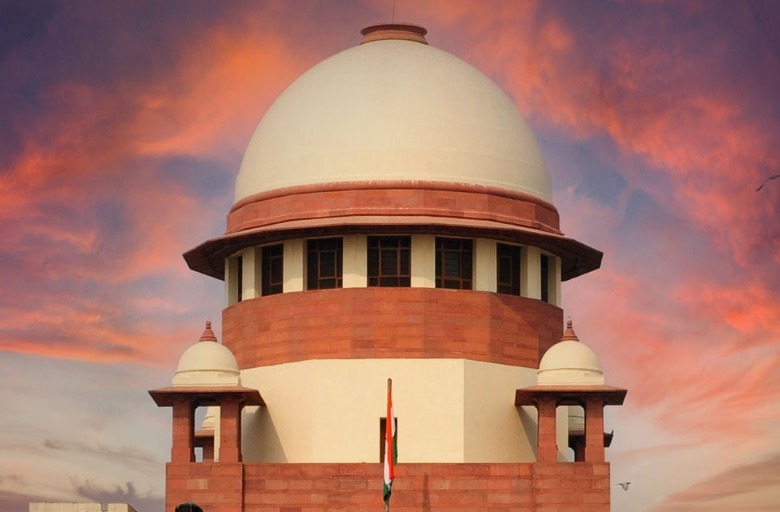
Supreme Court: No Forced Compensation in Place of Injunctions
High Courts cannot award relief beyond pleadings
Plaintiffs’ right to injunction upheld against encroachments
By Legal Reporter
New Delhi: June 23, 2026:
The Supreme Court of India has clarified that courts cannot compel plaintiffs to accept monetary compensation in place of an injunction when no such relief was sought in the pleadings. This ruling reinforces the principle that judicial discretion must remain within the boundaries of the reliefs claimed, ensuring fairness and adherence to procedural law.
1. Case Background
The dispute arose from two civil suits filed by a plaintiff against respondents, alleging encroachment on his property. The Trial Court decreed removal of the encroaching wall and lintel, restraining further construction. The first Appellate Court upheld the decrees. However, in second appeals, the Punjab and Haryana High Court substituted the injunction with compensation, treating the disputed wall as common property.
The matter reached the Supreme Court after repeated appeals. A bench of Justice S.V.N. Bhatti and Justice Atul S. Chandurkar set aside the High Court’s ruling, holding that it was impermissible to compel plaintiffs to accept compensation when they had only sought injunctions.
2. Key Legal Provisions Discussed
Section 100 of the Code of Civil Procedure (CPC): Governs second appeals, requiring substantial questions of law to be framed. The SC noted the High Court failed to do so.
Order XXI CPC: Relates to execution of decrees. The SC held that once decrees were set aside, no executable decree survived, making compensation assessment invalid.
Principle of Pleadings: Courts cannot grant relief not prayed for. Relief must be confined to pleadings and issues framed.
Doctrine of Judicial Restraint: Courts must avoid substituting remedies beyond the scope of litigation.
3. Court’s Observations
No Relief Beyond Pleadings: The plaintiff sought removal of encroachments, not damages. The High Court erred in awarding compensation.
Invalid Execution: Once decrees were set aside, directing the Executing Court to assess compensation was legally unsustainable.
Procedural Flaw: The High Court failed to frame substantial questions of law under Section 100 CPC.
Rights of Plaintiffs: Plaintiffs cannot be forced to accept remedies they did not seek.
4. Implications of the Judgment
For Property Law: Reinforces the sanctity of injunctions in encroachment disputes.
For Appellate Courts: Limits discretion to reliefs sought in pleadings.
For Plaintiffs: Ensures their chosen remedies are respected.
For Judicial Practice: Strengthens adherence to procedural safeguards under CPC.
5. Broader Legal and Social Context
This ruling underscores the importance of pleadings in civil litigation. Courts must adjudicate within the framework of reliefs sought, ensuring predictability and fairness. It also highlights the balance between judicial discretion and litigants’ rights. By rejecting forced compensation, the SC reaffirmed that injunctions remain a vital remedy in property disputes, especially against encroachments.
FAQ: Key Legal Points (Searchable Index Format)
Q1: What was the Supreme Court’s ruling? Courts cannot compel plaintiffs to accept compensation in lieu of injunctions when no such relief was sought.
Q2: Which law governs second appeals? Section 100 CPC, which requires framing of substantial questions of law.
Q3: Why was the High Court’s order invalid? Because it substituted injunctions with compensation, a relief not prayed for, and failed to frame substantial questions of law.
Q4: What is Order XXI CPC? It governs execution of decrees. The SC held that once decrees were set aside, no execution could proceed.
Q5: What relief had the plaintiff sought? Removal of encroachments and injunction against further construction.
Q6: Can courts grant relief beyond pleadings? No. Relief must be confined to what is sought in pleadings.
Q7: What is the significance of this ruling? It protects plaintiffs’ rights to chosen remedies and limits judicial overreach.
Q8: What happens if decrees are set aside? No executable decree survives, so compensation assessment is invalid.
Q9: How does this affect property disputes? It strengthens injunctions as a remedy against encroachments.
Q10: What broader principle does this uphold? Judicial restraint and adherence to procedural law.