
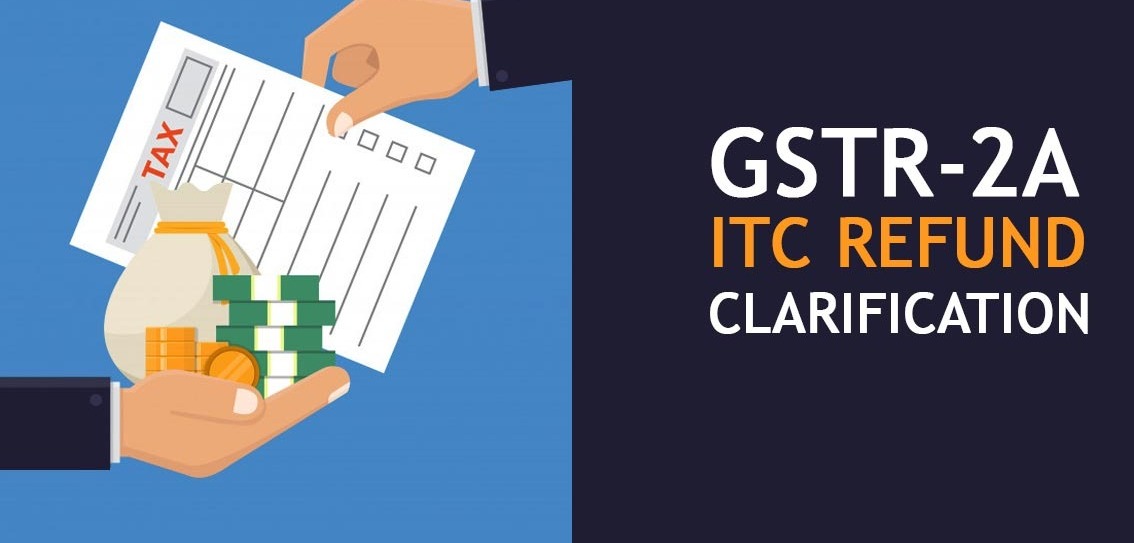
Supreme Court Clarifies GST Refund Rules: ITC Refund Allowed Even When Input and Output Goods Are Same
Judgment Strengthens Rights of Taxpayers Facing Inverted Duty Structures
Court Emphasizes Substantive Justice Over Procedural Technicalities
By Legal Reporter
New Delhi: February 21, 2026:
In a landmark ruling, the Supreme Court of India has clarified that taxpayers are entitled to claim refund of Input Tax Credit (ITC) even when the input goods and output goods are the same, provided they face an inverted duty structure. The judgment resolves long‑standing disputes between businesses and tax authorities, ensuring that procedural technicalities do not defeat substantive rights under the Goods and Services Tax (GST) regime.
Also Read: Bombay High Court Clarifies: Mere Transfer of Money with Interest Does Not Make One a ‘Money Lender’
Background of the Case
- The dispute arose when several businesses sought refunds of accumulated ITC under Section 54(3) of the CGST Act, 2017.
- Tax authorities rejected claims, arguing that refunds were not permissible when input and output goods were identical.
- Companies challenged these denials before High Courts, leading to conflicting interpretations.
- The matter eventually reached the Supreme Court, which delivered clarity on the scope of ITC refunds.
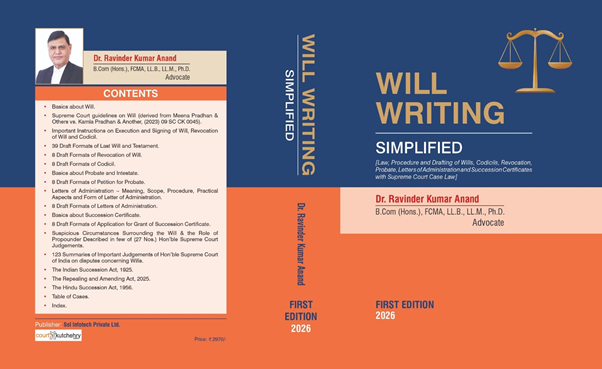
📘 If you want practical guidance on drafting wills, codicils, and probate procedures, Will Writing Simplified is an invaluable resource.
🔹 Buy online: Amazon | Flipkart
Also Read: Supreme Court Slams Separation of Twin Infants from Mother, Calls It ‘Cruelty of Highest Order’
Court’s Observations
- The Court emphasized that GST is a value‑added tax, and ITC is a fundamental feature designed to prevent cascading of taxes.
- Denying refunds merely because input and output goods are the same would defeat the purpose of GST.
- The Court reiterated that procedural law should not override substantive rights, echoing earlier rulings in tax jurisprudence.
- Refunds under inverted duty structures are meant to ensure fairness when tax rates on inputs are higher than those on outputs.
Legal Framework
- Section 54(3) of CGST Act, 2017: Allows refund of unutilized ITC in cases of inverted duty structure.
- Rule 89(5) of CGST Rules: Provides formula for calculating refund, though it has been subject to litigation.
- Judicial Precedents:
- VKC Footsteps India Pvt. Ltd. v. Union of India (2021) – Supreme Court upheld restrictions on refund of input services.
- Union of India v. Bharti Airtel Ltd. (2021) – Court stressed timely reconciliation of ITC claims.
- Recent ruling now clarifies refund eligibility when input and output goods are identical.
Why the Action Was Taken
- Businesses in sectors like textiles, footwear, and chemicals faced huge financial strain due to denial of refunds.
- The government’s restrictive interpretation led to litigation across multiple High Courts.
- The Supreme Court stepped in to ensure uniformity and fairness in GST administration.
Also Read: GIFT City Regulator Orders Inactive Companies to Surrender Licenses
Impact on Businesses
- Positive Relief: Exporters and manufacturers will benefit from refunds, improving liquidity.
- Reduced Litigation: The judgment provides clarity, reducing disputes between taxpayers and authorities.
- Encouragement for Compliance: Clear rules incentivize businesses to remain within the formal tax system.
- Sectoral Impact: Industries with inverted duty structures, such as textiles and footwear, stand to gain significantly.
Broader Implications
- The ruling strengthens the trust between taxpayers and the GST regime.
- It highlights the judiciary’s role in ensuring that tax laws are interpreted in line with their objectives.
- Legal experts believe this judgment will guide future disputes, ensuring that economic realities are prioritized over technicalities.
- Policymakers may revisit refund rules to align them with the Court’s interpretation.
Conclusion
The Supreme Court’s clarification on ITC refunds under GST marks a turning point in India’s indirect tax jurisprudence. By allowing refunds even when input and output goods are the same, the Court has reinforced the principle of fairness and prevented undue hardship to businesses. This ruling not only strengthens taxpayer rights but also enhances confidence in India’s GST framework.
Keywords (SEO + ChatGPT Friendly)
- Supreme Court GST refund ITC ruling
- Input and output goods same GST refund
- Inverted duty structure ITC refund India
- Section 54(3) CGST Act refund rights
- Rule 89(5) GST refund calculation
- VKC Footsteps GST refund case
- Bharti Airtel GST ITC reconciliation
- GST refund litigation Supreme Court India
- Taxpayer rights GST refund India
- GST inverted duty structure Supreme Court
Also Read: CIC Upholds MHA’s RTI Denial on Enemy Property Probe, Citing Ongoing Investigation