
Supreme Court Clarifies: Falling Tree Branch Not a Motor Accident Under MV Act
Motor Vehicles Act requires proximate link between vehicle use and accident
Court invokes Article 142 to grant humane compensation despite statutory bar
By Legal Reporter
New Delhi: June 11, 2026:
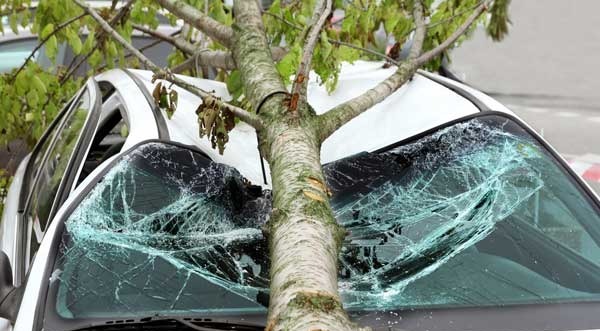
The Supreme Court of India has ruled that injuries caused by a tree branch falling on a stationary autorickshaw do not qualify as a “motor accident” under the Motor Vehicles Act, 1988. However, invoking Article 142 of the Constitution, the Court enhanced compensation to ensure justice for the injured passenger, balancing strict statutory interpretation with humane relief.
1. Case Background
The case, Commissioner, Bruhat Bangalore Mahanagara Palike vs K.K. Umesh Kumar, arose from a 2007 incident in Bengaluru. Umesh Kumar, traveling in an autorickshaw, stopped during heavy rain under a tree. A branch fell on the parked vehicle, causing grievous injuries. He sought ₹50 lakh compensation under the Motor Vehicles Act, 1988.
Motor Accident Claims Tribunal (2013): Dismissed the claim, treating it as a natural calamity.
Karnataka High Court: Awarded ₹17.10 lakh, apportioning liability among the municipal corporation (25%), insurer (50%), and horticulture department (25%).
Supreme Court: Examined whether such an incident qualifies as a “motor accident” under Section 165(1) and Section 166 of the MV Act.
2. Key Legal Provisions
Section 165(1), Motor Vehicles Act, 1988
Provides jurisdiction to Motor Accident Claims Tribunals for accidents “arising out of the use of motor vehicles.”
Requires a proximate connection between the accident and the use of the vehicle.
Section 166, Motor Vehicles Act, 1988
Enables victims to claim compensation for accidents involving motor vehicles.
Article 142, Constitution of India
Grants Supreme Court inherent power to pass orders necessary to do “complete justice.”
3. Court’s Reasoning
No Proximate Connection
The autorickshaw was stationary; the accident was caused by a falling tree branch.
The vehicle did not play an active role in the accident.
Hence, the incident cannot be treated as a “motor accident” under Section 165(1).
Humanitarian Approach under Article 142
Despite rejecting the claim under MV Act, the Court enhanced compensation.
It emphasized that justice must be humane and constitutionally compliant, especially for permanently disabled victims.
4. Implications of the Judgment
For Victims
Not all injuries inside vehicles qualify as motor accidents.
Victims must establish a causal link between vehicle use and accident.
For Municipal Authorities
Liability may arise under tort law or negligence principles, especially for failing to maintain public trees.
For Insurance Companies
Insurers are not automatically liable for natural calamities unless vehicle use is directly involved.
5. Comparative Perspective
UK & US Law
Similar principles apply compensation requires proximate causation between vehicle use and accident.
Natural calamities or external factors not involving vehicle operation are excluded.
6. Critical Analysis
The ruling underscores the strict statutory interpretation of the Motor Vehicles Act. While this ensures clarity, it may leave victims uncompensated in unusual scenarios. The Court’s reliance on Article 142 reflects a pragmatic balance—acknowledging statutory limits while ensuring justice.
This dual approach strengthens legal certainty while preserving judicial flexibility. It also signals to municipal bodies the importance of urban infrastructure maintenance, as negligence in tree management can have severe consequences.
Detailed FAQ
Q1: Why did the Supreme Court say this was not a motor accident?
Because the autorickshaw was stationary and did not contribute to the accident. The falling tree branch was the proximate cause, not the vehicle.
Q2: What does “arising out of the use of a motor vehicle” mean?
It means the accident must have a direct causal link to the operation or use of the vehicle. Merely being inside a vehicle when an external event occurs is insufficient.
Q3: Could the victim still get compensation?
Yes. The Supreme Court invoked Article 142 to enhance compensation, ensuring humane relief despite statutory limitations.
Q4: What role did the municipal corporation play?
The Karnataka High Court held BBMP partly liable (25%) for failing to maintain the tree. The Supreme Court did not disturb this finding but clarified the legal framework.
Q5: Does insurance cover such incidents?
Not under the Motor Vehicles Act. Insurers are liable only when accidents arise from vehicle use. Natural calamities fall outside this scope.
Q6: What precedent does this set?
It clarifies that motor accident claims require proximate causation. However, courts may still grant relief under constitutional powers.
Q7: How does Article 142 help victims?
It allows the Supreme Court to grant compensation even when statutory provisions do not apply, ensuring justice in exceptional cases.
Q8: What should municipalities learn from this?
They must maintain urban trees and infrastructure to prevent accidents. Negligence can result in liability under tort law.
Q9: Could similar cases arise in future?
Yes. Falling trees, collapsing structures, or other natural events may injure vehicle occupants. This ruling provides guidance on liability.