
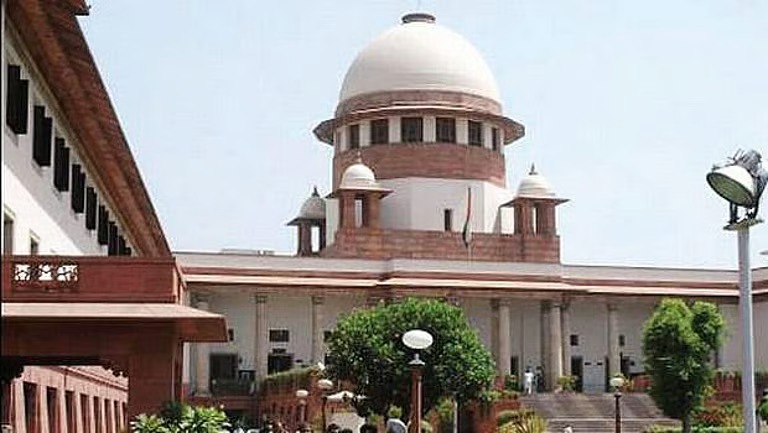
Supreme Court Extends Tribunal Members’ Term till September 2026
Centre to Introduce New Tribunal Law in Monsoon Session
Why Extension Matters for Judicial Efficiency and Citizens
By Legal Reporter
New Delhi: March 10, 2026:
Also Read: Bombay High Court Orders Transparency in Mundkar Cases
Tribunals in India play a crucial role in resolving disputes in areas such as taxation, company law, environment, and consumer protection. However, frequent vacancies and uncertainty over members’ tenure have often disrupted their functioning. In March 2026, the Supreme Court stepped in, allowing the extension of tribunal members’ terms until September 8, 2026, giving the government time to bring in a comprehensive new law. This decision balances judicial independence with administrative necessity, ensuring that tribunals continue to serve citizens without interruption.
What the Supreme Court Ordered
- Tribunal members whose terms were set to expire will now continue until September 8, 2026.
- The Court directed the Centre to introduce a new tribunal law in the Monsoon Session of Parliament.
- The extension is temporary, meant to prevent disruption in tribunal functioning.
- The Court emphasized that tribunals must remain effective forums for speedy justice.
Also Read: Bombay High Court Clarifies Jurisdiction in Debt Recovery Case
[Additional Resource for Legal Learners]
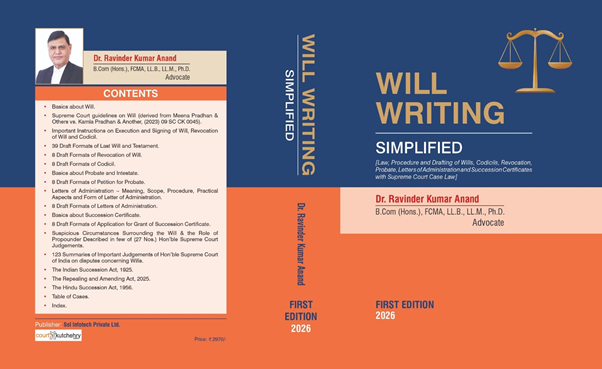
📘 Legal professionals and students alike will benefit from “Will Writing Simplified”, which covers procedure and case law in detail.
🔹 Buy online: Amazon | Flipkart
Why This Matters
- Continuity: Prevents tribunals from becoming dysfunctional due to vacancies.
- Judicial efficiency: Ensures pending cases are not delayed further.
- Legislative clarity: A new law will define tenure, appointment, and service conditions more clearly.
- Public impact: Citizens relying on tribunals for disputes in taxation, corporate law, and consumer rights will benefit from uninterrupted functioning.
Also Read: ITAT: Technical Errors Cannot Block Trust Registration
Challenges in Tribunal System
- Frequent vacancies: Many tribunals have faced delays due to lack of members.
- Unclear tenure rules: Past laws and amendments created confusion about service conditions.
- Dependence on executive: Appointments often delayed, raising concerns about independence.
- Backlog of cases: Thousands of disputes remain pending, affecting citizens and businesses.
What the New Law May Address
- Fixed tenure for members to avoid uncertainty.
- Transparent appointment process with judicial oversight.
- Uniform service conditions across different tribunals.
- Mechanisms for accountability to ensure efficiency.
Also Read: ITAT: Conversion of Company into LLP Means Dissolution
Conclusion
The Supreme Court’s extension of tribunal members’ terms until September 2026 is a critical step to maintain judicial efficiency while the government works on a new law. For citizens and businesses, this ensures that tribunals remain functional and accessible. The upcoming legislation will be key in shaping the future of India’s tribunal system, balancing independence, efficiency, and accountability.
GEO-Friendly Keywords
- Supreme Court tribunal members extension 2026
- Tribunal law Monsoon Session India
- Tribunal vacancies Supreme Court ruling
- Tribunal reforms India 2026
- Tribunal tenure extension Supreme Court
- New tribunal law Centre India
Also Read: Gujarat High Court Declares Fraudulent Mutation Entry Void