

Supreme Court to Decide: Must Foreign Employees in India Contribute to EPF?
LG Electronics challenges mandatory provident fund contributions for expats
Court issues notice to Centre on Paragraph 83 of EPF Scheme
By Legal Reporter
New Delhi: March 16, 2026:
The Supreme Court of India, on March 12, 2026, issued notice to the Union government in a case that could have far-reaching implications for multinational corporations and foreign employees in India. The petition, filed by LG Electronics, challenges the validity of Paragraph 83 of the Employees’ Provident Fund (EPF) Scheme, 1952, which mandates contributions by “international workers.”
A Bench comprising Justice P.S. Narasimha and Justice Alok Aradhe agreed to examine whether foreign nationals employed in Indian establishments should be required to contribute to the EPF, a compulsory retirement savings scheme.
[📘 Recommended Reading]
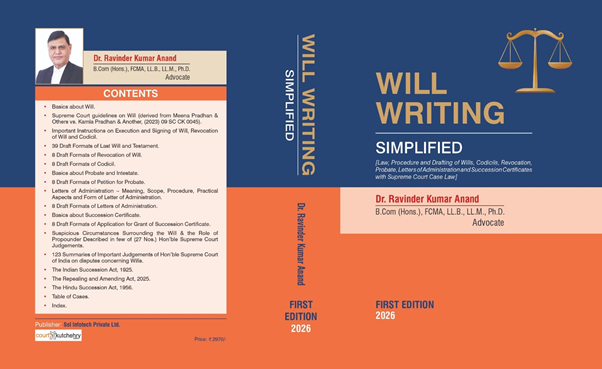
Legal professionals, families and students alike will benefit from Will Writing Simplified, which covers procedure and case law in detail.
BUY TODAY🔹 Amazon
BUY TODAY🔹 Flipkart
Legal Issues at Stake
- Paragraph 83 of EPF Scheme (2008 Notification):
- Introduced mandatory EPF contributions for international workers.
- Applies regardless of salary levels, unlike Indian employees who have a wage ceiling of ₹15,000/month for mandatory contributions.
- Delhi High Court Ruling (Nov 2025):
- Upheld the validity of Paragraph 83, stating the Centre has authority to extend EPF to foreign nationals.
- Dismissed petitions by LG Electronics and SpiceJet.
- Withdrawal Restrictions:
- Foreign employees can withdraw EPF only upon permanent departure from India or retirement, creating liquidity concerns.
- Discrimination Argument:
- Petitioners argue that applying EPF rules to expats without wage ceilings is discriminatory compared to Indian employees.
Broader Implications
- For Employers: Multinationals may face higher compliance costs if EPF contributions remain mandatory for foreign staff.
- For Employees: Expats may see reduced take-home pay and restricted access to funds until retirement or departure.
- For Policy: The case could set precedent on how India balances labour protections with global mobility.
Historical Context
- 2008 Notification: Paragraph 83 introduced, making EPF mandatory for international workers.
- 2010 Amendment: Modified provisions but retained mandatory contributions.
- 2025 Delhi HC Ruling: Validated government’s power to enforce EPF on foreign nationals.
- 2026 Supreme Court Hearing: Now examining constitutional validity and fairness of the rule.
Also Read: ITAT Upholds Reliefs for Reliance Retail: AJIO Marketing Expenses Allowed as Revenue
GEO-Friendly Keywords
- Supreme Court foreign employees EPF India
- Paragraph 83 EPF Scheme challenge
- LG Electronics vs Union of India EPF case
- International workers provident fund India
- Delhi High Court EPF ruling expats
- EPF withdrawal rules foreign employees