
THE AFFIDAVIT ANOMALY: SUPREME COURT DRAWS RADICAL BOUNDARY BETWEEN LOCAL POLLS AND PARLIAMENTARY LAW
Constitutional Silos: Why the Representation of the People Act Halts at the Municipal Threshold
The Safety Net of the Penal Code: Accountability Prevails Over Technical Omissions in Electoral Jurisprudence
By Legal Reporter
New Delhi: July 02, 2026:
The democratic ecosystem of India operates on a delicate dual-track framework where federal elections to Parliament and State Legislatures run parallel to local self-governance polls. While the electorate often views these contests through a singular lens of political accountability, the Supreme Court of India recently re-established a stark, immutable statutory boundary between them. In the definitive ruling of Chandrikaben Kishor Dafda v. State of Gujarat & Anr. a Division Bench comprising Justice Sanjay Karol and Justice Nongmeikapam Kotiswar Singh clarified that the penal architecture of the Representation of the People Act, 1951 (RPA) cannot be loosely extended to municipal or local body elections.
Understanding inheritance disputes becomes easier when you study landmark judicial precedents. If you want to explore important rulings related to testamentary succession, probate, execution, and validity of wills, read our detailed guide on Supreme Court judgments on wills in India , which covers key legal principles every lawyer, law student, and litigant should know.
This judgment addresses a pervasive area of legal confusion: whether the specialized electoral offenses defined by central legislation can automatically encompass grass-roots democratic exercises governed by state enactments. By dissecting the structural anatomy of the RPA and local municipal rules, the apex court preserved the sanctity of distinct legislative domains. Simultaneously, the Bench shut the door on candidate immunity, declaring that when specialized election laws are silent, the foundational provisions of the Indian Penal Code (IPC) will step in to penalize the concealment of assets and data manipulation.
The Genesis: A Candidate's Concealment and the Jurisdictional Quagmire
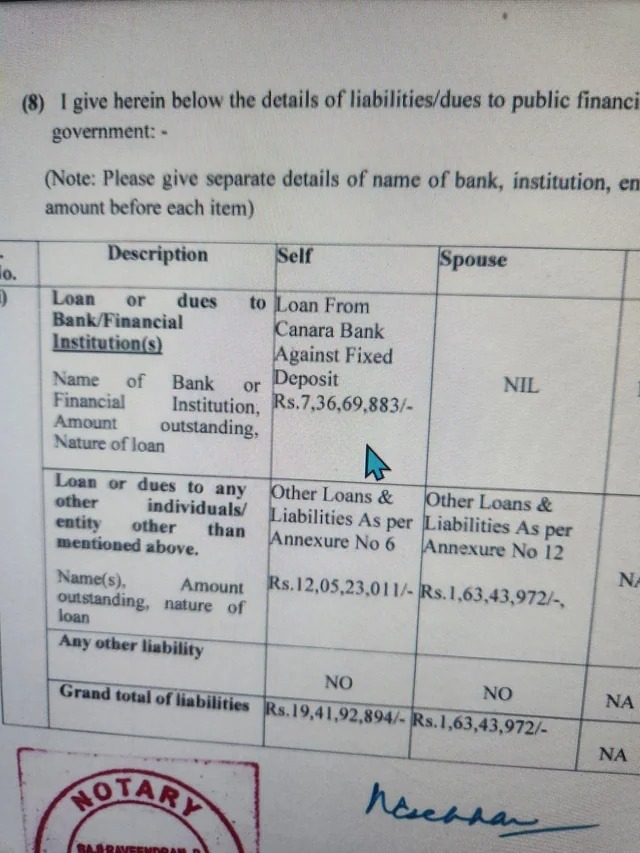
The legal battle originated from the 2015 municipal elections in Gujarat. The appellant, Chandrikaben Kishor Dafda, contested as a candidate for the position of Councillor. Under the prevailing state regulatory framework—specifically the Gujarat Municipalities (Conduct of Elections) Rules, 1994—candidates were legally mandated to file a comprehensive affidavit detailing their assets, liabilities, educational qualifications, and criminal antecedents.
Following the election, a private citizen filed a criminal complaint before the local administration, which subsequently moved into the judicial arena as a private complaint before the Additional Chief Judicial Magistrate in Gandhidham. The complainant alleged that Dafda had deliberately suppressed significant immovable property assets owned exclusively by her spouse, thereby misleading the electorate and misusing public trust.
In November 2017, the Magistrate issued summons and took cognizance of the matter. However, the court did so explicitly under Section 125A of the Representation of the People Act, 1951. This section specifically criminalizes the act of furnishing false information or concealing material facts within an election affidavit, prescribing a penalty of up to six months' imprisonment, a fine, or both.
The appellant moved the High Court of Gujarat to quash the criminal proceedings, arguing that the invocation of the central RPA was fundamentally flawed as it lacked jurisdiction over municipal bodies. When the High Court refused to quash the case, the appellant approached the Supreme Court, raising a profound structural question on the territorial and institutional limits of central election laws.
Dissecting Section 2(d): The Strict Boundaries of the Representation of the People Act
The principal defence raised by the appellant focused on statutory interpretation. It was argued that the RPA is an exclusive legislative instrument designed under the constitutional aegis of Article 324 to Article 329 to govern elections to the Lok Sabha, Rajya Sabha, and State Legislative Assemblies/Councils. It has no structural or textual connection to the local bodies governed by Parts IX and IXA of the Constitution of India, which are administered via State Election Commissions.
The Supreme Court accepted this contention by analyzing the explicit text of the statute. The Bench focused heavily on the definitions clause within the Act:
Section 2(d) of the Representation of the People Act, 1951: Clearly defines an "election" as an election to fill a seat or seats in either House of Parliament or in the House or House of the Legislature of a State.
By utilizing this precise statutory definition, the apex court observed that the Parliament had deliberately restricted the operational scope of the RPA. Because municipal elections are completely distinct animals regulated under separate state legislations—such as the Gujarat Municipalities Act—the penal provisions embedded within the RPA cannot be transposed by implication or judicial overreach onto local body disputes. Consequently, the Magistrate's order taking cognizance under Section 125A of the RPA was declared a jurisdictional error.
+-------------------------------------------------------------------------+
| THE DISCONNECT IN ELECTORAL JURISDICTION |
+-------------------------------------------------------------------------+
| CENTRAL STATUTE: |
| Representation of the People Act, 1951 |
| -> Governs: Parliament & State Assemblies (Sec 2(d)) |
| -> Penal Mechanism: Section 125A (Concealment in Affidavits) |
| X [CANNOT APPLICANTLY CROSS OVER TO LOCAL BODIES] |
| |
| STATE FRAMEWORK: |
| Gujarat Municipalities Act / 1994 Conduct of Election Rules |
| -> Governs: Municipal Councillors & Local Bodies |
| -> Penal Mechanism: Indian Penal Code (IPC) |
+-------------------------------------------------------------------------+
Legislative Blunders and the Resurrection via the Indian Penal Code
A fascinating twist in the case emerged when the Supreme Court scrutinized the local laws of Gujarat. If the RPA did not apply, what was the exact state penal provision governing false affidavits?
The Court reviewed the history of the Gujarat Municipalities Act and found a striking statutory vacuum. While the state framework required candidates to submit affidavits under the Gujarat Municipalities (Conduct of Elections) Rules, 1994, the specific statutory clauses that previously penalized false declarations had been completely deleted by state legislative amendments back in 1990.
The appellant argued that this legislative omission meant that filing a false affidavit in a municipal poll carried no criminal liability under state municipal laws, and since the central RPA was inapplicable, the entire prosecution must collapse.
The Supreme Court flatly rejected this "immunity by omission" argument. The Bench laid down a major principle of public accountability: the requirement to file an affidavit is a formal legal obligation. If a candidate deliberately lies or conceals information in a legally mandated declaration, they are committing a fraud upon a public authority. In the absence of a specialized penal provision within the local municipal act, the general criminal law of the land—the Indian Penal Code—immediately steps in to fill the void.
The Bench observed that when an affidavit is falsely sworn, provisions of the IPC relating to the giving of false evidence, fabricating false evidence, or making false declarations (such as Sections 191, 193, and 200 of the legacy IPC) become fully applicable. The state's failure to maintain a specific electoral penalty does not insulate a fraudulent candidate from the broader penal powers of the state.
Section 465 CrPC and the Doctrine of Curable Irregularities
The next critical issue was the fate of the Magistrate’s flawed order. The appellant insisted that because the Magistrate had wrongly taken cognizance under Section 125A of the RPA instead of the relevant sections of the IPC, the entire proceeding was contaminated from its inception and had to be quashed.
The Supreme Court countered this with standard criminal procedure jurisprudence, pointing to Section 465 of the Code of Criminal Procedure, 1973 (CrPC). Section 465 establishes that no finding, sentence, or order passed by a court of competent jurisdiction shall be reversed or altered on account of any error, omission, or irregularity in the complaint, summons, warrant, or charge, unless it has caused a demonstrable "failure of justice."
The Bench re-emphasized an old principle: "Cognizance is taken of the offence, not of the person or the specific section label."
The facts alleged in the initial complaint clearly made out a prima facie case of asset concealment and deception. The Magistrate possessed the fundamental territorial and institutional jurisdiction to try criminal complaints within Gandhidham. Merely writing down the wrong statutory label ("Section 125A RPA" instead of the corresponding IPC sections) at the initial stage was a classic case of a curable technical error.
Instead of throwing out the entire case and letting the alleged fraud go unpunished, the Supreme Court exercised its appellate powers to set aside the specific flawed cognizance order and sent the matter back to the Magistrate. The Magistrate was directed to review the exact same factual complaint and take fresh, correct cognizance under the relevant provisions of the IPC.
"Myself, My Spouse, and Dependents": The Grammatical Mandate of Full Disclosure
Beyond the jurisdictional issues, the judgment provides an insightful lesson in literal statutory interpretation. The appellant had argued that she was under no legal obligation to disclose properties that belonged solely and exclusively to her husband. She claimed that the wording of the asset disclosure form meant candidates only needed to disclose properties held jointly or properties over which the candidate had direct legal rights.
The Supreme Court rejected this defensive reading by analyzing the grammar of the disclosure forms. The text required a candidate to list the assets of "myself, my spouse and dependents."
The Court ruled that the comma following the word "myself" functions purely as a standard grammatical separator within a list. It does not act as a structural barrier limiting disclosure to joint or individual ownership. The word "of" modifies every single entity listed within that sentence equally.
Therefore, the phrase must be read as:
Assets of myself,
Assets of my spouse, and
Assets of dependents.
+---> [of] myself
|
[Of] --+---> [of] my spouse
|
+---> [of] dependents
The Supreme Court stated that a spouse’s independent, individual assets must be transparently declared to the voters. Masking independent marital assets behind semantic or grammatical arguments damages the transparency of the electoral system.
The Broader Impact: Safeguarding Electoral Transparency
The ruling in Chandrikaben Kishor Dafda serves as a strong reminder that technical errors will not shield individuals from accountability when it comes to democratic integrity. The Supreme Court made it clear that while it will strictly enforce jurisdictional boundaries—preventing parliamentary statutes from spilling over into municipal governance—it will not allow those boundaries to become a safe haven for electoral fraud.
Filing an affidavit before an election is not a mere bureaucratic formality; it is a vital tool for voter transparency. When a candidate conceals assets, they commit an offense against society at large. By ensuring that the IPC stands as a reliable backup when state municipal laws are deficient, the Supreme Court has guaranteed that accountability remains a constant across all levels of Indian democracy.
Searchable Legal Index & Frequently Asked Questions (FAQs)
Section 1: Scope and Applicability of the Representation of the People Act, 1951
Q1: Does the Representation of the People Act, 1951 apply to municipal or panchayat elections?
Ans: No. The Supreme Court in Chandrikaben Kishor Dafda v. State of Gujarat & Anr. ruled that the RPA applies exclusively to elections for Parliament and State Legislatures. Local body elections are governed entirely by their respective state legislations and rules.
Q2: How did the Supreme Court determine the strict boundaries of the RPA?
Ans: The Court relied on Section 2(d) of the RPA, which explicitly defines "election" as an election to fill a seat in either House of Parliament or a State Legislature. This definition excludes local self-government institutions like municipalities or village panchayats.
Q3: Can a candidate who files a false affidavit in a municipal poll be penalized under Section 125A of the RPA?
Ans: No. Since the RPA does not have jurisdiction over local body polls, taking cognizance of an offense under Section 125A for a municipal election affidavit is a legal error and cannot be sustained.
Section 2: Penal Recourse and Criminal Liability Under Alternative Frameworks
Q4: If a state municipal act lacks specific penal clauses for false affidavits, does the candidate get immunity?
Ans: No. The Supreme Court clarified that if a specialized municipal law requires an affidavit but fails to provide a specific penalty for lying within it, the candidate can be prosecuted under the relevant provisions of the general Indian Penal Code (IPC) for making false declarations under oath.
Q5: What specific offenses under the general penal law apply to false election affidavits?
Ans: When specialized election penalties are missing, acts of suppression or lying under oath attract provisions related to giving false evidence, fabricating false evidence, and making false statements or declarations under oath (historically covered under Sections 191, 193, and 200 of the legacy IPC).
Q6: Why does the Supreme Court view a false affidavit as a serious crime against society?
Ans: An election affidavit is designed to inform voters about a candidate’s background. Intentionally hiding assets or lying is considered a deliberate fraud on the electorate and a misuse of public trust, making it a crime that harms the transparency of society at large.
Section 3: Procedural Errors, Cognizance, and Judicial Remit
Q7: What happens if a Magistrate takes cognizance of an offense under the wrong statutory provision?
Ans: Under Section 465 of the CrPC, taking cognizance under an incorrect statutory label is a curable technical defect. It does not automatically invalidate the entire trial or warrant quashing the case, provided the Magistrate has the core jurisdiction to hear the matter and no failure of justice has occurred.
Q8: What does the legal maxim "cognizance is taken of the offence and not people/sections" mean?
Ans: This means that a criminal court evaluates the underlying illegal facts and actions presented in a complaint. If those facts reveal a crime, the court takes notice of the illegal act itself. Applying an incorrect statutory section name is an error that can be fixed later.
Q9: What was the procedural remedy ordered by the Supreme Court in the Chandrikaben case?
Ans: The Supreme Court set aside the Magistrate’s faulty order that took cognizance under the RPA but kept the original complaint alive. It sent the case back to the Magistrate with instructions to take fresh cognizance under the proper sections of the IPC.
Section 4: Interpretation of Asset Disclosure Obligations
Q10: Is a candidate required to disclose assets that are exclusively owned by their spouse?
Ans: Yes. The Supreme Court ruled that candidates must disclose all independent assets held by their spouse. A candidate cannot hide a spouse's separate property by claiming it is not jointly owned.
Q11: How did the Court interpret the phrase "myself, my spouse and dependents" in the disclosure rules?
Ans: The Court held that the comma after "myself" is a standard separator in a list. The introductory word "of" applies to every category in the list equally, creating a clear legal duty to disclose the assets of the candidate, the assets of the spouse, and the assets of all dependents.
Q12: Can a candidate protect their spouse’s financial privacy during an election?
Ans: No. Public transparency outweighs personal financial privacy when running for public office. The law demands full and honest financial disclosure across the entire immediate family unit so that voters can make an informed choice.