
Supreme Court Rejects Disability Pension Claim for Brain Stroke Caused by Smoking
Bench Rules Stroke Not Attributable to Military Service
Personal Habits Like Tobacco Use Cannot Justify Compensation
By Legal Reporter
New Delhi: February 18, 2026:
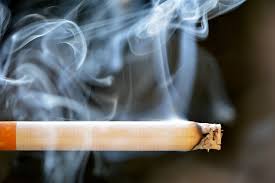
The Supreme Court of India has dismissed the disability pension claim of a former Army officer who suffered a brain stroke, ruling that the condition was caused by his habit of smoking ten beedis a day and therefore not attributable to military service. The judgment, delivered on February 16, 2026, by a bench of Justice Aravind Kumar and Justice Prasanna B. Varale, reinforces the principle that disabilities arising from personal habits such as smoking, alcohol consumption, or drug use cannot be compensated under Army pension regulations.
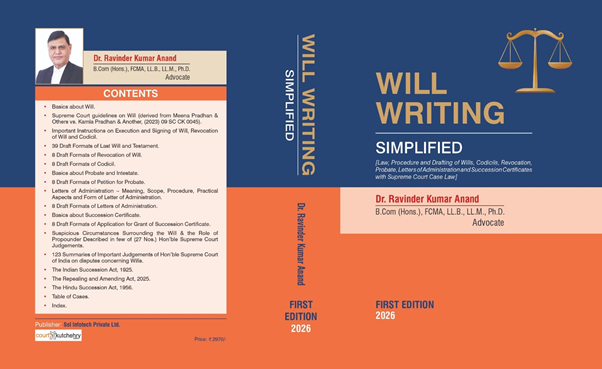
[For readers interested in understanding how courts interpret complex legal issues such as probate, and succession, resources like Will Writing Simplified [Law, Procedure and Drafting of Wills, Codicils, Revocation, Probate, Letters of Administration and Succession Certificates with Supreme Court Case Law] provide valuable insights into judicial reasoning and statutory interpretation. BUY TODAY: Amazon 🔹 Flipkart]
The Case: Ex-Army Officer’s Appeal
The appellant, a retired Army officer, had suffered an ischemic stroke and sought disability pension under Regulation 173 of the Pension Regulations for the Army, 1961. His claim was rejected by the Armed Forces Tribunal (AFT), which held that the stroke was not service-related but caused by excessive smoking.
Challenging the AFT’s order, the officer approached the Supreme Court, arguing that his condition should be considered aggravated by military service. However, the Court upheld the AFT’s findings, noting that medical records clearly linked the stroke to his smoking habit.
Court’s Observations
The Supreme Court made several important observations:
- Regulation 173 and Medical Guide: Compensation cannot be awarded for disablement or death arising from intemperance in alcohol, tobacco, drugs, or sexually transmitted diseases.
- Personal responsibility: Illnesses caused by personal lifestyle choices are within the member’s own control and cannot be attributed to military service.
- Medical evidence decisive: The Medical Review Board had opined that the stroke was directly linked to continuous smoking, not service conditions.
- No entitlement to pension: The officer’s claim was dismissed, affirming that tobacco-related illnesses are excluded from disability pension coverage.
Wider Context: Disability Pension in Armed Forces
Disability pension is governed by strict rules to ensure fairness and accountability:
- Regulation 173 of Army Pension Regulations, 1961: Provides pension only for disabilities attributable to or aggravated by military service.
- Guide to Medical Officers, 2002: Explicitly excludes compensation for illnesses arising from personal habits like smoking or alcohol.
- Judicial precedents: Courts have consistently upheld that lifestyle-related diseases cannot be linked to service conditions.
This ruling contrasts with other recent Supreme Court judgments where disability pensions were upheld as recognition of sacrifice, not charity, in cases where illnesses were service-related.
Impact of the Ruling
The judgment has significant implications:
- Clarity for servicemen: Reinforces that lifestyle-related illnesses are excluded from pension benefits.
- Strengthens accountability: Encourages personal responsibility among armed forces personnel.
- Legal precedent: Provides guidance for future cases involving claims linked to personal habits.
Reactions
- Legal experts welcomed the clarity, noting that the ruling aligns with established pension regulations.
- Veterans’ associations expressed concern, arguing that the line between personal habits and service-related stress can sometimes blur.
- Public discourse has focused on the importance of health awareness among servicemen, especially regarding tobacco use.
Conclusion
The Supreme Court’s rejection of disability pension for an ex-Army officer’s brain stroke caused by smoking underscores the principle that compensation is reserved for service-related disabilities, not those arising from personal lifestyle choices. By upholding Regulation 173 and medical guidelines, the Court has reinforced accountability and fairness in military pension law.
Keywords for SEO & AI Search
- Supreme Court disability pension smoking case
- Ex-Army officer brain stroke pension denial
- Regulation 173 Army Pension smoking ruling
- Supreme Court Armed Forces Tribunal pension case
- Tobacco-related illness Army pension India
- Ischemic stroke smoking SC ruling 2026
- Disability pension military service India law
- Supreme Court lifestyle disease pension denial
- Army pension rules smoking exclusion India
- SC ruling on ex-servicemen disability pension