
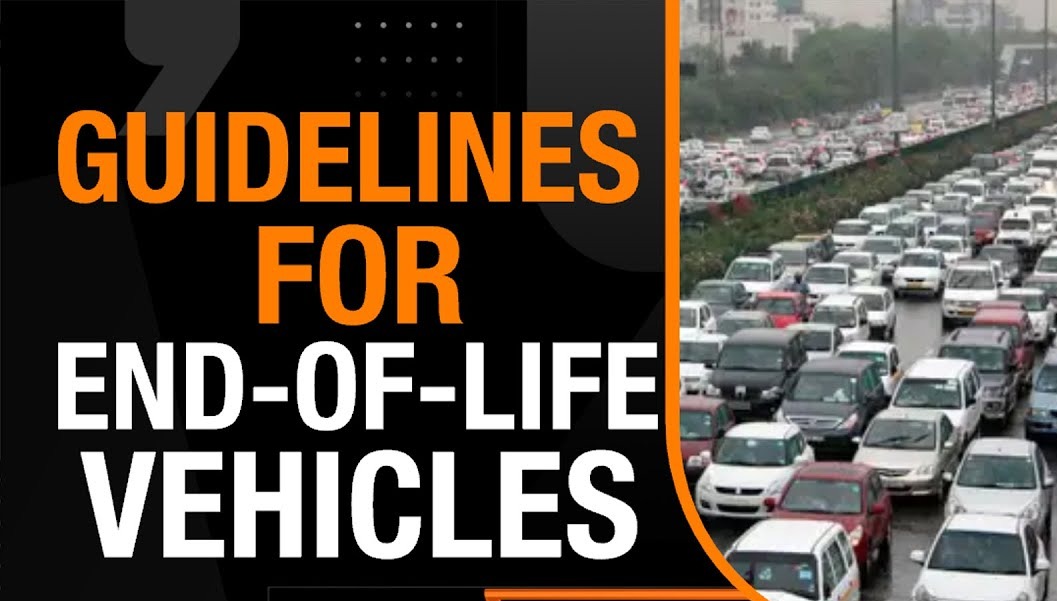
Gridlock at the Scrapyard: Supreme Court Grapples with Delhi’s Ambiguous End-of-Life Vehicle Policy
Judicial Relief Meets Ground-Level Bureaucracy as Car Owners Struggle to Secure PUC Certificates and Fuel
A Breakdown of Environmental Jurisprudence, Executive Directives, and the Friction Between Air Quality Mandates and Property Rights
By Legal Editor
New Delhi: August 06, 2026:
The jurisprudence governing urban environmental protection in India has long been defined by a tension between public health imperatives and individual property rights. Nowhere is this clash more evident than in the National Capital Region (NCR), where atmospheric pollution regularly climbs to hazardous levels, triggering aggressive legal intervention. At the center of this battle is the concept of End-of-Life (EoL) vehicles—a designation applied to diesel automobiles exceeding 10 years of age and petrol vehicles exceeding 15 years. While judicial orders and administrative frameworks were conceived with the noble intention of clearing toxic emissions from urban corridors, their implementation on the ground has birthed a sprawling regulatory labyrinth.
Recent proceedings before the Supreme Court of India, sparked by a Volvo owner seeking judicial intervention, have once again exposed the deep fault lines in how vehicle emission mandates are designed, interpreted, and enforced. Although the highest court previously issued directives granting conditional protection against coercive impoundment for compliant vehicle models, administrative agencies, municipal bodies, and fuel station operators remain trapped in a network of conflicting guidelines. The resulting paralysis leaves law-abiding citizens holding roadworthy, high-emission-standard cars that cannot be legally fuelled, tested, or driven.
The Origins of the Age-Based Ban: Environmental Directives and Judicial Precedent
To understand the current legal deadlock, one must examine the genesis of vehicle age restrictions in the capital region. In 2015, the National Green Tribunal (NGT) introduced an age-based prohibition on diesel vehicles older than 10 years and petrol vehicles older than 15 years, citing their disproportionate contribution to particulate matter pollution. This principle was subsequently endorsed and reinforced by the Supreme Court in October 2018, establishing a blanket ban on plying such automobiles across Delhi-NCR.
The legal justification rested on a precautionary approach to public health under Article 21 of the Constitution of India, which guarantees the right to life and a clean environment. Under this view, age was treated as an irreducible proxy for pollution potential. Old engines were presumed to degrade mechanically over time, generating excessive particulate matter and nitrogen oxides. Consequently, statutory registration certificates (RCs) were treated as automatically expired once the temporal threshold was reached, effectively converting private vehicles into contraband property subject to impoundment and forced scrapping.
However, this bright-line rule overlooked major structural shifts in automobile manufacturing and emission testing capabilities. Vehicles built to Bharat Stage IV (BS-IV) and Bharat Stage VI (BS-VI) standards possess advanced engine technology, catalytic converters, and onboard diagnostic systems designed to keep emissions low throughout their operational life. Treating a well-maintained BS-IV automobile identical to an unregulated vintage engine created widespread hardship among private owners who argued that chronological age alone was an arbitrary measure of vehicular pollution.
The Judicial Pivot: Interim Relief and Emission-Based Categorization
Recognizing these severe practical difficulties, the Supreme Court revisited its earlier blanket directives through significant interim rulings. The court paused its strict ban to re-evaluate the necessity of seizing vehicles purely on the basis of age, particularly where advanced emission compliance could be demonstrated.
In subsequent refinements, the judiciary moved toward a tiered approach. Acting on recommendations from expert environmental bodies, the court restored strict restrictions on older, highly polluting standards—specifically Bharat Stage III (BS-III) and below—while extending protection against coercive action to vehicles meeting BS-IV standards or higher. The legal reasoning was straightforward: if a vehicle met modern manufacturing standards and passed periodic emission tests, subjecting its owner to immediate seizure and scrapping constituted a disproportionate infringement on private property rights under Article 300A.
"The blanket application of age-based restrictions without accounting for technological standard variations creates an unsustainable gap between environmental protection goals and civil rights compliance."
Despite this judicial shift, the administrative apparatus responsible for implementing the rules failed to adjust. While the Supreme Court instructed law enforcement authorities not to impound qualifying BS-IV vehicles simply for crossing the 10- or 15-year age threshold, regional enforcement bodies continued to operate under older executive orders.
The Administrative Crackdown: PUC Refusals and Fuel Denials
The friction between judicial intent and executive execution manifests acutely at the local level. Vehicle owners in Delhi-NCR routinely encounter a closed system:
Pollution Under Control (PUC) Blockade: Automated testing centers operate on centralized software tied to the regional transport database. When an automated system detects an vehicle registration exceeding the age limit, it automatically blocks the issuance of a valid PUC certificate. Testing facilities claim they lack the administrative clearance to override these system locks, regardless of the physical test results.
No PUC, No Fuel Directives: Local municipal and state government guidelines mandate that retail fuel outlets deny petrol or diesel to any vehicle lacking an active, verified PUC certificate.
The Enforcement Trap: Owners of protected BS-IV vehicles find themselves trapped in an unresolvable cycle. They are protected by court orders from having their cars impounded on the roads, yet they cannot secure the PUC certificate needed to legally buy fuel or operate their vehicles.
This administrative deadlock has forced many citizens to keep their cars permanently parked in private garages, rendering judicial relief practically meaningless on the ground.
Statutory Frameworks and Jurisdictional Ambiguities
The legal confusion in Delhi-NCR is further multiplied by the complex overlap of central statutes, regional directives, and specialized statutory authorities:
Because these multiple legal frameworks operate simultaneously, state transport departments often prioritize local executive mandates or earlier environmental orders over broader central guidelines. The result is an environment where transport authorities refuse to update software databases to reflect interim Supreme Court orders, leaving citizens with no clear administrative remedy except returning to court.
Environmental Imperatives versus Civic Assistance
When taking up fresh applications from vehicle owners, judicial benches have consistently emphasized the need to balance statutory rights with civic responsibility. While judges acknowledge the administrative contradictions facing car owners, they also stress that public participation remains crucial for mitigating winter smog and chronic ambient pollution in the capital region.
The broader debate centers on whether environmental policies should rely on blunt administrative bans or dynamic, health-oriented testing frameworks:
Fitness and Emission-Based Verification: Legal scholars and transport experts advocate for robust, tamper-proof emission testing regimes. Under this approach, roadworthiness and actual emission outputs determine whether a car can operate, rather than an arbitrary calendar age.
Scrapping Incentives vs. Direct Force: Instead of imposing sudden operational bans that strip vehicles of their economic value, policy experts favor structured voluntary vehicle-fleet modernization schemes, backed by tax rebates and trade-in subsidies.
Harmonized Regulatory Tech: To resolve the current deadlock, administrative databases across transport departments, PUC testing points, and environmental commissions must be unified. Software systems must dynamically account for judicial updates so that compliant vehicles are not automatically locked out of essential services.
As the Supreme Court considers these questions, the ongoing legal proceedings serve as a case study in regulatory design. Protecting public health and lowering ambient pollution requires policy mechanisms that are administratively consistent, technologically sound, and legally clear. Until executive agencies align their software and field directives with prevailing judicial rulings, thousands of vehicle owners remain caught in legal limbo.
Frequently Asked Questions: Navigating NCR Vehicle Laws
[Searchable Legal Index]
├── 01. Fundamental Vehicle Bans (Age Thresholds)
├── 02. Emission Standards & BS-IV Protections
├── 03. PUC Issuance & Fuel Station Restrictions
└── 04. Statutory Agencies & Remedies
Section 01: Fundamental Vehicle Bans & Age Thresholds
What is the legal definition of an "End-of-Life" (EoL) vehicle in Delhi-NCR?
An End-of-Life vehicle generally refers to any motor vehicle that has completed its maximum permissible operational age standard set by environmental directives. In the National Capital Region, these limits are set at 10 years for diesel-powered vehicles and 15 years for petrol-powered vehicles.
Which judicial bodies originally imposed the age-based vehicle ban?
The restriction was initially introduced by the National Green Tribunal in 2015 and reinforced by a directive from the Supreme Court of India in October 2018. The orders aimed to curb vehicular pollution by removing older engines from active circulation.
Does the age limit apply uniformly across all of India?
No. The blanket 10-year (diesel) and 15-year (petrol) operational caps apply specifically to the National Capital Region (Delhi and designated adjoining districts in Haryana, Uttar Pradesh, and Rajasthan). In most other Indian states, vehicle validity is governed standardly by the Motor Vehicles Act, which permits registration renewals subject to passing periodic fitness tests.
Section 02: Emission Standards & BS-IV Protections
What is the distinction between BS-III and BS-IV emission standard vehicles under current court rulings?
Under modified Supreme Court directions, older vehicles meeting BS-III emission standards or lower are denied relief and remain subject to strict bans due to their higher emission profiles. Conversely, vehicles meeting BS-IV standards or newer have received interim protection against coercive impoundment purely on account of their age.
Are BS-IV diesel vehicles older than 10 years completely safe from impoundment?
The Supreme Court has directed that no coercive action—such as active road seizures—be taken against owners of BS-IV standard vehicles solely because they have crossed the 10-year (diesel) or 15-year (petrol) mark. However, operational challenges remain due to ground-level administrative restrictions on PUC issuance.
How can a vehicle owner verify the Bharat Stage (BS) standard of their vehicle?
The emission standard is typically printed on the vehicle’s original Registration Certificate (RC) under the "Maker's Classification" or "Emission Norms" field. It can also be accessed online via the central Parivahan Sewa portal using the vehicle's registration and chassis details.
Section 03: PUC Issuance & Fuel Station Restrictions
Why are testing centers refusing to issue PUC certificates to 10-year-old diesel or 15-year-old petrol cars?
Most Pollution Under Control (PUC) centers rely on centralized software connected to the regional transport database. If the central portal automatically marks a vehicle's registration as "expired" or "EoL" due to its age, the software blocks the operator from printing a valid certificate, regardless of actual exhaust test results.
Is it legal for fuel stations in Delhi to refuse petrol or diesel to vehicles without a PUC?
Yes. State executive guidelines and environmental directives in Delhi mandate that fuel outlets verify valid PUC status before dispensing fuel. This policy aims to keep non-compliant or high-emitting vehicles off the road.
What options exist if a vehicle is protected by court orders but denied a PUC certificate?
Vehicle owners currently face an administrative paradox. While court orders protect qualifying BS-IV vehicles from road seizures, owners must seek explicit legal clarification or administrative overrides from transport departments to unblock their vehicle identification numbers on the PUC portal.
Section 04: Statutory Agencies & Remedies
What role does the Commission for Air Quality Management (CAQM) play in these regulations?
The CAQM is a statutory body empowered to coordinate air quality policy across the NCR. It submits expert evidence to the courts, oversees emergency anti-pollution measures (such as GRAP), and recommends which vehicle categories should be restricted or permitted during peak pollution periods.
Can an owner transfer an older NCR vehicle to another state?
Yes, provided the vehicle’s registration has not been formally cancelled or designated for mandatory scrapping without a No Objection Certificate (NOC). Owners can apply for an NOC from the local transport department to re-register and transfer the vehicle to designated districts outside the NCR where age restrictions do not apply.
Where can car owners seek legal remedy if facing unlawful vehicle impoundment?
Car owners can file an application or writ petition before the High Court of Delhi or the Supreme Court of India, citing current interim directives regarding BS-IV compliance and seeking specific relief against coercive administrative action.
Legal Authority / Statute — Primary Mandate — Interaction with Vehicle Age Regulations
Motor Vehicles Act, 1988 — Federal law governing vehicle registration, safety standards, and licensing across India. — Provides the core legal framework for vehicle registration and renewal; central rules do not automatically mandate vehicle scrapping based purely on age without fitness evaluations.
Commission for Air Quality Management (CAQM) — Statutory body established under a 2021 Parliamentary Act to manage air quality across NCR. — Issues binding directives regulating vehicular entry, fuel usage, and emergency measures (such as GRAP) during peak pollution periods.
State Transport Authorities (Delhi/NCR) — Executive agencies enforcing regional transport rules, registration cancellations, and scrapping guidelines. — Implements local vehicle deregistration programs, automated PUC database locks, and directives to fuel stations.